

Key Takeaways
- Intentional planning prevents impulse purchases that drain your decorating budget.
- Decluttering first reveals what you already have and reduces what you need to buy.
- Spending more on a few durable anchor pieces protects long-term value.
- Secondhand markets, paint, and lighting deliver the highest visual return per dollar.
- Cohesion - not cost - is what makes a room look pulled-together.
Start with a Clear Decorating Plan
Budget decorating fails most often not at the thrift store, but at the planning stage. Without a clear direction, every attractive item becomes a potential purchase - and impulse buys accumulate fast. Before spending anything, invest time in defining what you actually want your home to feel like.
Start by gathering visual references: browse design publications, save images that resonate with you, and look for patterns. Are you consistently drawn to warm, layered rooms or clean, minimal spaces? Identifying your instincts helps you make cohesive choices rather than collecting mismatched pieces. To explore defined style frameworks, see common interior design styles explained.
Next, set a realistic total budget and break it down by room and category - furniture, soft furnishings, lighting, and accessories. Treating your decorating spend as a household budget line keeps it accountable. For broader guidance on building spending plans, budgeting basics offers a practical starting framework.
Define Your Style Before Browsing
Spend at least one session collecting reference images before visiting any store or marketplace. A clear visual direction prevents impulse purchases that don't fit your overall scheme and saves significant money over time.
Declutter Before You Decorate
One of the most overlooked budget strategies is working with what you already own. A room crowded with mismatched or unused items will look cluttered regardless of how much new décor you add. Clearing the space first reveals your actual baseline - and often surfaces pieces worth keeping, repositioning, or repainting.
Go room by room methodically: remove everything that doesn't serve a functional or aesthetic purpose, then reassess what remains. You may find that a piece moved from one room to another solves a problem for free. For a structured approach, a room-by-room decluttering walkthrough can guide you through the process before you spend a dollar on new items.
Repositioning Costs Nothing
Before purchasing anything new, try moving existing furniture into different arrangements or rooms. Designers routinely find that the right layout - not new pieces - is what a room was missing. Good furniture placement can dramatically change how spacious and functional a room feels.
Where to Spend and Where to Save
Not all home purchases carry equal weight. The widely shared principle among interior designers - spend on what you touch daily, save on what you see occasionally - holds up well in practice.
- Invest in anchor pieces: Sofas, bed frames, dining tables, and quality mattresses endure daily use. Buying durable versions upfront typically costs less over time than replacing cheaper alternatives every few years.
- Save on accessories: Throw pillows, vases, artwork, and seasonal décor are easy to swap out and don't need to be expensive to look good.
- Be cautious with trends: Trendy items at any price point can feel dated quickly. Neutral, timeless anchor pieces with lower-cost accent updates give you lasting style and flexibility.
~80%
Of decorating impact from a few key decisions
Interior design professionals widely note that most of a room's visual impact comes from a small number of choices: layout, a dominant color, anchor furniture, and lighting - not the number of accessories.
2-3x
Longer lifespan of quality anchor furniture
Consumer research on furniture durability consistently indicates that solid-wood or hardwood-frame pieces can last two to three times longer than particleboard alternatives, reducing total long-term cost.
Sourcing Furniture and Décor Affordably
The secondhand market is one of the most powerful tools in budget decorating. Estate sales, thrift stores, online resale platforms, and neighborhood buy-nothing groups regularly yield solid wood furniture, quality lighting, and unique accessories at a fraction of retail prices.
When buying used furniture, inspect joints, drawer slides, and upholstery frames - cosmetic issues like scratched finishes or dated fabric are usually fixable with paint or reupholstery at low cost. Structural damage is harder and more expensive to remedy.
Paint deserves its own mention: few interventions transform a room more dramatically per dollar than a fresh coat of paint on walls or furniture. A consistent color palette across rooms also creates visual cohesion that makes a home feel deliberately designed rather than assembled randomly. If you're renting, renter-friendly decorating options outlines what changes are reversible and permissible without lease risk.
When shopping secondhand, bring room measurements and a photo of your space on your phone. Buying a piece that doesn't fit the room's scale is one of the most common and costly decorating mistakes.
Scale is frequently cited by interior designers as the single most important factor in whether a room feels balanced - and it's easy to misjudge without reference points.
Paint furniture before replacing it. A coat of chalk paint or primer-and-latex can transform a dated wood piece into something that looks intentional and current at minimal cost.
Furniture painting is one of the highest-return DIY interventions available to budget decorators, typically costing under $30 in materials while adding significant perceived value to a piece.
Using Color, Light, and Texture Strategically
Three elements - color, light, and texture - do more decorating work per dollar than almost any piece of furniture. Used thoughtfully, they can visually enlarge a room, create warmth, and establish a distinctive atmosphere without major spending.
Color: A cohesive palette of two to three complementary colors throughout your home creates a sense of intentionality. Painting an accent wall or the interior of a bookcase is a low-cost way to add depth and personality.
Light: Layering light sources - overhead fixtures, floor lamps, table lamps, and candles - creates warmth and dimension that a single overhead light cannot. Warm-toned bulbs (around 2700K) generally make living spaces feel more inviting than cool-toned alternatives. For a deeper look at balancing light sources, see balancing natural and artificial lighting.
Texture: Layering materials - a linen throw, a jute rug, a ceramic lamp base - adds visual richness without requiring expensive statement pieces. This principle is especially effective in smaller spaces; small-space interior design principles explores this further.
Decorating Room by Room on a Budget
Rather than trying to overhaul every room at once, prioritize by where you spend the most time and by which rooms guests see first. A focused, sequential approach prevents budget fatigue and allows you to learn what works before committing to an entire home.
Living Room
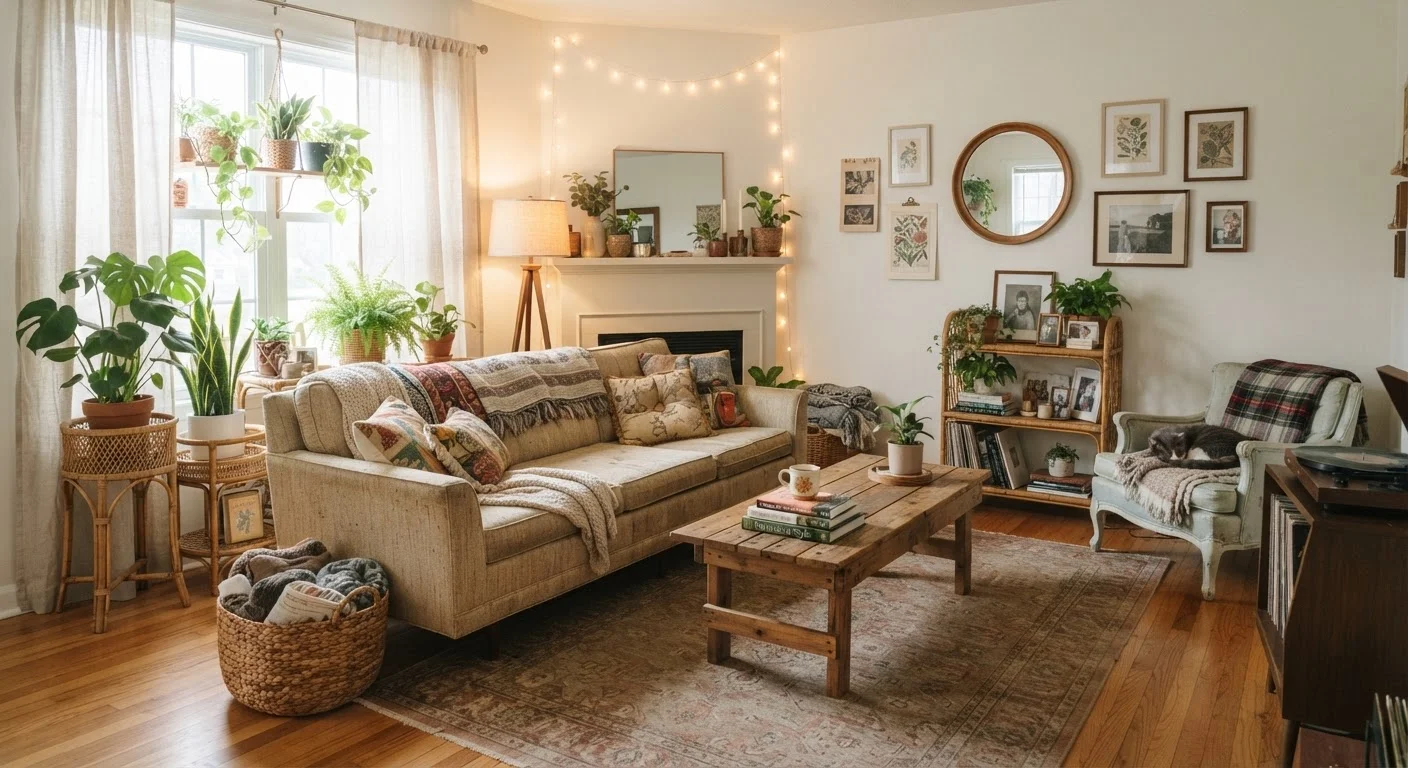
Anchor with a quality sofa in a neutral tone. Layer in a rug (the most impactful single purchase in most living rooms), add varied lighting, and use plants and affordable artwork to add life and personality.
Bedroom
Prioritize sleep quality with a good mattress, then address visual comfort. Bedding in consistent tones, blackout curtains, and bedside lighting carry significant impact at moderate cost.
Kitchen and Dining
Functional spaces benefit from organizational improvements as much as decorative ones. Open shelving styled with a few deliberate objects, consistent dishware, and adequate task lighting can elevate a kitchen without structural changes.
Decorating well on any budget is fundamentally about developing good taste and restraint - knowing what to leave out is as valuable as knowing what to add. For a look at rules worth reconsidering, common decorating myths that date a home may shift your perspective usefully. For households balancing home improvement goals with broader financial priorities, maintaining quality of life while saving offers relevant perspective.
Avoid the "Almost There" Spending Trap
One of the most common budget overruns in home decorating comes from continuously buying small items to make a room feel finished. Set a clear stopping point for each room and live with it for a few weeks before spending more. This pause often reveals that the room needs editing - not more purchasing.