

Key Takeaways
- Natural light supports mood and wellbeing but is inconsistent across seasons, times, and room orientations.
- Artificial lighting fills gaps left by natural light and should be layered - ambient, task, and accent sources together.
- The best-lit homes use both in combination, not as substitutes for each other.
- Color temperature (measured in Kelvins) determines whether light feels warm, neutral, or cool - match it to the room's purpose.
- Window treatments, mirror placement, and light-colored walls can dramatically amplify natural light at little cost.
Option A
Natural Light
The mood-setting, health-supporting foundation of any well-lit room.
Best for: Homeowners who want to improve wellbeing, reduce energy use, and make spaces feel open and airy throughout daylight hours.
Option B
Artificial Lighting
The controllable, consistent layer that makes every room functional after dark.
Best for: Anyone who needs reliable, adjustable illumination regardless of the time of day, season, or window placement.
If you work from home and need consistent task lighting all day
Artificial Lighting
Natural light shifts in intensity and angle throughout the day, causing glare and shadows on screens. A well-positioned desk lamp with a neutral color temperature (around 4000K) provides steady, eye-friendly illumination regardless of the weather or time.
If you want to reduce energy costs and improve daytime atmosphere
Natural Light
Maximizing daylight through unobstructed windows, reflective surfaces, and lighter wall tones can reduce reliance on electric lighting significantly during daytime hours - benefiting both your utility bill and your daily mood.
If you're designing a bedroom for rest and relaxation
Artificial Lighting
Warm, dimmable artificial light (2700-3000K) lets you tailor the atmosphere for winding down. Blackout treatments control natural light, giving you full control over your sleep environment regardless of the season.
If you want to make a small or windowless room feel larger
Artificial Lighting
Strategic use of uplighting, wall sconces, and layered sources creates the illusion of depth and height. Pair with mirrors to simulate the reflective quality of daylight - a technique covered in depth in small-space design principles.
If you're decorating on a budget and want the most impact for the least cost
Natural Light
Swapping heavy curtains for sheer panels, repositioning furniture away from windows, and hanging a large mirror opposite a window costs little but can transform how bright and spacious a room feels.
What Each Type of Light Actually Does
Light does more than illuminate - it shapes how we perceive space, influences our energy levels, and affects the mood a room projects. Understanding the distinct roles of natural and artificial light is the first step toward balancing them well.
Natural light is dynamic. It shifts in color and intensity from morning to evening, varies by season, and enters rooms differently depending on which direction your windows face. North-facing rooms receive soft, diffused light all day; south-facing rooms get intense midday sun. This variability is part of what makes natural light so appealing - it gives rooms life. Research has linked adequate daylight exposure to improved alertness, better sleep quality, and positive mood, though the specific mechanisms remain an active area of study.
Artificial lighting is consistent and controllable. You decide when it's on, how bright it is, and - increasingly - what color it emits. Modern lighting is typically organized into three layers: ambient (general illumination that replaces daylight), task (focused light for specific activities like reading or cooking), and accent (decorative light that highlights architectural features or artwork). Using all three layers is the hallmark of a professionally lit room.
| Criterion | Natural Light | Artificial Lighting |
|---|---|---|
| Consistency | Variable - changes by time, season, weather | Constant - fully controllable |
| Cost to operate | Free once windows are in place | Ongoing electricity cost |
| Color temperature control | None - set by sun angle and sky | Full control with correct bulbs |
| Mood and wellbeing | Strongly linked to alertness and mood | Varies by bulb type and placement |
| After-dark usability | Not available | Primary source |
| Design flexibility | Limited by window placement | Highly flexible with layering |
| Installation complexity | Structural changes require a contractor | Plug-in options need no installation |
Neither source is superior on its own. The goal is to use each where it performs best - and to design your space so they complement rather than compete with each other.
How to Maximize Natural Light in Any Room
Before reaching for more light fixtures, look at how well your existing windows are performing. A few low-cost adjustments can dramatically increase usable daylight.
- Clear the window perimeter. Tall furniture placed in front of or beside windows blocks and absorbs light before it reaches the room. Move shelving and large pieces to interior walls.
- Switch to sheer or light-filtering window treatments. Heavy drapes block most daylight even when open. Sheer linen panels diffuse sunlight beautifully while preserving privacy.
- Use mirrors strategically. A large mirror placed on the wall opposite a window reflects natural light deep into the room - a technique that also creates the impression of more space. For more on this, see our guide to making compact rooms feel larger.
- Choose lighter wall and ceiling colors. Matte white or off-white ceilings reflect light back into the room. Walls painted in soft, warm neutrals amplify the glow rather than absorbing it - a topic explored further in our piece on designing with a tonal palette.
When Natural Light Isn't Enough
Rooms below grade, interior spaces, or those with north-facing windows in northern climates may receive insufficient natural light for comfortable use - even in summer. In these situations, full-spectrum LED bulbs (around 5000K) can partially replicate the quality of daylight and help maintain alertness, though they are not a substitute for actual sunlight exposure. Consider consulting a lighting designer for rooms that consistently feel dark and unwelcoming despite your best efforts.
In rooms with very limited window access - basements, north-facing bathrooms, or interior hallways - natural light may simply not be a viable primary source. This is where a thoughtful artificial lighting plan carries the room entirely.
Building a Layered Artificial Lighting Plan
The most common lighting mistake in American homes is relying on a single overhead fixture to do everything. One ceiling light creates flat illumination with heavy shadows and no sense of warmth or depth. Layering changes that entirely.
3 Layers
Recommended lighting layers per room
Interior design professionals consistently recommend ambient, task, and accent lighting as the foundation of any well-lit residential space.
2700-3000K
Warm white range for living and sleeping areas
The Lighting Research Center notes that warmer color temperatures (lower Kelvin values) are generally preferred for relaxation-oriented spaces.
Up to 30%
Potential daytime energy savings from daylighting
The U.S. Department of Energy notes that well-designed daylighting strategies can reduce the need for electric lighting during daylight hours substantially.
Start with ambient light. Recessed downlights, a central pendant, or a flush-mount fixture establishes baseline illumination. Aim for enough to navigate the room safely without squinting.
Add task lighting where you work. Under-cabinet strips in the kitchen, a reading lamp beside the sofa, a lighted mirror in the bathroom - each targets the activity, not just the room.
Finish with accent lighting. Wall sconces, picture lights, or LED strip lights tucked behind shelving or beneath a floating cabinet create visual interest and reinforce the room's style.
Color temperature matters. Measured in Kelvins (K), it determines whether light reads as warm or cool. As a general rule: 2700-3000K suits living rooms and bedrooms; 3500-4000K works well in kitchens and home offices; 5000K and above mimics daylight and is best reserved for task-heavy spaces. Dimmers let you adjust intensity without changing bulbs, giving you more flexibility across times of day.
If you're interested in automating your lighting across different rooms and routines, our smart lighting setup guide walks through bulb types, switch compatibility, and scheduling logic in practical detail.
Room-by-Room Balancing Strategies
Different rooms have different lighting needs based on how they're used and when. Here's how to think through each space.
Living Room
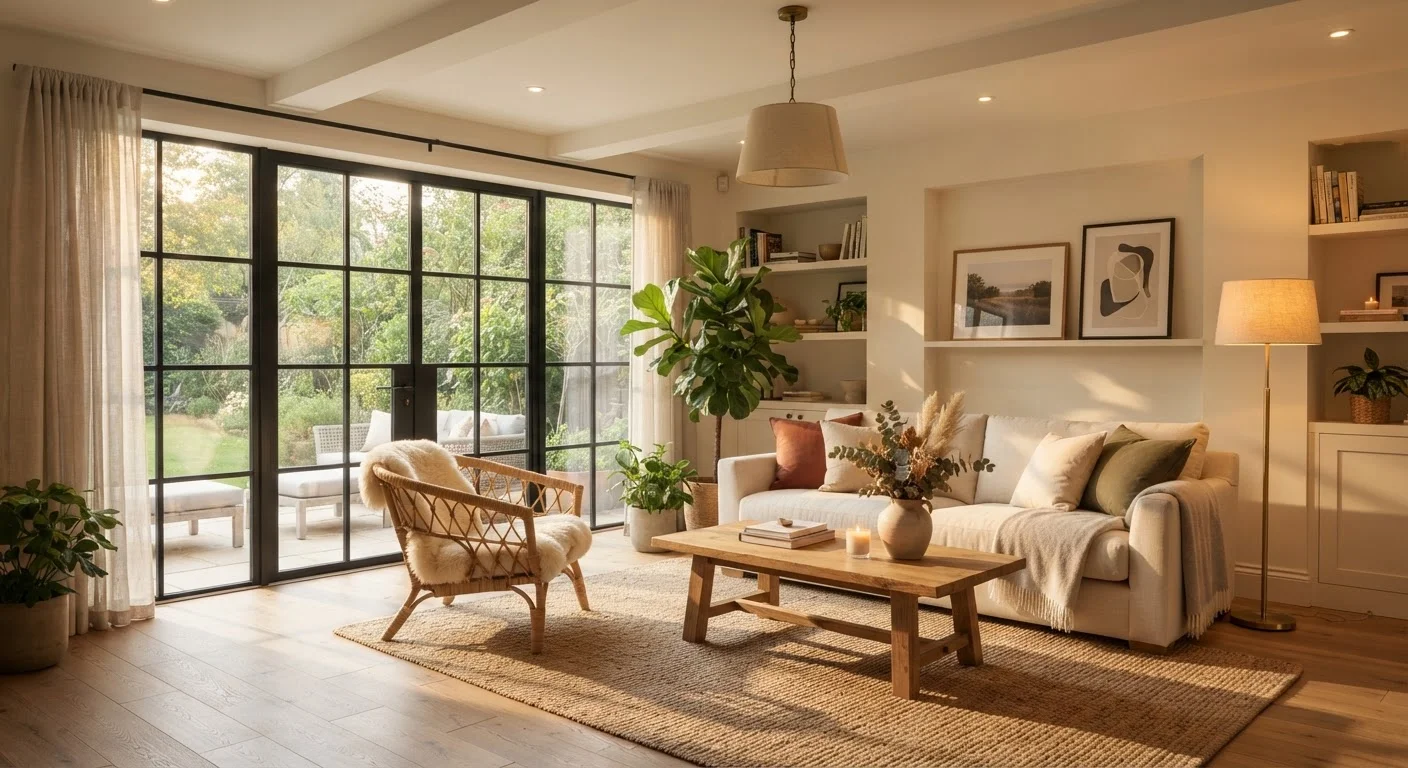
The living room benefits most from flexibility. During the day, maximize natural light and turn off overhead fixtures entirely. In the evening, layer floor lamps, table lamps, and dimmable ceiling fixtures to create warmth. Avoid cool-white bulbs here - they make relaxation harder.
Kitchen
Kitchens need bright, even task lighting at countertops regardless of daylight levels. Under-cabinet lighting eliminates prep-area shadows that overhead lights create. If your kitchen has limited windows, a higher color temperature (around 4000K) helps maintain alertness during meal preparation.
Bedroom
Reserve bright light for mornings. Use warm, dimmable bedside lamps for evening reading, and consider blackout or room-darkening shades to control early-morning natural light - particularly useful in summer when sunrise arrives well before you need to wake up.
Home Office
Position your desk to receive natural light from the side rather than directly in front of or behind your monitor, which causes glare and eye strain. Add a quality task lamp for overcast days and after-dark work sessions. For a broader look at building out your home's tech environment room by room, see our room-by-room smart home guide.