

Key Takeaways
- Matching furniture sets often make a room feel showroom-stiff rather than lived-in and layered.
- Ceilings don't have to be white - the right color can dramatically alter a room's proportion and mood.
- Small rooms can handle bold color and pattern; careful scale is more important than playing it safe.
- Decorating rules are guidelines, not laws - knowing when to break them is half the skill.
Why Decorating Myths Persist
Decorating advice travels fast - through shelter magazines, social media, and well-meaning relatives. But a lot of it started as a rule of thumb for one era, one style, or one type of home, and got repeated until it felt like law. The result is that many households quietly follow guidelines that are working against them.
Before overhauling a space, it's worth knowing which rules actually hold up. Some widely repeated decorating beliefs are simply outdated. Others were never quite right to begin with. The myth-fact pairs below address the most persistent offenders - the ones that tend to make homes look formulaic rather than considered.
If you're preparing to redecorate, a useful first step is clearing the canvas. Starting with a room-by-room declutter helps you see what you're actually working with before making any styling decisions.
Myth
Furniture in the same room should always match - buy the set so everything coordinates.
Fact
Matching sets often produce stiff, showroom-like results. Mixing pieces creates the layered, collected look that makes rooms feel personal and lived-in.
The matching-set approach dominated mid-century retail, when buying coordinated suites was a practical shortcut. But interior designers have long favored mixing - pairing different wood tones, varying upholstery fabrics, and combining old and new pieces. The key is repetition of one or two unifying elements (a color, a material, a leg style) rather than identical pieces. A sofa and armchairs in different silhouettes but similar tones, for example, feel cohesive without being predictable.
Myth
Ceilings should always be painted white to make a room feel larger.
Fact
White ceilings can be a useful default, but a colored or dark ceiling often makes a room feel more intentional, intimate, or architectural.
White ceilings reflect light, which is useful in low-lit spaces, but they're not universally flattering. In a room with high ceilings, a deeper ceiling color can bring the space down to a more human scale and add drama. In a small room, a ceiling in the same hue as the walls can actually make the space feel more expansive by removing the visual interruption at the ceiling line. If you're considering painting beyond the walls, choose color and placement thoughtfully is what determines whether the result reads as deliberate or accidental.
Myth
Small rooms need light colors - bold shades or dark paint will make them feel cramped.
Fact
Scale and clutter affect perceived room size more than color does. Dark or saturated colors can actually make a small room feel cozy and immersive rather than cramped.
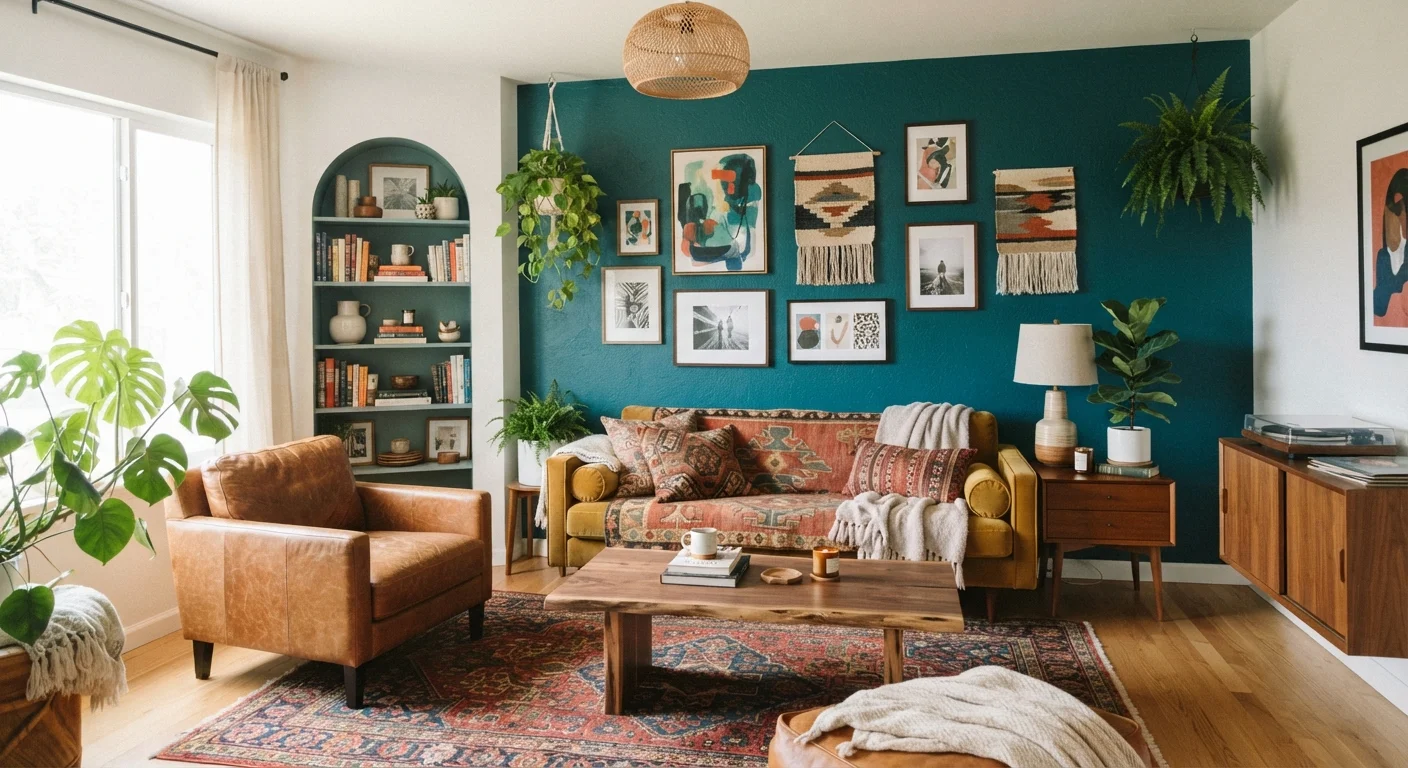
This myth conflates two separate things: brightness and spaciousness. A small room packed with furniture and visual clutter will feel tight regardless of paint color. Conversely, a small room with dark walls, minimal furniture at the right scale, and good lighting can feel intimate rather than cramped. The real culprits behind a feeling of smallness are oversized furniture, busy patterns at the wrong scale, and too many competing focal points - not the color on the walls.
Myth
Rugs in the living room should fit under the front legs of the sofa at most.
Fact
Area rugs generally work best when large enough for all major furniture legs to sit on, or at least the front legs of all seating - not just the sofa.
The most common rug mistake is going too small. A rug that only catches the front legs of one sofa looks like an afterthought and visually fragments the seating area. A properly sized rug anchors the entire conversation group - ideally with all front legs on the rug - defining the zone and making the room feel pulled together. When in doubt, going larger is almost always the safer choice. Sizing up, even if it costs more, tends to have a more dramatic positive effect than any other single room change.
Myth
More decorative accessories make a room feel finished and styled.
Fact
Editing is as important as adding. Overcrowding surfaces with accessories creates visual noise that competes with - rather than complements - the room's best features.
The instinct to fill every surface comes from a belief that empty space looks unfinished. In practice, negative space is a design tool - it lets meaningful objects breathe and draws the eye to what matters. A shelf with five carefully chosen items reads as intentional; the same shelf with twenty reads as cluttered. Periodic editing - removing pieces, reassessing what earns its place - is a practice that consistently improves how a room looks. For a structured approach to that process, fact-checking common organizing myths can help distinguish useful habits from ones that perpetuate clutter.
Myth
Curtains should hang just above the window frame and drop to the sill.
Fact
Curtains hung close to the ceiling and falling to the floor visually elongate walls and make rooms feel taller and more polished.
Curtain placement has a significant effect on perceived ceiling height. Hanging rods at or slightly below the ceiling line - even in rooms with standard 8-foot ceilings - draws the eye upward and makes the windows appear much larger than they are. Dropping curtains to the floor (with a slight break or even a gentle puddle) reinforces that vertical line. This technique is widely used by interior designers precisely because it delivers a high-impact result with minimal cost. Sill-length curtains have their place in casual or cottage-style settings, but as a default they tend to make rooms feel shorter and windows feel smaller.
How to Apply These Corrections in Your Own Home
Recognizing a myth is one thing; knowing how to move forward is another. The most reliable approach is to anchor decisions in your actual room - its proportions, its light, and how you use it - rather than in abstract rules.
70%
Homeowners who cite décor regrets
A survey by Houzz found that roughly 70% of homeowners who renovated or redecorated reported at least one decision they later wished they'd made differently, with furniture scale and color choice among the most cited.
2-3×
Typical rug size underestimate
Interior design professionals commonly report that clients select area rugs two to three sizes smaller than what would actually work for their space.
If color feels intimidating, start with textiles. Cushions, throws, and curtains are low-commitment ways to introduce pattern and warmth without paint. Understanding what each textile does in a room can help you make choices that genuinely shift the feel of a space.
For those decorating on tighter margins, style is less about budget than about intention. The same principles - scale, contrast, layering - apply whether you're shopping secondhand or investing in a few quality pieces. Our guide to decorating on a budget covers practical strategies for building a cohesive look without overspending.
Renters face additional constraints, but far fewer than most assume. Many decor changes are reversible and renter-friendly - from removable wallpaper to curtain swaps - and can make a significant visual difference without breaching a lease.
Don't Confuse Style Trends With Timeless Principles
Some decorating corrections lead people to swing hard in the opposite direction - all dark walls, all mixed patterns, maximum drama. Design principles like scale, proportion, and visual balance remain constant even as trends shift. Apply these corrections thoughtfully, not as new absolutes. When in doubt, live with a change for a few days before committing - paint a large swatch, borrow a piece of furniture, or rearrange what you already own before buying anything new.
If you're curious about deeper style frameworks, a plain-language overview of interior design styles can help you identify what actually appeals to you - which makes every subsequent decision easier.