

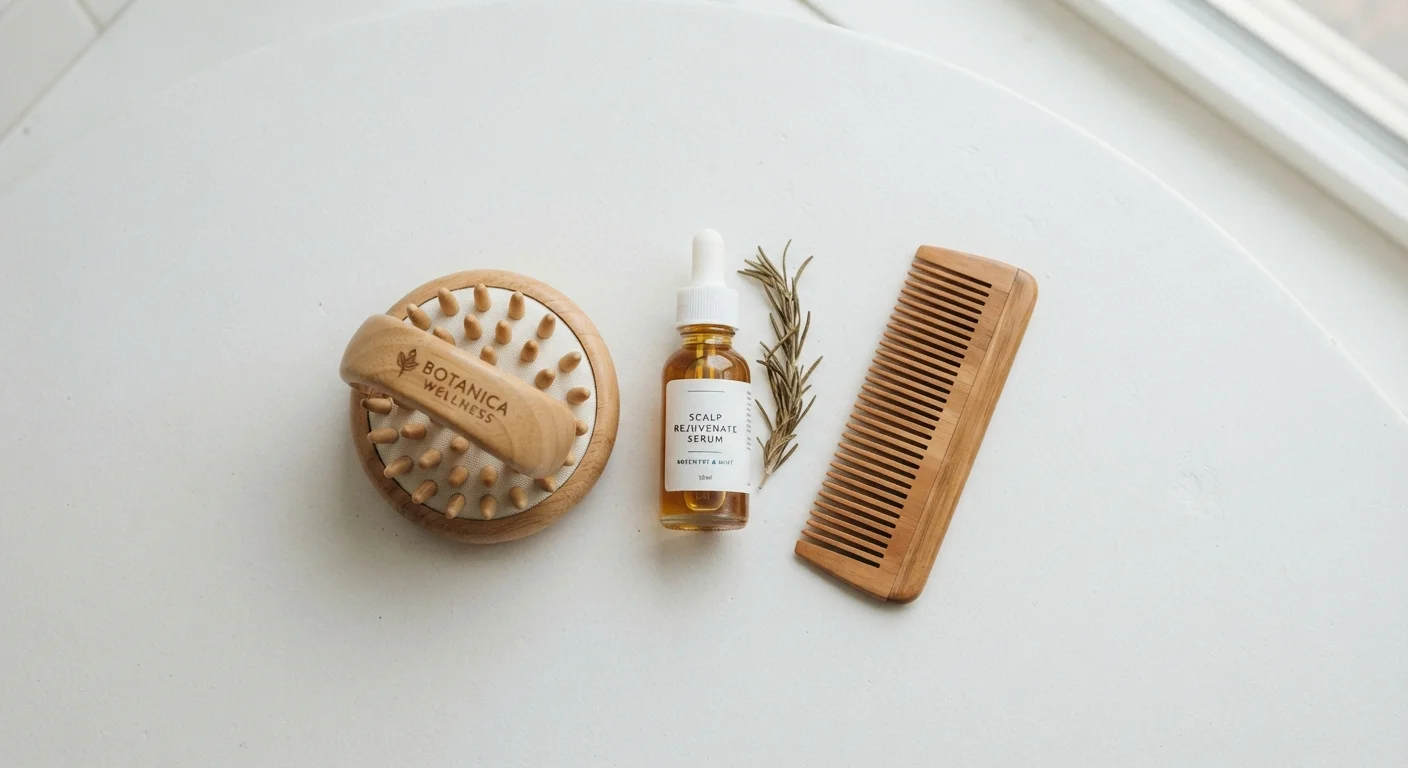
Key Takeaways
- The scalp is skin - it needs exfoliation, moisture balance, and targeted treatment, not just shampoo.
- Hair shafts are not living tissue; products applied to them cannot repair cells, only coat or fill damage.
- Scalp problems (buildup, dryness, inflammation) often cause visible hair issues, but the fix targets the scalp.
- Using hair products on the scalp - and scalp products on the lengths - can create new problems.
- A healthy scalp routine and a healthy hair routine can coexist; they just require different steps.
Option A
Scalp Care
The foundation beneath your hair.
Best for: Addressing the skin environment where hair growth begins - think sebum balance, flaking, sensitivity, and circulation.
Option B
Hair Care
The strand-focused routine most of us know.
Best for: Maintaining and improving the condition, strength, and appearance of the hair shaft itself - from root to tip.
If you're dealing with flaking, itching, or persistent oiliness
Scalp Care
These are skin-level concerns. A targeted scalp routine - gentle exfoliation, pH-balanced cleansers, and possibly a scalp serum - addresses the actual source of the problem.
If your issue is dryness, breakage, or dullness mid-shaft to ends
Hair Care
The hair strand itself needs moisture, protein, and protective habits. Conditioners, masks, and heat protection work at the shaft level where the damage is occurring.
If you're noticing shedding or slower growth than usual
Scalp Care
Hair grows from follicles embedded in the scalp. A congested or inflamed scalp environment can impede healthy growth cycles - scalp-first attention makes sense here.
If you want to maintain overall hair health proactively
Scalp Care
Building a consistent scalp routine alongside your existing hair care habits creates a stronger foundation - healthy scalp, healthier strands over time.
If you color-treat or heat-style regularly
Hair Care
Chemical and thermal stress acts directly on the hair shaft. Strengthening and protective hair care practices help maintain structural integrity between processes.
Two Different Surfaces, Two Different Needs
It sounds obvious once you say it out loud: your scalp is skin, and your hair is not. But most people treat both with the same products and the same logic - which is exactly where a lot of hair frustration starts.
The scalp is a living, active layer of skin. It produces sebum, sheds dead cells, hosts a microbiome, and can become dry, irritated, inflamed, or congested just like facial skin. Hair strands, on the other hand, are made of keratin - a protein - and by the time a strand is visible above the scalp surface, its cells are no longer alive. That's not a flaw; that's just biology. But it means the two surfaces respond to entirely different kinds of care.
When you apply a rich conditioner from root to tip, you're likely coating skin that doesn't need coating - and potentially clogging follicles. When you use a clarifying shampoo without any scalp-specific attention, you might be stripping skin without treating what's actually going on underneath. Understanding the distinction is the starting point for a routine that actually works.
| Criterion | Scalp Care | Hair Care |
|---|---|---|
| Surface addressed | Living skin tissue | Keratin protein strands |
| Primary goal | Healthy follicle environment | Strong, smooth, manageable strands |
| Key routine steps | Cleanse, exfoliate, treat | Condition, hydrate, protect |
| Common concerns | Flaking, oiliness, inflammation | Breakage, dryness, dullness |
| Product examples | Scalp serums, clarifying shampoos | Conditioners, masks, heat protectants |
| Where products are applied | Scalp and roots only | Mid-lengths to ends |
| Can cells be repaired? | Yes - living skin regenerates | No - only appearance improves |
What Scalp Care Actually Involves
Think of scalp care the way you'd think of a basic skincare routine - cleanse, treat, maintain. The scalp needs regular removal of dead skin cells, product buildup, and excess sebum. Scalp exfoliation (either physical via a gentle brush or chemical via ingredients like salicylic acid) helps keep follicles clear. This is conceptually similar to the way chemical and physical exfoliants work differently on facial skin - the scalp responds to both, but gentleness matters more here given the hair follicles involved.
Beyond exfoliation, scalp serums and targeted treatments address specific concerns: dryness, sensitivity, excess oil, or flaking. Scalp massage - even a few minutes during washing - is widely noted by dermatologists to support circulation in the area. And the shampoo you choose matters at the scalp level too; if you're curious about how formula differences play into this, our piece on sulfate-free vs. traditional shampoo breaks down what each formula actually does.
When Scalp Issues Persist, See a Professional
Persistent flaking, significant scalp irritation, or redness that doesn't respond to routine adjustments may signal a dermatological condition such as seborrheic dermatitis or psoriasis. These conditions require diagnosis and treatment from a licensed dermatologist - general scalp care products are not substitutes for medical care. This article is general educational information, not medical advice.
What Hair Care Actually Involves
Hair care is about the shaft - moisturizing it, strengthening it, protecting it from physical and chemical stress, and managing how it looks and feels. Conditioners, deep treatments, protein masks, heat protectants, and styling products all operate at this level. They smooth the cuticle layer, fill in gaps along the shaft, add slip for detangling, or form a barrier against damage.
It's important to have realistic expectations here: no product can biologically repair a hair strand. What conditioning and treatment products do is improve the appearance and manageability of damaged hair and slow further deterioration. For a clear breakdown of what conditioner can and can't actually fix, see what conditioner actually does. And if you regularly color or heat-style, the hair shaft takes on extra stress - those habits deserve a focused response, as outlined in keeping color-treated hair healthy between salon visits.
If you have natural hair with tight coils or curls, moisture retention at the shaft level is especially central to your routine - building a regimen for coils, kinks, and curls offers a full picture of what that looks like in practice.
Building a Routine That Honors Both
The good news: scalp care and hair care aren't in competition. They're just sequential. A smart wash-day routine starts with the scalp - cleansing it properly, massaging, and applying any targeted treatments - and then moves to the lengths for conditioning and hydration. The order matters because many scalp products shouldn't sit on the strands, and many hair treatments don't belong on the scalp.
Reading product labels helps you know where something is designed to work. Ingredients like zinc pyrithione, tea tree oil, or salicylic acid are typically scalp-targeted. Ingredients like cetyl alcohol, shea butter, or hydrolyzed proteins are generally strand-focused. Our guide on reading a hair product label without getting lost can help you decode what you're actually buying.
For a structured way to put all of this into your week, the weekly and monthly hair care checklist gives you a practical framework - including scalp steps. And if you've noticed increased shedding alongside any scalp concerns, it's worth exploring when thinning hair warrants a closer look, since a dermatologist or trichologist can assess what's happening at the follicle level.
~100,000
Average number of hair follicles on the human scalp
Each follicle is embedded in scalp skin - illustrating why scalp health directly affects the hair it produces.
50-100
Strands shed per day considered normal
According to the American Academy of Dermatology, daily shedding in this range is a typical part of the hair growth cycle.
28 days
Approximate scalp skin cell renewal cycle
Like skin elsewhere on the body, scalp skin renews roughly monthly - making regular gentle exfoliation relevant for most people.