

Key Takeaways
- Weekly habits like gentle cleansing and detangling prevent the most common forms of breakage.
- Monthly treatments - deep conditioning and scalp checks - address issues that build up over time.
- Your hair type and lifestyle should shape how often you perform each step.
- Scalp health and hair health are related but require different attention and approaches.
- Consistency over perfection is what produces long-term results.
Summary
22 items · 20-45 minutes to audit your routine
Why a Structured Hair Care Routine Actually Matters
Most hair damage is cumulative and quiet - too much heat here, skipped moisture there, a buildup of product that goes unaddressed for weeks. A structured checklist pulls that invisible drift into view. Instead of reacting to breakage or dryness after the fact, you're catching small imbalances before they compound.
This checklist is organized into two timeframes: weekly tasks that maintain day-to-day hair and scalp health, and monthly tasks that address deeper conditioning, observation, and routine adjustments. It works across hair textures, lengths, and care philosophies - including for those who co-wash or use protective styles. Because scalp care and hair care are genuinely different disciplines, both get their own dedicated attention here.
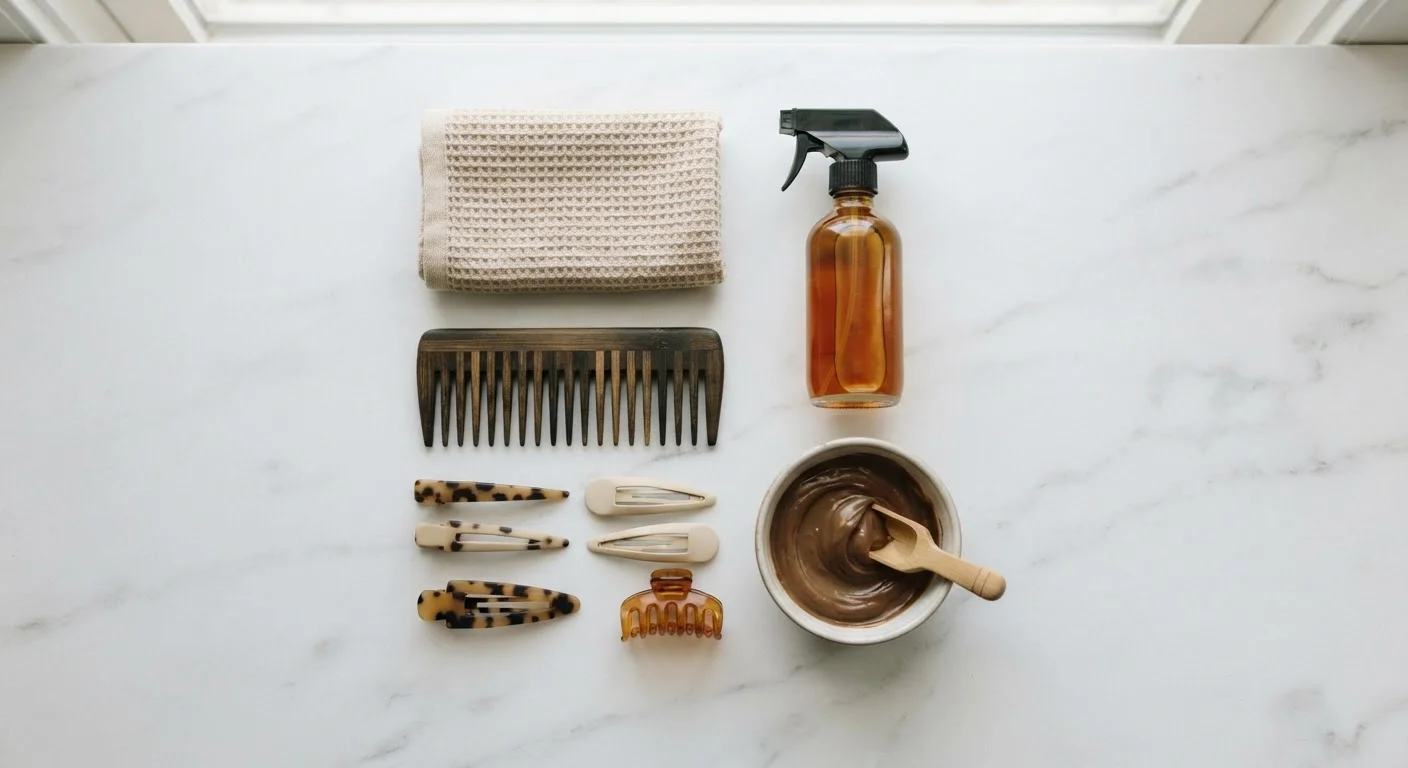
Below, you'll find the tools you'll want on hand, followed by the full grouped checklist.
Wide-tooth comb
Detangles wet or conditioner-coated hair with minimal breakage.
Shower cap or processing cap
Traps body heat to boost deep conditioning treatment absorption.
Spray bottle
Applies water or diluted leave-in product evenly for refresh and moisture.
Satin or silk pillowcase / bonnet
Reduces overnight friction that contributes to frizz, tangles, and breakage.
Clarifying shampoo
Removes accumulated mineral and product buildup during the monthly cleanse.
Handheld mirror
Allows a thorough monthly scalp inspection across the crown and nape.
Hair journal or notes app
Tracks what's working, what isn't, and seasonal changes in your routine.
The Full Weekly and Monthly Hair Care Checklist
Work through this checklist at your own pace. Not every item applies to every hair type - for example, those with fine or straight hair may cleanse more frequently, while those with tightly coiled or chemically treated strands often benefit from stretching wash days. Use the checklist as an audit, not a rigid prescription.
Weekly - Cleansing & Conditioning
Weekly - Scalp Maintenance
Weekly - Styling & Protection
Monthly - Deep Treatments
Monthly - Scalp & Growth Observation
Monthly - Routine Audit
Don't Overload Your Hair with Monthly Treatments
More is not always better when it comes to protein treatments and clarifying washes. Using a clarifying shampoo too frequently can strip essential moisture, while over-applying protein can make hair stiff and prone to snapping. Follow the frequency guidance on your product and pay attention to how your hair responds - these are signs, not suggestions.
If you color your hair, pair this checklist with targeted habits between appointments. Our guide on keeping color-treated hair healthy between salon visits covers the specifics of protecting a processed hair shaft.
Also worth exploring: if you've been curious about skipping shampoo entirely, our honest breakdown of co-washing explains who benefits and who may see buildup instead.
How to Use This Checklist Over Time
On your first pass, treat every item as an observation - check off what you already do, and flag gaps without judgment. From there, add one or two new habits per week rather than overhauling your entire routine at once. Gradual integration is more likely to stick.
Monthly, revisit the full checklist as a brief audit. Ask: Has my hair responded well? Has the season or my lifestyle changed in a way that calls for adjustments? Hair needs shift with humidity, diet, stress, hormonal changes, and age, so a routine that worked perfectly six months ago may need a small tune-up today.
Building a consistent hair care rhythm is not unlike building other sustainable self-care habits. If you're interested in bringing that same structured approach to other areas of your life, a weekly mental wellness check-in or a home maintenance calendar can extend the same principle to wellbeing and household management.
When to See a Dermatologist
Persistent scalp discomfort, sudden increases in shedding, visible bald patches, or skin changes on the scalp are not problems a product routine can solve. These may indicate a medical condition - such as alopecia, seborrheic dermatitis, or a nutritional deficiency - that requires professional evaluation. Don't delay seeking care in hopes that a new shampoo will fix it.
This article is for general informational purposes only. If you are experiencing significant hair loss, scalp pain, or other symptoms, consult a qualified dermatologist or healthcare professional.