

Key Takeaways
- Ingredients are listed in descending order by concentration, so the first five matter most.
- Active ingredients are the ones doing the targeted work - look for them near the top of the list.
- Fragrance, essential oils, and certain preservatives are common sensitizers worth watching for.
- Understanding a label helps you compare products and avoid duplicating potent actives.
- Even "natural" or "clean" labels require scrutiny - marketing terms are not regulated like ingredient names.
What you will need
Why the Ingredient List Is the Most Honest Part of Any Label
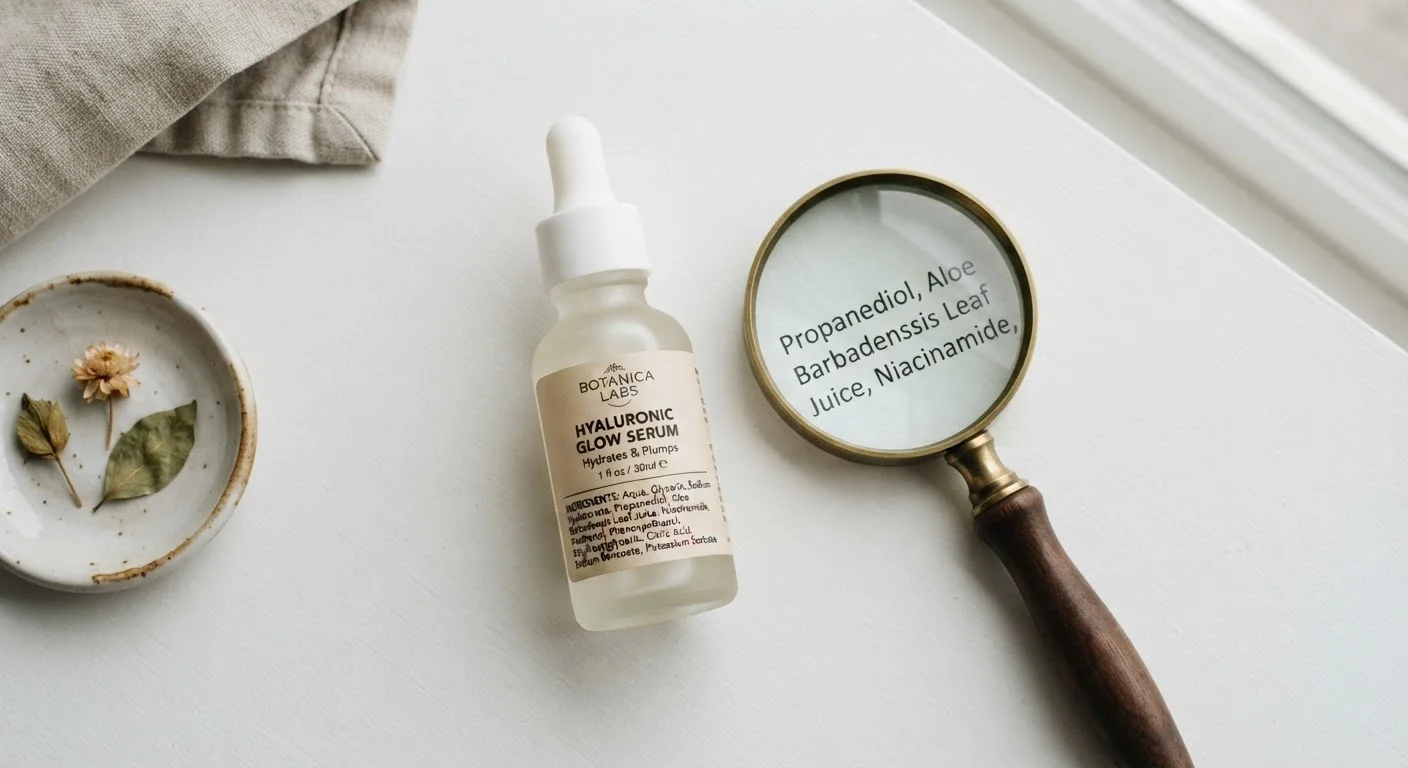
The front of a skincare product is marketing. The back - specifically the INCI list (International Nomenclature of Cosmetic Ingredients) - is where you find what's actually in the bottle. In the U.S., the FDA requires cosmetics to list ingredients in descending order of concentration. That one rule is your most useful tool as a consumer.
Front-label buzzwords like "brightening," "anti-aging," or "clean" are largely unregulated in the cosmetics space. The ingredient list, by contrast, follows a standardized naming convention that's consistent across brands and borders. Once you know how to read it, you can evaluate any product - regardless of packaging or price point.
If you're curious how this kind of label literacy translates beyond skincare, the same logic applies elsewhere. See how it works for food in our nutrition label walkthrough, and for hair products in our hair product label guide.
What you will need
How to Read the List: Step by Step
Follow these steps the next time you pick up a new product - in-store or online. You don't need a chemistry degree; you just need to know what to look for and where.
Find the full ingredient list
Look for the section labeled "Ingredients" - usually on the back or bottom of the packaging in small print. Online, it's often in the product details tab. This is the regulated INCI list, distinct from any marketing copy on the front or in the product description.
Read the first five ingredients closely
Because ingredients are listed by concentration (highest to lowest), the first five typically make up the bulk of the formula - often 80-90% of it. Water (aqua) is frequently first in leave-on products. What follows water tells you a lot about the formula's core purpose and texture.
Identify the active ingredients
"Actives" are ingredients with a specific, targeted function - exfoliating, brightening, treating acne, etc. In OTC (over-the-counter) drug products like acne treatments or sunscreens, actives are called out in a separate "Drug Facts" box above the cosmetic ingredient list. In purely cosmetic products, there's no separate box - you'll find actives within the main INCI list.
Scan for common sensitizers
Certain ingredients are more likely to cause reactions in sensitive or reactive skin types. Common ones to be aware of include: fragrance (parfum), alcohol denat. (denatured alcohol), essential oils (e.g., citrus, lavender, eucalyptus), and certain preservatives such as methylisothiazolinone. None of these are harmful for everyone - but knowing they're present helps you make an informed decision. For a deeper look at one of the most debated, see our fragrance in skincare explainer.
Note where preservatives and stabilizers appear
Ingredients like phenoxyethanol, ethylhexylglycerin, and parabens (e.g., methylparaben) are preservatives that keep products safe and shelf-stable. They typically appear toward the end of the list in small concentrations. Their presence is generally a sign of a well-formulated product - without them, water-based formulas can harbor bacteria.
One Percent Is the Threshold to Know
By convention, ingredients present at 1% or less can be listed in any order after the main ingredients. This means everything after the preservatives or fragrance may be present in very small amounts. Cosmetic chemists often use this as a formatting cue - watch for the shift from high-concentration to low-concentration ingredients around that zone.
Key Ingredients Worth Knowing by Name
A few categories of ingredients appear across many skincare products. Recognizing their INCI names helps you quickly assess what a formula is designed to do.
- Humectants (attract moisture): glycerin, hyaluronic acid (sodium hyaluronate), propylene glycol
- Emollients and occlusives (seal and soften): squalane, dimethicone, shea butter (butyrospermum parkii), petrolatum
- Exfoliating acids: glycolic acid, lactic acid (AHAs), salicylic acid (BHA) - see how AHAs and BHAs differ
- Antioxidants: ascorbic acid (vitamin C), tocopherol (vitamin E), niacinamide
- Retinoids: retinol, retinal, retinyl palmitate - learn more in our retinol explainer
- Sunscreen actives: zinc oxide, titanium dioxide, avobenzone - context from our daily sunscreen guide
"Free From" Claims Aren't Always What They Seem
Labels that say "fragrance-free" or "paraben-free" simply mean those specific ingredients aren't included - not that the product is gentler or safer overall. A fragrance-free product can still contain essential oils that cause reactions. Always read the full list rather than relying on what the front label highlights or excludes.
Understanding your skin type helps you prioritize which ingredient categories to seek out or avoid. And once you've chosen a product, our new product readiness checklist walks you through introducing it safely.
This article is for general informational purposes only and is not medical or dermatological advice. If you have a skin condition, known allergies, or concerns about an ingredient, consult a qualified healthcare or skincare professional.