

Key Takeaways
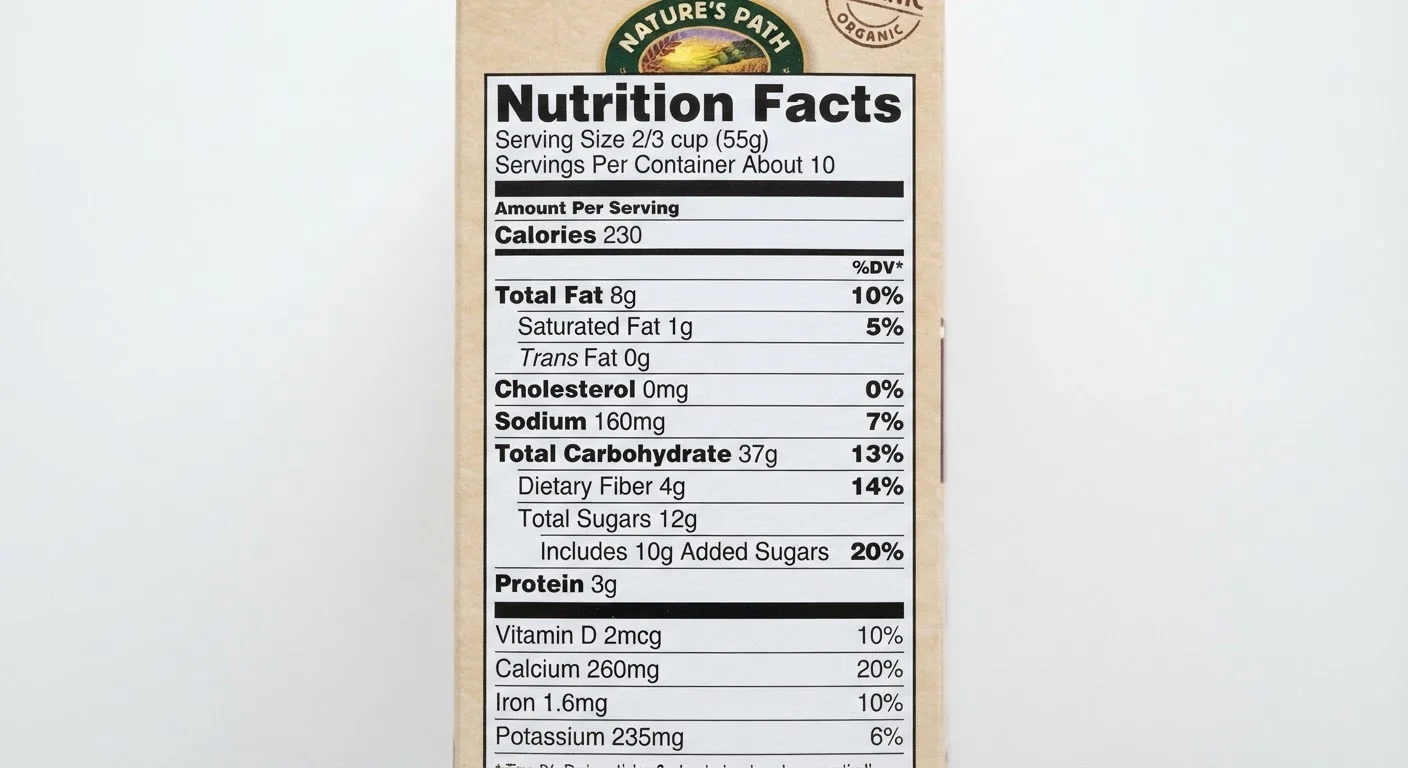
- All nutrient amounts on the label apply to one serving, not the whole package.
- Percent Daily Value quickly tells you whether a food is high or low in a given nutrient.
- Added sugars are listed separately from total sugars so you can spot hidden sweeteners.
- Sodium and saturated fat are nutrients most Americans benefit from monitoring.
- Fiber, vitamins, and minerals are nutrients many Americans fall short on - look for higher %DV here.
Start here
Why the Label Exists and What It Covers
Next
Serving Size: The Starting Point for Everything
Then
Calories, Macronutrients, and What They Mean
When you're ready
Percent Daily Value: A Practical Shortcut
Go deeper
Micronutrients and Added Sugars
Why the Label Exists and What It Covers
The Nutrition Facts label is a federally standardized panel required by the U.S. Food and Drug Administration (FDA) on most packaged foods. Its purpose is straightforward: give consumers consistent, comparable information about the nutritional content of what they're eating. The current label format - updated in 2016 and phased in by 2020 - reflects decades of nutrition science and real-world eating patterns.
Every label follows the same structure, top to bottom: serving size, calories, macronutrients, sodium, fiber, sugars, and micronutrients. Once you understand that structure, reading any label becomes a repeatable skill rather than a guessing game. This guide walks through each section so you can use the panel confidently at the grocery store or in your kitchen.
Serving Size
The standardized amount of food used as the reference unit on the Nutrition Facts label. All nutrient values listed apply to this amount, not the full package.
Percent Daily Value (%DV)
A percentage showing how much of a nutrient one serving provides relative to the recommended daily intake for an average adult on a 2,000-calorie diet.
Macronutrients
The three main energy-providing nutrients in food: fat, carbohydrates, and protein. Each plays a distinct role in how the body functions and gets energy.
Added Sugars
Sugars that are added to food during processing or preparation, as opposed to sugars that occur naturally in ingredients like fruit or milk.
Dietary Fiber
A type of carbohydrate the body cannot fully digest. It supports digestive health and is a nutrient many Americans don't consume in sufficient amounts.
Micronutrients
Vitamins and minerals the body needs in smaller amounts to support a wide range of functions, from bone health to immune response.
Serving Size: The Starting Point for Everything
The serving size appears at the very top of the label and is the reference unit for every number that follows. All calorie counts and nutrient amounts are calculated per serving - not per package. This distinction matters enormously with multi-serving containers.
If a bag of chips lists 150 calories per serving and contains three servings, the bag contains 450 calories total. The serving size is set by the FDA based on typical consumption amounts from national survey data - it is a reference point, not a dietary recommendation about how much you should eat.
Always Check Servings Per Container First
Before reading any other number on the label, find 'servings per container.' If a package contains 2.5 servings and you eat the whole thing, every number on the label needs to be multiplied by 2.5. This single check prevents the most common misreading of nutrition labels.
Servings per container appears just below or alongside the serving size. Always check this number first - it gives you the full picture before you interpret anything else on the label.
Calories, Macronutrients, and What They Mean
Calories measure how much energy a serving provides. Below that, the label breaks down the three macronutrients - fat, carbohydrates, and protein - each of which plays a distinct role in the body.
- Total Fat is further divided into saturated fat and trans fat. Saturated fat is worth monitoring for cardiovascular health; industrially produced trans fat has been largely removed from the U.S. food supply but may still appear in trace amounts. For more context, see our plain-language guide to dietary fats.
- Total Carbohydrate includes dietary fiber, total sugars, and added sugars as sub-entries. Fiber supports digestive health and is a nutrient many Americans don't get enough of.
- Protein is listed in grams. The label does not currently show a %DV for protein for most foods because protein deficiency is uncommon in the U.S. general population.
Cholesterol and sodium follow the fat section. Both have %DV figures because most dietary guidance focuses on limiting them - particularly sodium, which many Americans consume well above recommended levels.
Percent Daily Value: A Practical Shortcut
The right-hand column of the label shows Percent Daily Value (%DV) for most nutrients. This figure answers one question: does this serving give you a little or a lot of this nutrient relative to a full day's needs?
The FDA's general rule of thumb is simple: 5% DV or less is low; 20% DV or more is high. You can apply this without knowing any specific daily targets. A food with 25% DV of sodium per serving is high in sodium. A food with 15% DV of fiber is a meaningful source.
The 2,000-Calorie Reference Explained
The 2,000-calorie baseline used for %DV calculations is a population-level reference, not a target for every person. Children, older adults, and highly active individuals all have different needs. Use %DV figures as a tool for comparing foods relative to one another, keeping in mind they are approximations rather than personalized prescriptions.
%DV is calculated based on a 2,000-calorie reference diet - a standard used for labeling purposes. If your actual calorie needs differ significantly, the %DV figures are still useful as relative comparisons between foods, even if the absolute targets don't match your situation. For a broader look at putting these nutrients together at mealtime, see building a balanced meal without a formula.
Micronutrients and Added Sugars
Near the bottom of the label, you'll find vitamins and minerals - currently required disclosures include Vitamin D, calcium, iron, and potassium. These are nutrients the FDA identified as commonly under-consumed in the American diet. Higher %DV values here are generally a good sign. To understand how vitamins and minerals function differently in the body, our guide to vitamins vs. minerals breaks it down clearly.
Added sugars now appear as a required sub-line under total sugars, with their own %DV. This is one of the most significant updates to the modern label. Naturally occurring sugars in whole fruit or plain dairy behave differently in context than sugars added during manufacturing - health guidance generally targets added sugars specifically for reduction. For a deeper look, see our article on added sugar vs. natural sugar.
Once you can move through the label top to bottom - serving size, calories, macros, %DV, and micronutrients - you'll have a reliable, repeatable method for evaluating any packaged food. Pair this skill with a practical grocery shopping checklist to put it into action every week.
This article is for general informational and educational purposes only and is not a substitute for advice from a registered dietitian or other qualified healthcare professional. Individual nutritional needs vary; consult a professional for guidance specific to your health situation.