

Key Takeaways
- Daily sunscreen use is widely considered one of the most effective tools for preventing premature skin aging.
- SPF numbers reflect UVB protection only - look for 'broad-spectrum' to cover UVA rays too.
- UV exposure happens even on cloudy days and through windows, which is why dermatologists recommend year-round use.
- Reapplication every two hours matters as much as initial application, especially outdoors.
- Sunscreen works alongside - not instead of - other protective behaviors like shade-seeking and protective clothing.
Sun Protection Factor (SPF)
SPF is a measure of how well a sunscreen protects skin from UVB rays - the type of ultraviolet radiation most associated with sunburn and skin damage. The number indicates how much longer protected skin can be exposed to UVB before burning, compared to unprotected skin. An SPF 30 product, for example, filters out roughly 97% of UVB rays under ideal testing conditions.
SPF measures only UVB protection. Broad-spectrum labeling indicates a product also protects against UVA rays, which penetrate more deeply and contribute to premature aging and long-term cellular damage.
Why UV Exposure Is a Daily Skin Concern
Ultraviolet radiation from the sun reaches your skin every single day - whether you're commuting, sitting near a window, or spending an afternoon outdoors. UV light exists on two spectrums that matter for skin health: UVA and UVB.
UVB rays are shorter-wave and primarily responsible for sunburn. UVA rays penetrate more deeply into the dermis - the skin's inner layer - and are strongly linked to photoaging: the fine lines, uneven texture, and loss of elasticity that build up over years of unprotected sun exposure. Crucially, UVA intensity stays relatively consistent throughout the day and across seasons, and it passes through glass. That daily drive to work adds up.
The cumulative nature of UV damage is exactly why dermatologists frame daily sunscreen as non-negotiable rather than situational. It's not just about beach days - it's about the quiet, consistent exposure that accumulates across a lifetime.
UVA Rays and Window Glass
Standard window glass blocks most UVB rays but allows UVA rays to pass through. This means that time spent near windows - at home, in the office, or while driving - still exposes your skin to the UV wavelengths most associated with long-term aging effects. Broad-spectrum sunscreen addresses this type of exposure even when you're technically indoors.
Understanding SPF: What the Numbers Actually Tell You
SPF numbers can feel confusing, especially because the jumps - 15 to 30 to 50 to 100 - don't scale the way you might expect. Here's what they mean in practice:
- SPF 15 blocks about 93% of UVB rays
- SPF 30 blocks about 97% of UVB rays
- SPF 50 blocks about 98% of UVB rays
- SPF 100 blocks about 99% of UVB rays
The diminishing returns above SPF 50 are real, which is why most dermatologists focus their guidance on consistent use of at least SPF 30 rather than chasing higher numbers. A sunscreen you apply well every day outperforms a high-SPF product applied unevenly or skipped entirely.
The other key phrase to look for on a label is broad-spectrum. This tells you the formula is designed to protect against both UVA and UVB rays. SPF alone only guarantees UVB coverage.
97%
UVB rays blocked by SPF 30
SPF 30 is the minimum daily-use level most dermatologists recommend, as it filters out the large majority of UVB radiation under standard application conditions.
Up to 80%
UV rays that pass through cloud cover
Research cited by public health organizations indicates that significant UV radiation reaches the skin even on overcast days, supporting the case for year-round daily use.
2 hours
Reapplication interval for outdoor exposure
General dermatological guidance recommends reapplying sunscreen every two hours when outdoors, or immediately after swimming or heavy perspiration.
Chemical vs. Mineral Sunscreens: A Plain Explanation
Sunscreens work through two general mechanisms, and both are effective when used correctly:
- Mineral sunscreens
- Contain active ingredients like zinc oxide or titanium dioxide. These physically sit on the skin's surface and reflect or scatter UV light. They tend to be well-tolerated by sensitive skin and begin working immediately upon application.
- Chemical sunscreens
- Contain organic compounds - such as avobenzone, octinoxate, or oxybenzone - that absorb UV radiation and convert it to heat. These are often lighter in texture and may be preferable for daily wear under makeup. They typically require about 15-20 minutes to become fully effective after application.
Your choice between them comes down to personal preference, skin sensitivity, and how the formula feels on your skin. For a broader look at how to evaluate what goes into your skincare products, our guide to reading skincare ingredient lists can help demystify labels.
How to Make Daily Sunscreen a Habit That Actually Sticks
The gap between knowing sunscreen matters and actually applying it every day is a real one - and it's usually about convenience, texture, or forgetting. A few practical approaches can help:
Make Reapplication Easy When You're Out
Powder sunscreens and mist-style SPF sprays are designed to be applied over makeup and are easy to carry in a bag. If you're spending more than a couple of hours outdoors, reapplication matters just as much as that morning layer. Keep a travel-sized option with you on days you'll be outside.
- Attach it to an existing step. Sunscreen fits naturally as the last step of a morning skincare routine, just before makeup. Our everyday skincare routine walkthrough shows exactly where it lands in the sequence.
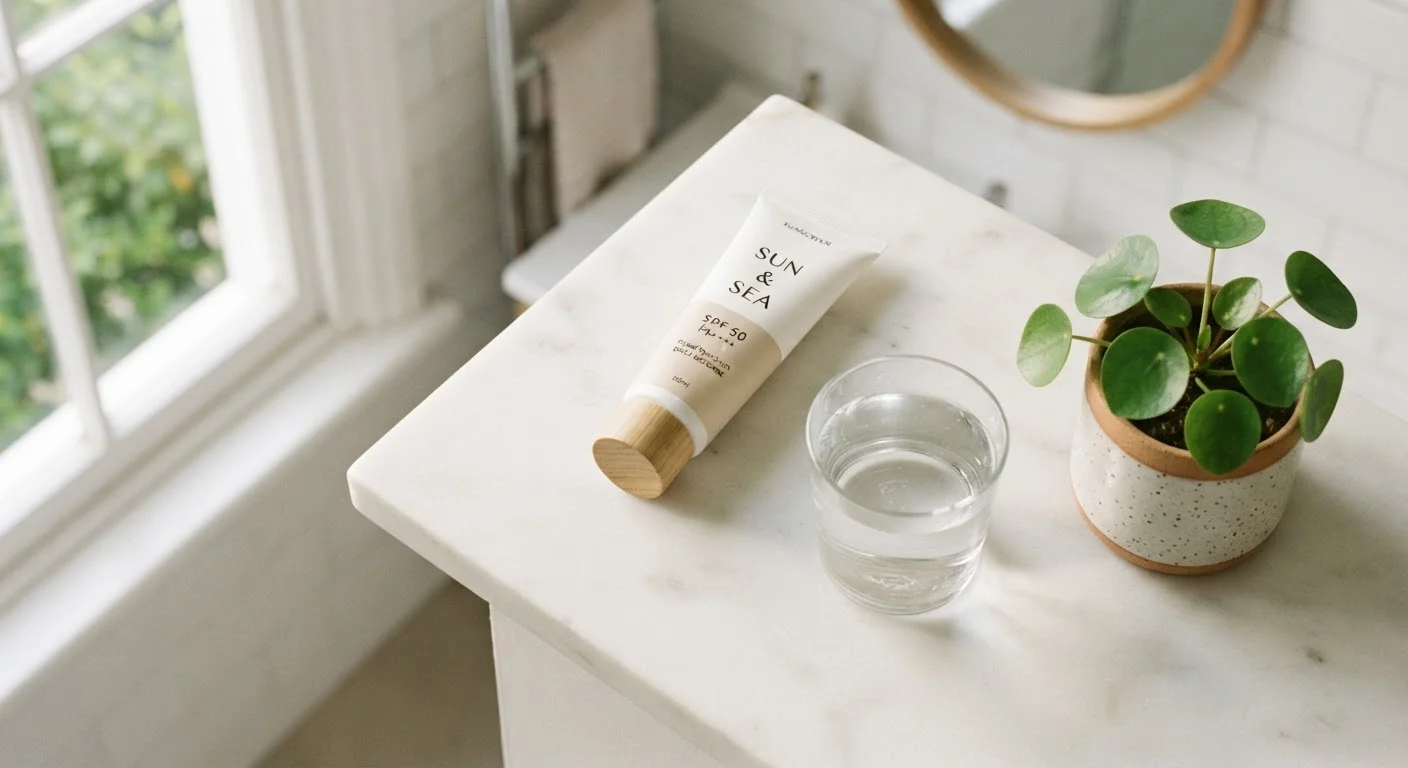
- Keep it accessible. A product that lives on your bathroom counter is more likely to be used than one tucked in a cabinet.
- Reapply when spending extended time outdoors. General guidance is to reapply every two hours, or after swimming or heavy sweating.
- Match the formula to your lifestyle. Lightweight, tinted, or fluid formulas can reduce the resistance that comes with heavier textures - especially for those using actives like retinol, which can increase sun sensitivity. Speaking of which, our article on retinol and how to use it carefully covers why sun protection matters even more when you're using certain ingredients.
Sunscreen is one piece of a broader skin health picture. Protective clothing, shade, and sensible timing of outdoor activities all contribute - and a strong skin barrier helps your skin respond better overall. For more on that, see our piece on skin barrier health.
This article is for general informational and educational purposes only and is not a substitute for personalized advice from a qualified dermatologist or healthcare provider.