

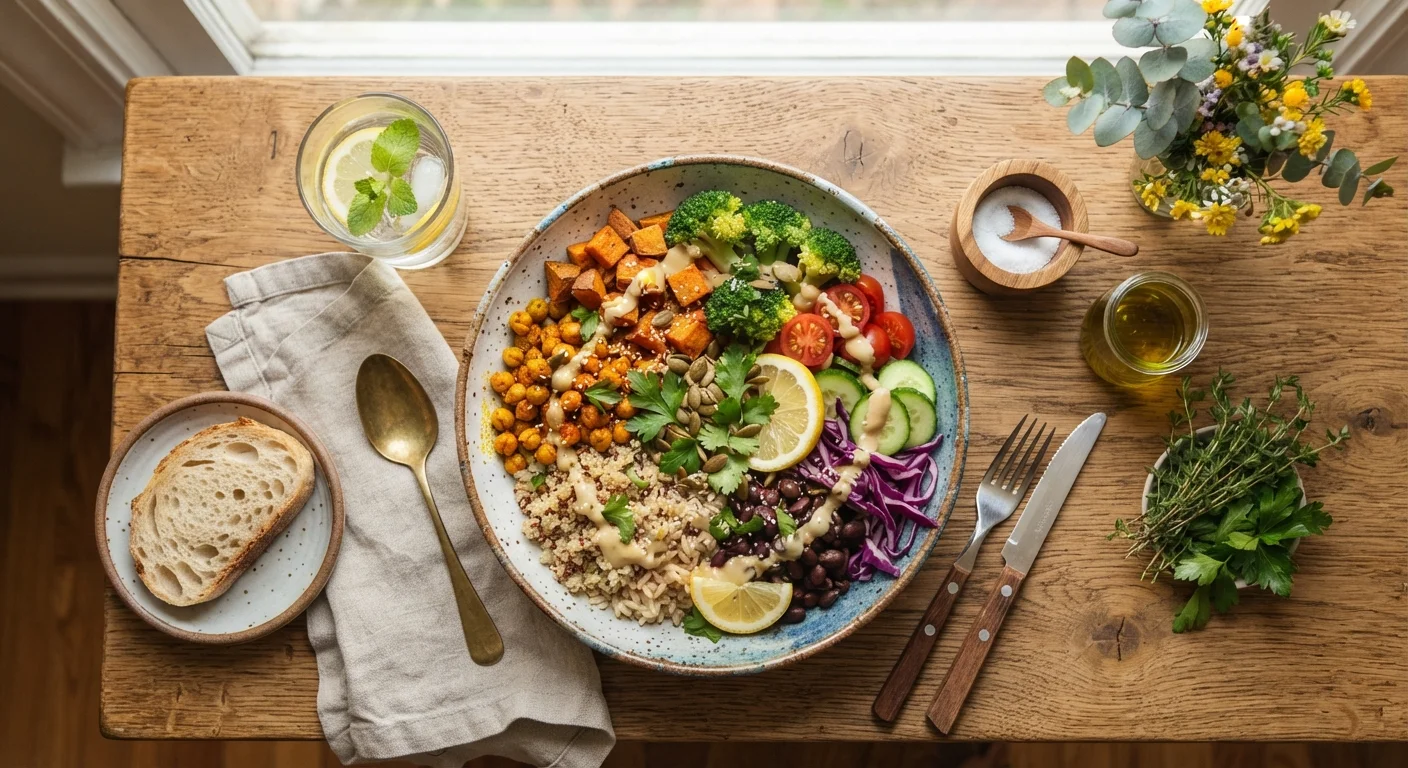
Key Takeaways
- A balanced meal can be built using a simple visual framework rather than calorie counting.
- Combining a protein source, fiber-rich carbohydrate, vegetables, and healthy fat covers most nutritional bases.
- Flexibility and variety matter more than rigid adherence to any single eating system.
- Small, consistent shifts in how you assemble meals tend to create more lasting habits than strict rules.
Why 'Balanced' Doesn't Need to Be Complicated
The idea of eating a balanced meal has been tangled up in diet culture for decades - macros to calculate, portions to weigh, rules to memorize. In reality, the nutritional science behind a well-composed meal is more accessible than that. Most major dietary guidelines, including those from the U.S. Department of Agriculture, emphasize patterns over precision: eat a variety of foods, include vegetables, lean proteins, whole grains, and healthy fats, and you're covering the fundamentals.
For most people without specific medical conditions, there's no need for a rigid formula. What helps is a mental framework - a loose structure you can apply to any meal, in any kitchen, on any budget. Think of it as organizing your plate into functional parts rather than tracking nutrients to the decimal.
If you want to sharpen your understanding of what's actually in packaged foods, reading a Nutrition Facts label is a useful companion skill - but it's not a prerequisite for building better meals at home.
This Is General Guidance, Not Medical Advice
The principles in this article are based on widely accepted dietary guidance and are intended for generally healthy adults. Individual nutritional needs vary based on age, health status, medications, and other factors. If you have a chronic condition, food allergy, or specific health concern, consult a registered dietitian or your healthcare provider before making significant dietary changes.
The Core Building Blocks of Any Balanced Meal
Rather than percentages or formulas, think in terms of four functional categories that most well-rounded meals share:
- A protein source - supports muscle repair, satiety, and metabolic function. Options include eggs, fish, poultry, legumes, tofu, or dairy.
- A fiber-rich carbohydrate - whole grains, starchy vegetables, or legumes provide sustained energy and support digestive health.
- Non-starchy vegetables - the most nutrient-dense, lowest-calorie category. These provide vitamins, minerals, and phytonutrients across a wide variety of colors and types.
- A source of healthy fat - olive oil, avocado, nuts, or fatty fish help with fat-soluble vitamin absorption and contribute to fullness.
These four elements don't need to be present in exact proportions. A stir-fry heavy on vegetables with tofu, brown rice, and a drizzle of sesame oil covers all four. So does a grain bowl, a simple sandwich on whole-grain bread, or a veggie-loaded omelet. The framework travels across cuisines and cooking styles.
Use your plate as a visual guide rather than a measuring tool
Visual portioning - such as filling roughly half your plate with vegetables, a quarter with a protein source, and a quarter with a whole grain - offers practical structure without requiring precise measurement. This approach is endorsed by many public health frameworks as a realistic, repeatable method for home cooks.
Prioritize variety across the week, not perfection at every meal
No single meal needs to contain every nutrient. Nutritional balance is better understood across days and meals rather than within a single sitting. Aiming for variety reduces the pressure on each individual meal and broadens your overall nutrient intake.
Anchor each meal around a fiber-protein pairing
Protein and dietary fiber both slow digestion and contribute to satiety, reducing the likelihood of energy crashes or overeating later. Building meals around these two elements first tends to naturally crowd out less nutritious options.
Add color as a proxy for micronutrient diversity
Different pigments in plant foods - such as the lycopene in tomatoes, the beta-carotene in carrots, or the anthocyanins in blueberries - reflect different phytonutrient and vitamin profiles. Eating a range of colors is a practical heuristic for broadening micronutrient intake without needing to memorize specific vitamins.
Include a small healthy fat component at most meals
Fat-soluble vitamins (A, D, E, and K) require dietary fat for absorption. Meals that are very low in fat may limit how well your body utilizes the micronutrients in the vegetables and grains you're eating. A modest amount of healthy fat also supports satiety.
Quick Ways to Start Building Better Meals Today
Knowing the framework is one thing; applying it consistently is another. The good news is that the most effective changes tend to be small and sustainable rather than dramatic overhauls. A few targeted shifts can significantly improve the nutritional quality of meals without requiring a complete kitchen reset.
If you want to stock your kitchen in a way that makes this easier, a weekly grocery checklist built around better nutrition can remove a lot of the decision-making before you even reach the stove. And if you're curious about how this connects to broader fitness goals, the Fitness & Exercise hub covers how nutrition and movement work together.
Building Habits That Actually Stick
The research on dietary behavior consistently shows that sustainability - not perfection - is the strongest predictor of long-term health outcomes. A nutritional pattern you can maintain across busy weeks, tight budgets, and varying appetites will do more for your health than a stricter plan you abandon after a month.
80%
Of chronic disease risk tied to lifestyle factors
The World Health Organization estimates that a large proportion of heart disease, stroke, and type 2 diabetes cases are preventable through dietary and lifestyle changes.
1 in 10
Americans meet vegetable intake recommendations
According to CDC data, only about 1 in 10 U.S. adults consumes the recommended daily amount of vegetables - underscoring how much room there is for practical improvement.
Variety also matters independent of specific choices. Eating a wide range of plant foods, for example, is associated with greater gut microbiome diversity, which researchers increasingly link to general health. This doesn't require expensive specialty items - rotating between different vegetables, grains, and legumes throughout the week achieves the same goal.
It's worth noting that nutritional needs shift across life stages. Children, older adults, pregnant individuals, and those managing chronic conditions may have specific requirements that go beyond general guidance. For those groups, consulting a registered dietitian or healthcare provider is strongly recommended rather than relying on general frameworks alone. See how nutrient needs shift across life stages for a broader overview.
You might also explore what current evidence says about ultra-processed foods and their nutritional trade-offs - a useful context for understanding what to minimize without over-restricting.
“The best diet is one you can actually follow. Dietary patterns that are flexible, enjoyable, and sustainable over time consistently outperform those that are technically 'optimal' on paper but difficult to maintain.”
— Walter Willett, Professor of Epidemiology and Nutrition, Harvard T.H. Chan School of Public Health
This article is for general informational and educational purposes only and is not a substitute for personalized medical or dietary advice. Consult a qualified healthcare professional or registered dietitian before making significant changes to your diet, especially if you have an existing health condition.