

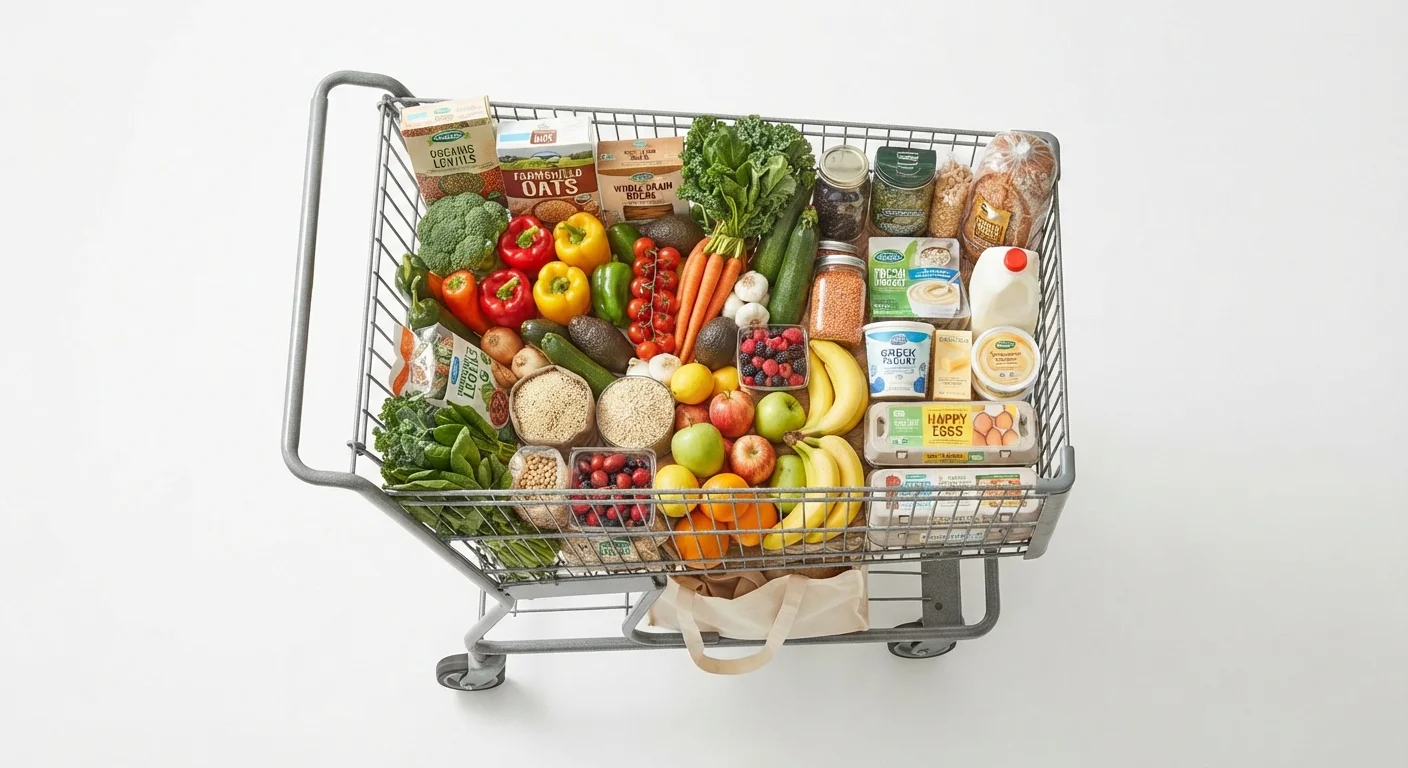
Key Takeaways
- Organizing your grocery list by food group helps ensure nutritional balance without rigid meal planning rules.
- Stocking versatile pantry staples reduces reliance on ultra-processed convenience foods during busy weeks.
- Shopping with a checklist can reduce impulse purchases and cut food waste over time.
- Frozen and canned options count - they are nutritionally comparable to fresh in most categories.
- Consistency in your weekly shop matters more than perfection in any single trip.
Summary
28 items · 20-40 minutes per weekly shop
Why a Grocery Checklist Supports Better Eating Habits
What ends up in your cart largely determines what ends up on your plate. Yet most people shop without a system - navigating aisles hungry, distracted, or working from a vague mental list. The result is often a mix of nutritious staples and impulse buys that don't quite add up to balanced meals.
A structured weekly checklist changes that dynamic. Rather than tracking every calorie or following a rigid meal plan, this approach asks a simpler question: does your cart cover the key food groups your body needs? It's a flexible framework, not a formula - which is exactly what makes it sustainable.
If you'd like to take the next step after shopping, see our guide to building a balanced meal without a formula for practical ways to assemble what you've bought into nourishing, satisfying plates.
Before You Shop
Fruits and Vegetables
Protein Sources
Whole Grains and Starchy Staples
Dairy or Fortified Alternatives
Healthy Fats and Pantry Staples
Hydration
What to Bring to the Store (and Why It Matters)
Before you walk through the doors, a little preparation goes a long way. Knowing what you already have at home, what you've been eating, and roughly how many meals you're planning for can make the difference between a purposeful shop and an expensive, stressful one.
Grocery list app or notepad
Organize your checklist by store section to keep your shop efficient and reduce forgotten items.
Nutrition label reference
Use the Nutrition Facts label on packaged goods to compare sodium, added sugars, and fiber content between similar products.
Meal planning worksheet
Map out a rough meal plan for the week so your cart quantities match what you'll actually cook.
Reusable shopping bags
Keep produce and proteins separated and prevent cross-contamination during transport.
It's also worth thinking about your pantry and freezer before buying fresh items. A well-organized home kitchen reduces waste and makes weeknight cooking far less effortful - our guide to organizing your pantry, fridge, and freezer walks through exactly how to set that up.
Don't Overbuy Perishables Without a Plan
Fresh produce and proteins spoil quickly if you don't have a rough plan for using them. Buying more than you'll realistically cook in a week often leads to wasted food and wasted money. If your week is unpredictable, lean on frozen vegetables and shelf-stable proteins as flexible backups. Freezing fresh items before they go bad is also a practical option.
One more consideration: grocery shopping has a real budget dimension. Building a nutritious cart doesn't require spending more - it requires spending intentionally. For strategies on managing household food costs alongside your broader finances, the Budgeting Basics hub offers a useful starting point.
Individual Nutritional Needs Vary Significantly
This checklist is a general starting point for adults without specific dietary restrictions. People managing chronic conditions such as diabetes, kidney disease, or cardiovascular disease may need to follow different guidance for nutrients like carbohydrates, potassium, or saturated fat. If you have a diagnosed condition or follow a medically supervised diet, consult your healthcare provider or a registered dietitian before using this checklist as-is.
Using This Checklist Week After Week
The checklist above is designed to be reused - not as a rigid rule set, but as a reliable starting point you adapt to your household's tastes, schedule, and budget. If your cart hits most of the must items across food groups most weeks, you're building the kind of consistency that supports long-term healthy eating far more effectively than any short-term overhaul.
Pay attention to the sodium content of packaged staples you add to your cart. Many common grocery items - canned soups, sauces, deli meats, and condiments - contain more sodium than people expect. Our article on hidden sodium in everyday foods breaks down which categories to watch most closely.
Similarly, if convenience foods are a regular part of your shop, it's worth understanding the trade-offs. Read our balanced overview of ultra-processed foods and what the evidence says to make more informed decisions without overcorrecting.
This article is for general informational and educational purposes only. It is not a substitute for personalized nutrition advice from a registered dietitian or qualified healthcare professional. Individual dietary needs vary - consult a professional before making significant changes to your diet, especially if you have a medical condition or specific health concern.