

Key Takeaways
- American households waste an estimated 30-40% of their food supply, much of it preventable with better storage habits.
- Assigning dedicated zones in each storage area reduces the chance of forgotten or expired items.
- The FIFO (first in, first out) method - rotating older items to the front - is the single most effective anti-waste habit.
- Refrigerator temperature should be kept at or below 40°F; freezer at 0°F for safe, long-term storage.
- A consistent weekly reset keeps any organizational system from backsliding into clutter.
Why Food Organization Pays Off
Disorganized food storage quietly costs American households real money. According to the USDA, food waste represents roughly 30-40% of the U.S. food supply - a significant share of which originates in the home. When items get buried behind other groceries, they expire before anyone remembers they exist.
30-40%
U.S. food supply lost to waste
According to USDA estimates, this loss occurs across the supply chain, with a significant portion at the consumer level.
40°F
Safe maximum refrigerator temperature
The FDA recommends keeping your refrigerator at or below 40°F to slow bacterial growth and keep food safe.
0°F
Recommended freezer temperature
The USDA states that food stored at 0°F remains safe from bacterial spoilage indefinitely, though quality degrades over time.
Beyond the financial impact, a well-organized kitchen simply reduces daily friction. When you know what you have and where it lives, meal planning becomes faster, grocery lists get more accurate, and the pre-dinner scramble shrinks considerably. Thoughtful food storage is genuinely one of the higher-return household improvements you can make, and it costs little beyond time and intention.
If you're just beginning to tackle household organization more broadly, this guide to starting the decluttering process offers a practical framework for building momentum without burnout.
Pantry Organization Fundamentals
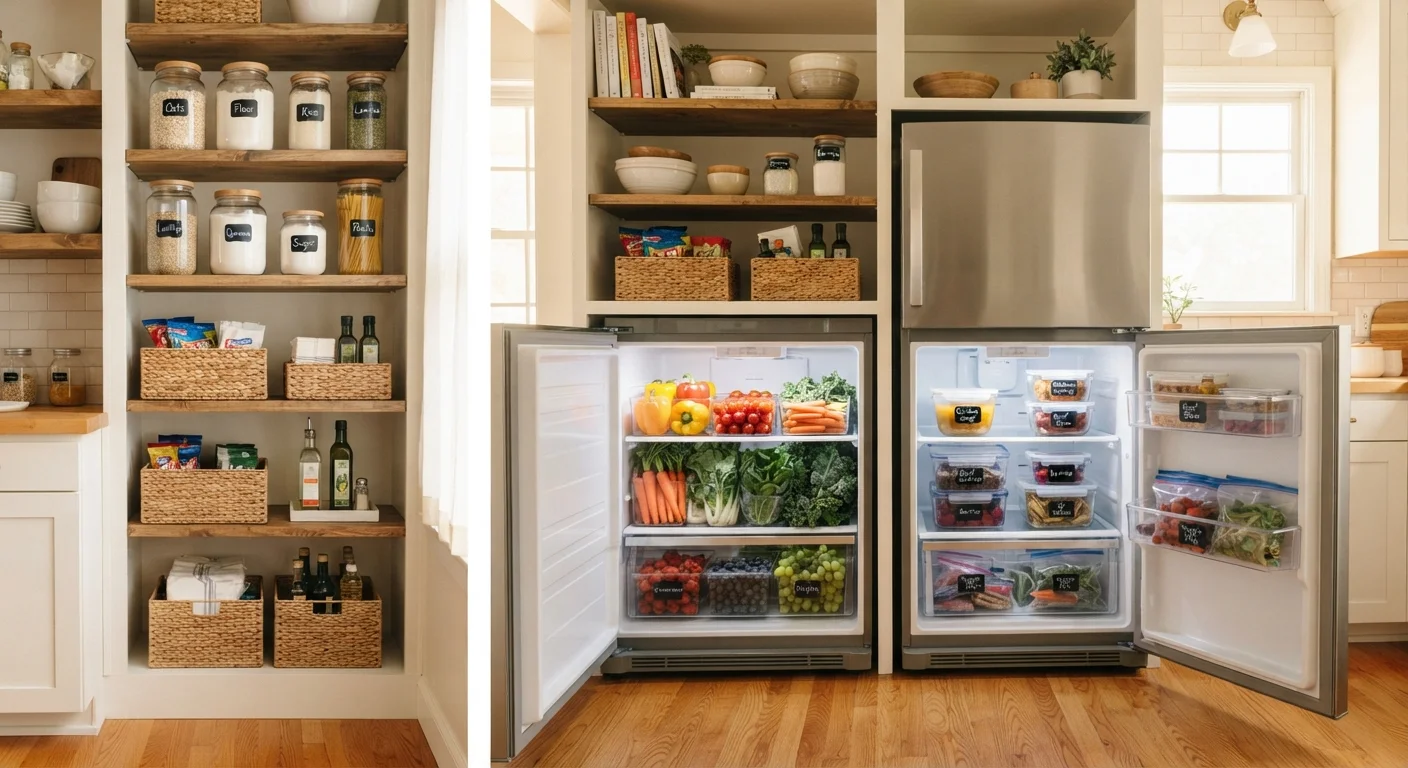
A functional pantry starts with a full audit. Pull everything out, discard expired items, and group what remains by category: grains and pasta, canned goods, baking supplies, snacks, condiments, and cooking oils. Categorizing before you put anything back prevents the random stacking that makes items invisible.
Before restocking, take a photo of your pantry interior with your phone. It becomes an instant reference list at the grocery store, preventing duplicate purchases.
Duplicate buying is one of the leading drivers of pantry clutter and food expiration, and this simple habit addresses it with no extra cost or effort.
Designate one shelf or bin as your 'use first' zone and move anything approaching its expiration date there immediately. Cook from this zone before reaching for anything else.
Expiring items hidden throughout a pantry are easy to overlook. A dedicated 'use first' station makes the priority visible to everyone in the household.
Once categorized, apply the FIFO principle - first in, first out. Place newer purchases behind older ones so that you naturally reach for what needs to be used first. This single habit, applied consistently, eliminates most pantry waste.
For deep or corner shelves, consider using turntables (sometimes called lazy Susans) to bring items at the back within easy reach. Stackable bins work well for grouping packets and smaller items that would otherwise topple. Clear containers with labels are useful for bulk staples like flour, oats, and rice - they make quantities visible at a glance so you're never caught short mid-recipe.
Check Storage Conditions Before Buying in Bulk
Buying staples in bulk can reduce cost per unit, but only if storage conditions allow it. Improper temperature, humidity, or light exposure can shorten shelf life significantly, negating any savings. Before stocking up, confirm you have an appropriate cool, dry, and dark space for long-term storage of each item type.
Also think about storage conditions. Dry goods last longest in a cool, dark location away from heat sources like the stove or dishwasher. Onions and potatoes should be kept separate - they each emit gases that accelerate spoilage in the other. For design decisions about cabinet versus open storage in your kitchen, this comparison of open shelving and closed cabinets covers practical trade-offs.
Refrigerator Zones and Best Practices
Most refrigerators have distinct temperature zones, and matching food to zone is fundamental to both safety and longevity. Here's a general breakdown:
- Top shelves: Most consistent temperature - good for leftovers, drinks, and ready-to-eat items.
- Middle shelves: Dairy products like yogurt, cheese, and eggs do well here.
- Bottom shelves: The coldest spot; ideal for raw meat, poultry, and fish. Always store raw proteins on the lowest shelf to prevent drips from contaminating other food.
- Crisper drawers: Designed to maintain humidity. High-humidity drawer suits leafy greens and vegetables; low-humidity suits fruits.
- Door shelves: The warmest part of the fridge - appropriate for condiments and juice, not for milk or eggs despite popular practice.
Never Store Raw Meat Above Ready-to-Eat Foods
Storing raw poultry, beef, or seafood above cooked foods or produce in the refrigerator is a food safety risk. Juices from raw proteins can drip and contaminate anything below, potentially causing foodborne illness. Always place raw proteins on the lowest shelf, ideally in a sealed container or on a dedicated tray.
Apply FIFO here too: when you unpack groceries, slide older items forward so they're used before newer ones. Keep the fridge from being packed so tightly that air can't circulate. Good airflow helps every item stay at a consistent temperature.
Freezer Organization and Food Safety
The freezer is often the most under-utilized storage area in the home - partly because items go in and never come out. An organized freezer changes that. Group items into clear categories using bins or sections: proteins, vegetables, prepared meals, bread, and desserts. Label everything with the item name and the date it was frozen.
“The freezer is one of the most powerful tools for reducing food waste in the home - but only when people know what's actually in it. A simple labeling system transforms it from a black hole into a resource.”
— Dana Gunders, Food waste researcher and author of the Waste-Free Kitchen Handbook
A chest freezer benefits from vertical dividers or mesh bags to separate categories, since items at the bottom can easily become inaccessible. An upright freezer's shelves naturally create zones, making organization somewhat easier to maintain.
From a food safety standpoint, the USDA recommends keeping your freezer at 0°F (-18°C). While frozen foods technically remain safe indefinitely at this temperature, quality does decline over time. Ground meat is best used within 3-4 months; whole poultry can last up to a year. Labeling with freeze dates ensures you actually use what you store.
Avoid Refreezing Thawed Proteins
Thawing meat at room temperature and then refreezing it creates conditions where harmful bacteria can multiply to unsafe levels. Always thaw proteins in the refrigerator, in cold water, or in the microwave if cooking immediately. If thawed in the fridge, they can be refrozen safely - though quality may suffer.
One habit that pays dividends: do a quick freezer sweep before each grocery trip. It takes two minutes and tells you exactly what you already have, preventing redundant purchases. A well-managed freezer directly supports smarter household budgeting by stretching grocery spending further.
Maintaining Your System Long-Term
The most thoughtfully built organizational system will degrade without routine maintenance. The key is a lightweight weekly reset rather than an infrequent deep overhaul. Take five to ten minutes each week - often best timed just before the grocery run - to check expiration dates, move older items forward, and wipe down shelves if needed.
Make a note of what you actually wasted that week. Over a few weeks, patterns emerge: maybe it's always fresh herbs, or yogurt bought in bulk. Adjusting purchasing habits based on observed waste is among the most concrete ways food organization connects to household savings goals.
Organization Looks Different for Every Household
A system designed for a family of five will look very different from one designed for a single-person household. There is no universal blueprint. Focus on habits and principles - rotation, zoning, labeling - rather than copying a specific setup that may not fit your space, budget, or cooking style.
Avoid the common trap of over-organizing. Elaborate label systems and matching containers look appealing but require sustained effort to maintain. Simpler systems - consistent zones, clear containers, and a rotation habit - tend to outlast elaborate setups. For a broader look at when organizing advice backfires, this article on home organization myths offers a useful reality check.
Finally, involve everyone in your household. A system only one person understands will break down the moment that person is unavailable. Brief, clear labeling and intuitive zone placement make it easier for everyone to both find things and put them back correctly.