

Key Takeaways
- A capsule wardrobe is defined by intentional curation, not a strict item count.
- The concept works best when built around your real lifestyle, not an idealized one.
- Versatility - how many outfits a piece enables - is the core selection criterion.
- A capsule approach can reduce decision fatigue and morning stress for many people.
- It is not a one-time project; successful capsule wardrobes evolve with your life.
Capsule Wardrobe
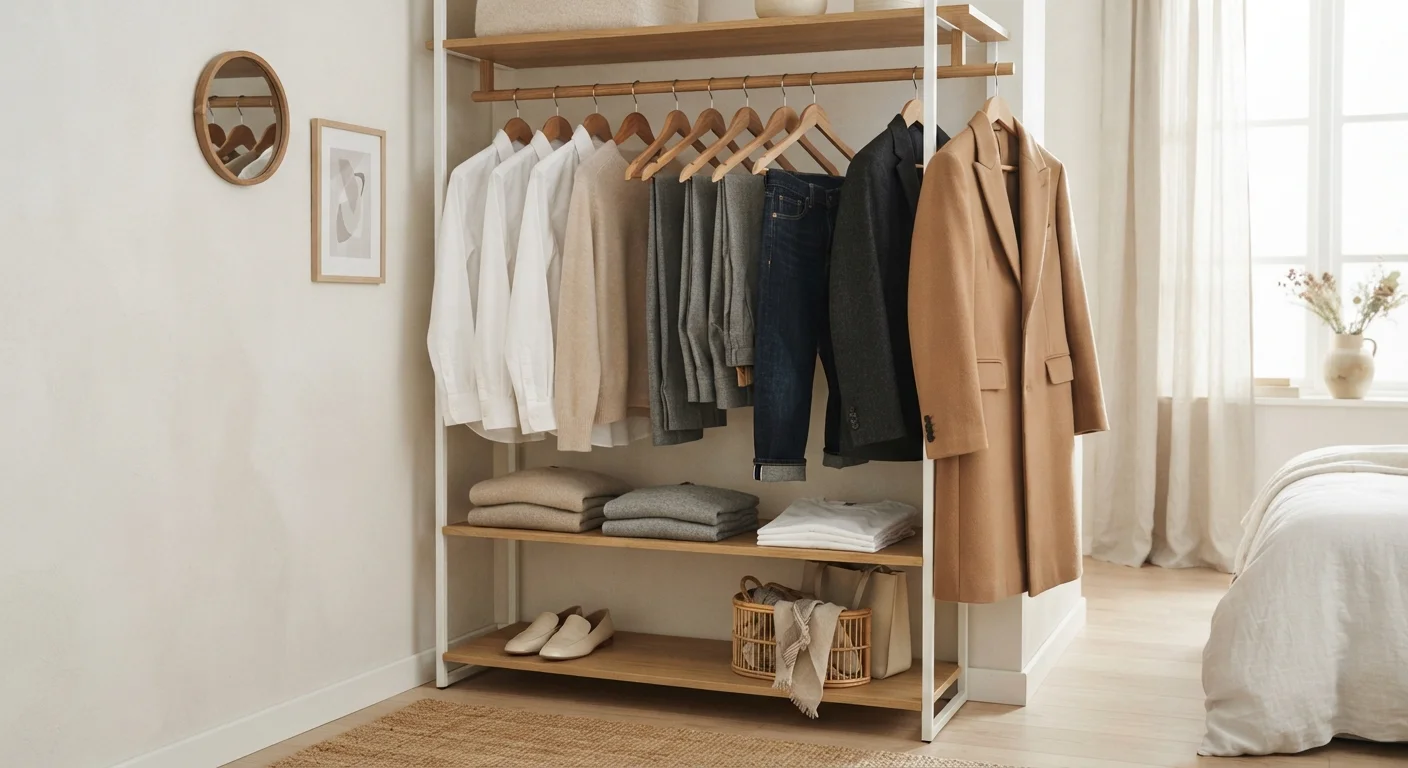
A capsule wardrobe is a curated collection of clothing pieces - typically between 25 and 50 items - chosen because they work well together and cover the majority of your everyday dressing needs. The idea is to own fewer things intentionally rather than accumulating clothes that rarely get worn. Each piece earns its place by being versatile, fitting well, and aligning with your actual lifestyle.
The term was coined by London boutique owner Susie Faux in the 1970s and popularized in the United States by designer Donna Karan, whose 1985 'Seven Easy Pieces' collection translated the concept into a commercial framework.
Where the Concept Comes From
The capsule wardrobe idea has been around for decades, but it resurfaces regularly because it addresses a persistent frustration: owning a closet full of clothes and feeling like you have nothing to wear. At its core, the concept is a response to accumulation - the slow drift toward owning more than you use.
Susie Faux's original framing was practical: a small set of quality, timeless pieces that could be refreshed seasonally with a few trend-driven additions. Donna Karan's commercial version in the 1980s made it aspirational. Today, the idea travels in minimalist and sustainability circles as much as fashion ones, which has broadened its appeal - and occasionally blurred what it actually means.
What hasn't changed is the underlying logic: a smaller, more intentional wardrobe should produce more usable outfits per item than a large, unfocused one.
What Makes It Work - and What Doesn't
The capsule wardrobe works when it's built around your actual life rather than a lifestyle you imagine having. A collection of tailored blazers and structured trousers makes sense if you work in an office five days a week. It makes much less sense if you work from home and spend weekends outdoors.
Versatility is the key criterion for every piece. Before adding something, the useful question is: how many different outfits does this enable? A well-fitting pair of dark jeans might combine with eight or ten other items you already own. A very specific novelty piece might pair with one or two. That ratio matters.
Where people run into trouble is treating the capsule wardrobe as a rigid ruleset - a fixed number, a mandated color palette, or a list copied from someone else's closet. Those frameworks can help as a starting point, but they tend to produce wardrobes that look good on paper and feel wrong in daily life. Outfit formulas are a related tool that can complement a capsule approach by making the pieces you own easier to deploy quickly.
Building One in Practice
The most practical starting point isn't shopping - it's auditing. Before buying anything, understanding what you already own and what actually gets worn gives you an honest baseline. A structured closet review can reveal patterns: which colors you actually reach for, which silhouettes you avoid, and which items have never left the hanger.
Start With What You Actually Wear
Before editing your wardrobe, spend two to four weeks paying attention to what you reach for without thinking. The items that appear repeatedly are your natural starting points - the foundation your capsule should be built around. Don't discard things you love just because they don't fit someone else's capsule template.
From there, the process involves identifying genuine gaps - not wish-list items, but pieces that would make existing things more useful. If you have five tops and one pair of pants, you don't have a wardrobe gap; you have an imbalance. If everything you own requires dry cleaning and your lifestyle doesn't support that, you have a practicality problem.
Balancing neutrals and more expressive pieces is part of the equation too. How you mix neutrals and statement pieces affects whether a capsule feels flexible or flat. And if you're starting with very little, building a versatile wardrobe from scratch follows similar principles with an emphasis on sequencing what you buy.
Does It Actually Work?
For many people, yes - with realistic expectations. The commonly cited benefits are real: less decision fatigue in the morning, fewer impulse purchases, a clearer sense of personal style, and a wardrobe where most things get worn regularly rather than occasionally.
~20%
Of clothing items worn regularly
A widely cited industry observation suggests most people wear roughly 20% of their wardrobe 80% of the time, illustrating the gap between ownership and actual use.
85%
Of purchased clothing ends up in landfills
The EPA estimates that a significant majority of textiles - including unworn clothing - ultimately end up discarded, underscoring the environmental case for buying intentionally.
The limits are also real. A capsule wardrobe requires upfront effort and a willingness to regularly reassess. Life changes - new job, new climate, new routines - mean the wardrobe needs to change too. It's not a one-time project.
It also doesn't eliminate clothing costs; it redirects them. The logic is that spending more thoughtfully on fewer things yields better cost-per-wear over time. Whether that holds depends on how well individual pieces are chosen and maintained. Dressing well on a tight budget offers principles that align naturally with a capsule approach for those working with limited funds.
The capsule wardrobe is ultimately a framework, not a formula. Its value is in the thinking it encourages - prioritizing use over ownership, cohesion over volume, and intention over habit.