

Key Takeaways
- Buying fewer, more versatile pieces almost always stretches a clothing budget further than frequent low-cost hauls.
- Fit matters more than price - even affordable clothing looks polished when it fits properly.
- Caring for clothes correctly significantly extends how long they stay wearable and presentable.
- A neutral foundation with selective statement pieces gives you more outfit combinations with fewer items.
- Secondhand and resale sources can fill wardrobe gaps at a fraction of retail cost.
Why Budget Dressing Requires a Different Mindset
When money is tight, the instinct is often to buy whatever's cheapest right now. The problem is that cheap-per-item thinking frequently leads to a closet full of things that don't work together, wear out quickly, or never quite fit right. The result is spending more over time, not less.
Dressing well on a limited budget isn't about deprivation - it's about making each dollar do more work. That means shifting from reactive shopping (buying whatever catches your eye on sale) to intentional building (adding pieces that serve real gaps in a functioning wardrobe). The principles below don't require a big starting budget. They require a clearer set of priorities.
If you're starting from the very beginning, the guide to building a versatile wardrobe from scratch covers the foundational decisions worth making first.
The Core Practices That Actually Make a Difference
These aren't abstract style rules - they're practical shifts in how you think about and approach clothing purchases on a limited budget.
Build from a neutral foundation before adding anything else.
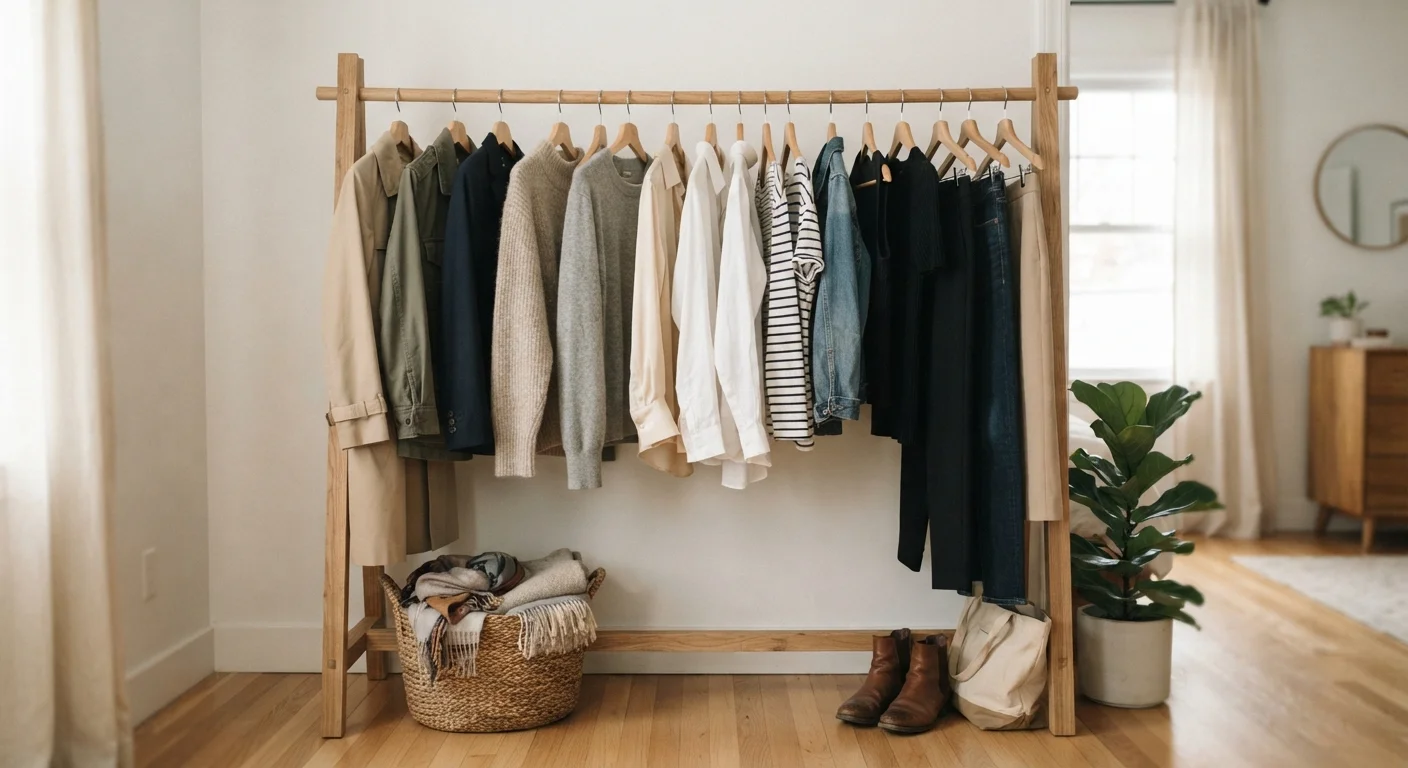
Neutrals - think navy, white, grey, black, tan - pair with almost everything, which multiplies how many outfits you can assemble from a small number of pieces. When your base is cohesive, even a single statement item can generate several new combinations. Without a neutral anchor, bright or trend-driven purchases often end up isolated and unworn.
Prioritize fit over price, and alter if necessary.
Ill-fitting clothing looks inexpensive regardless of what it actually cost. A $20 shirt that fits cleanly will consistently look better than a $60 shirt that pulls at the shoulders or bunches at the waist. Basic tailoring - hemming pants, taking in a side seam - is often less expensive than people expect and can transform how a garment looks and feels.
Calculate cost-per-wear rather than sticker price.
A $90 jacket worn 150 times costs $0.60 per wear. A $30 jacket worn 8 times before it falls apart costs $3.75 per wear - six times more. Budget dressing means asking not just 'how much does this cost?' but 'how much will I realistically wear this, and how long will it hold up?' This reframe naturally steers you toward durability over novelty.
Be selective and skeptical about trends.
Trend-driven pieces are deliberately designed with a short relevance window. Buying heavily into seasonal trends means regularly cycling out clothing that still has wear left in it - which is expensive regardless of the original price. Trends can be incorporated in small doses through low-stakes accessories or inexpensive secondary pieces, but your core wardrobe is better served by classic, durable choices.
Take care of what you already own.
Clothing deteriorates faster through poor care habits than through normal wear. Overwashing, high-heat drying, and improper storage are the most common culprits behind premature pilling, fading, and sagging - and they're all preventable. Keeping existing clothes looking presentable longer is, in budget terms, identical to buying quality clothing for free.
Know what fits your actual life before buying anything.
A common budget mistake is buying aspirationally - for the life you imagine rather than the one you're living. Clothes that don't match your real daily contexts go unworn. Mapping out where you actually spend your time (work, errands, social occasions, home) helps you allocate budget toward what you'll genuinely reach for.
Start Making Changes Today
You don't need to overhaul your entire wardrobe at once. A few targeted actions can immediately improve how your current clothes look and how much farther your budget goes going forward.
For a deeper look at which items in your current closet are actually earning their place, a structured closet audit is a useful next step.
The Long View: Clothing as an Investment in Yourself
Dressing well on a budget isn't a one-time fix - it's an ongoing practice of making smarter, smaller decisions consistently. The biggest lever most people have isn't finding cheaper prices; it's buying less and caring for what they have. Research on consumer spending consistently shows that frequency of purchase is a larger cost driver than per-item price for most household clothing budgets.
~$1,700
Average annual U.S. household clothing spend
According to the U.S. Bureau of Labor Statistics Consumer Expenditure Survey, American households spend roughly this amount on apparel and services annually.
Over 60%
Clothing items rarely or never worn after purchase
Industry research and consumer surveys consistently find that a majority of purchased clothing goes largely unworn, pointing to a gap between buying habits and actual use.
Extending the life of what you already own is just as valuable as spending less on new items. Proper care habits - washing on gentle cycles, air drying when possible, storing items correctly - can meaningfully delay wear and fading. And when you are ready to add something new, secondhand shopping is worth understanding honestly, including where it delivers and where it has limits.
Style on a budget is less about sacrifice and more about intention - and intention, it turns out, produces better-looking closets at every spending level.