
Neutral vs. Statement Pieces: How to Balance a Wardrobe That Actually Gets Worn

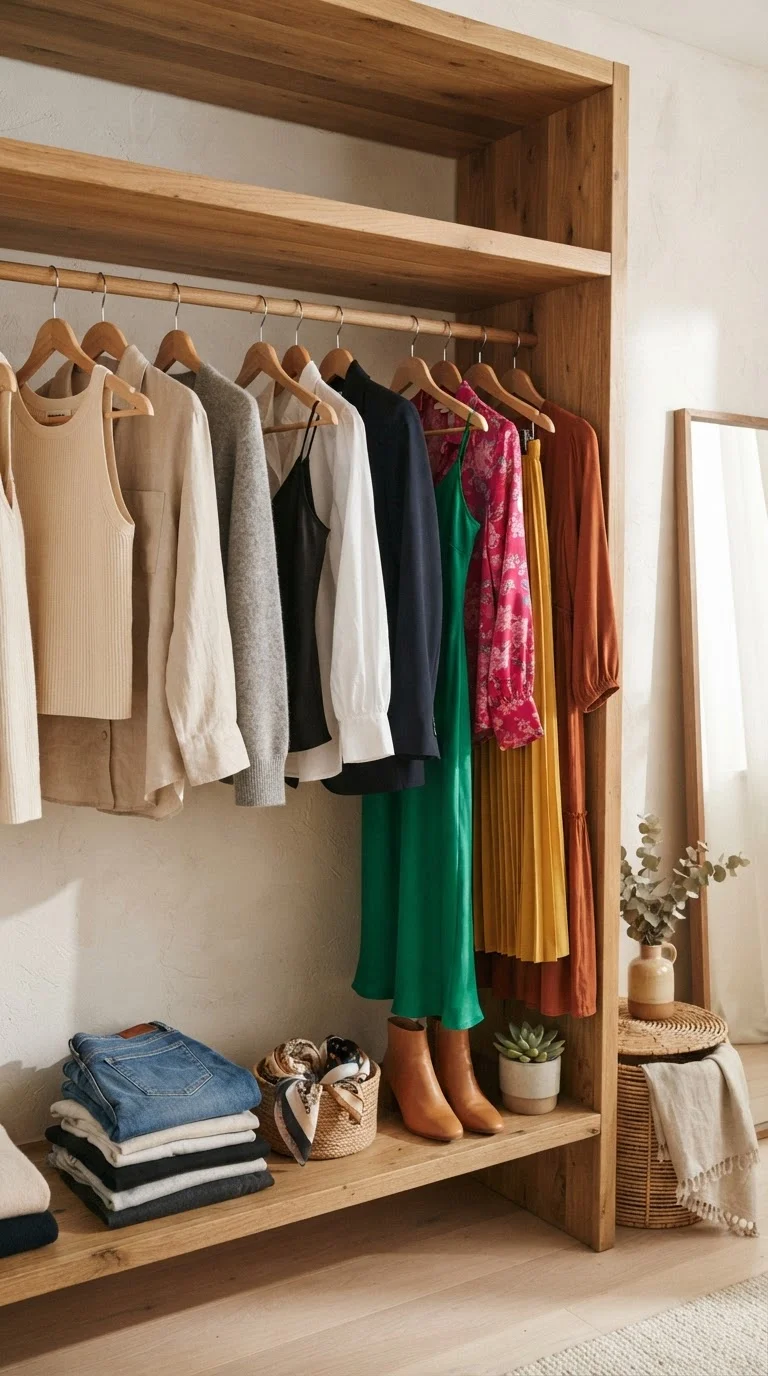
Key Takeaways
- Neutrals form the foundation; statement pieces provide the personality - both are necessary for a functional wardrobe.
- A rough 70/30 split of neutrals to statement pieces gives most people the flexibility they need without visual monotony.
- Statement pieces work best when they pair naturally with at least three existing items you already own.
- Too many statement pieces competing in one outfit usually cancels out each other's impact - restraint reads as intention.
- Your lifestyle and daily context should drive how many statement pieces make sense for your wardrobe.
Option A
Neutral Pieces
The reliable, endlessly adaptable wardrobe foundation.
Best for: Anyone who wants maximum outfit combinations with minimum effort - especially for work, travel, or daily routines.
Option B
Statement Pieces
The personality-forward, conversation-starting wardrobe accents.
Best for: People who want their clothing to reflect their individuality and add visual energy to otherwise simple outfits.
If you want a low-maintenance, mix-and-match wardrobe for a busy lifestyle
Neutral Pieces
A neutral-heavy wardrobe dramatically reduces daily decision fatigue and keeps everything cohesive without much effort.
If your goal is to express personality and stand out in social or creative settings
Statement Pieces
A well-chosen statement piece can communicate your aesthetic instantly and make simple outfits feel intentional and dynamic.
If you're building a wardrobe on a limited budget and want long-term versatility
Neutral Pieces
Neutrals yield more outfit combinations per item, which stretches a clothing budget further over time.
If you already own plenty of basics and your wardrobe feels flat or uninspiring
Statement Pieces
Strategically adding one or two statement pieces can revitalize an entire wardrobe without replacing what you already have.
If you want the most wearable, balanced wardrobe overall
Neutral Pieces
Lead with neutrals and add statement pieces selectively - the combination creates a wardrobe that's both practical and expressive.
What We Actually Mean by Neutrals and Statement Pieces
The terms get tossed around constantly in style advice, but they're worth defining clearly before diving in. Neutral pieces are garments in colors that don't compete - think white, black, navy, grey, camel, beige, and olive. They pair easily across the board and rarely clash with anything. Statement pieces are the opposite: bold colors, strong prints, unconventional silhouettes, or distinctive textures that immediately draw the eye and anchor an outfit's personality.
Neither category is inherently better. The tension most people feel in their closet - the sense that there's nothing to wear despite a full rack - usually comes from an imbalance between the two. Either everything blends into sameness, or nothing actually coordinates. Understanding what each type brings to the table is the first step toward fixing that.
For a deeper look at how color relationships can inform these choices, see our color coordination primer.
The Case for Building on Neutrals First
Neutrals do the heavy lifting in a wardrobe. A white button-down, dark-wash trousers, a grey crewneck, or a tan trench coat can each function in multiple contexts - casual, professional, social - without requiring much thought. That versatility is their main strength.
From a practical standpoint, neutrals also tend to age better stylistically. Trends cycle fast, but a well-cut navy blazer or a pair of black straight-leg pants will look appropriate for years. If you're working with a tight clothing budget, anchoring your spending in neutrals typically yields more mileage per item.
The downside? An exclusively neutral wardrobe can feel flat and interchangeable - fine functionally, but potentially joyless. Wearing only muted tones every day can make getting dressed feel like a chore rather than an expression of anything personal.
| Criterion | Neutral Pieces | Statement Pieces |
|---|---|---|
| Outfit versatility | Very high - pairs with almost anything | Lower - requires intentional pairing |
| Visual personality | Minimal - blends in by design | High - draws the eye immediately |
| Trend longevity | Strong - rarely goes out of style | Variable - depends on the piece |
| Daily decision effort | Low - easy to combine | Higher - requires more planning |
| Budget efficiency | High - more uses per item | Lower - fewer natural pairings |
| Emotional engagement | Can feel repetitive over time | Energizing and expressive |
Where Statement Pieces Earn Their Place
A statement piece doesn't have to mean a sequined blazer or head-to-toe print (though it absolutely can). It might be a terracotta linen shirt, a leopard-print loafer, a cobalt-blue structured bag, or wide-leg trousers in a bold geometric pattern. The common thread is intentionality - the piece signals something about your aesthetic rather than simply filling a functional gap.
Statement pieces also have a multiplying effect when chosen well. One interesting jacket layered over a white tee and straight jeans creates a complete, considered look from otherwise simple components. That's the real value: they make neutrals feel styled rather than default.
The key test before adding any statement piece to your wardrobe is whether it pairs naturally with at least three items you already own. If you can't easily picture those combinations, it's likely to hang unworn. This connects directly to the logic behind capsule wardrobe thinking - every item should work in multiple outfit contexts, even the expressive ones.
70%
Of outfits worn from the average wardrobe
Research cited by wardrobe consultants and reported in consumer behavior studies consistently suggests most people wear a small fraction of what they own regularly.
3+
Outfit pairings a statement piece needs to justify its place
Style educators commonly recommend the 'three-outfit rule' as a practical test before adding any new piece to a wardrobe.
Finding Your Personal Balance
A commonly cited starting framework is a 70/30 split: roughly 70% neutrals and 30% statement pieces. That ratio gives you enough flexibility to mix and match effortlessly while leaving real room for personality. But it's not a rigid rule - someone with a creative or fashion-forward lifestyle might comfortably flip that ratio, while someone who dresses for a conservative professional environment might prefer 80/20.
Your lifestyle context matters more than any formula. Ask yourself: How varied are the settings I dress for each week? Do I re-wear the same outfit combinations often, or do I want variety? When I get compliments, what am I wearing? Those answers tend to reveal your natural balance point more reliably than any style rule.
If you're starting fresh or rethinking your closet entirely, building a wardrobe from scratch walks through a prioritized approach to deciding what to buy first and why.
Neutrals Aren't One-Size-Fits-All
What reads as a 'neutral' depends on your existing wardrobe and skin tone. For some people, dusty rose or warm burgundy functions as a neutral because it pairs easily with most of what they own. Don't feel locked into the standard grey-black-white palette if other colors work more naturally for you. The defining quality of a neutral in your wardrobe is flexibility, not a specific color.
Common Mistakes That Throw Off the Balance
Even with a clear framework, a few patterns tend to derail people's wardrobes repeatedly. The first is buying statement pieces in isolation - drawn to something beautiful in a store without checking whether it actually connects to what's already at home. Pieces bought this way often become expensive orphans.
The second is wearing too many statement items at once. Bold print top plus statement earrings plus colorful shoes plus a printed bag creates visual noise, not impact. Generally, one strong statement element per outfit is enough to make it feel intentional; the rest should recede. Two statement pieces can work when they share a complementary color or theme, but it takes practice.
The third mistake is confusing trends with statements. A trend-driven piece might feel exciting in the moment but wear out its welcome quickly - both stylistically and emotionally. A true statement piece reflects your personal aesthetic, not just the current season. Our guide on when trends are worth following can help you tell the difference before you buy.