

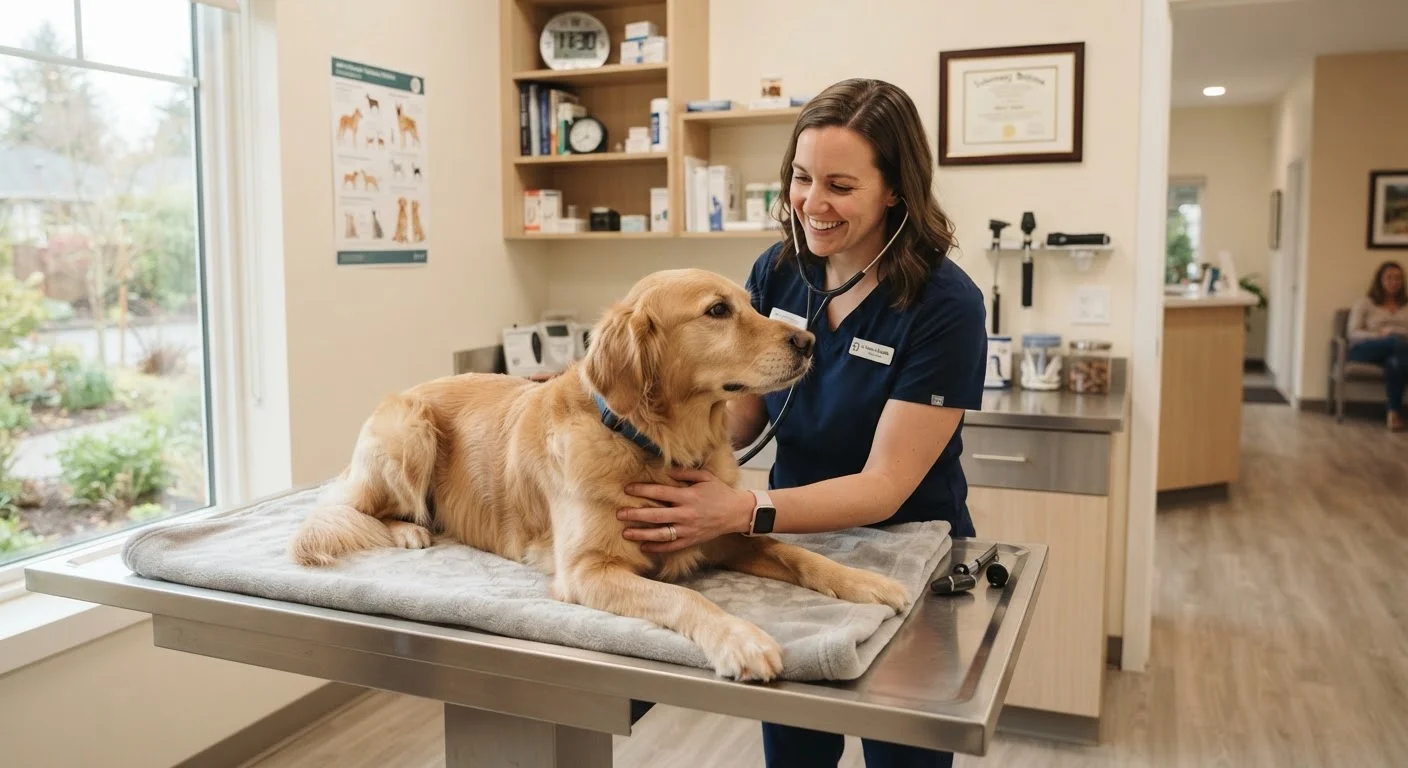
Key Takeaways
- Wellness exams focus on prevention and early detection, not on resolving an active problem.
- Sick visits are narrowly focused on diagnosing and addressing a specific concern your pet is experiencing.
- Booking a sick visit does not replace the need for a scheduled annual exam - they serve different goals.
- Vets may flag an issue during a wellness exam that then requires a separate follow-up sick visit.
- Both visit types are part of a complete veterinary care plan for your pet's long-term health.
Option A
Annual Wellness Exam
The proactive, prevention-first appointment.
Best for: Healthy pets who need routine screening, vaccinations, parasite prevention, and a full head-to-tail checkup on a scheduled basis.
Option B
Sick Visit
The targeted, problem-focused appointment.
Best for: Pets showing specific symptoms, behavioral changes, or signs of discomfort that need prompt veterinary evaluation.
If your pet appears healthy and is due for vaccinations or routine screening
Annual Wellness Exam
Wellness exams are designed to assess overall health, update preventives, and catch subtle changes before they become serious problems.
If your pet is vomiting, limping, lethargic, or showing any new or worrying symptom
Sick Visit
A sick visit allows the vet to focus entirely on diagnosing and managing the specific issue your pet is experiencing right now.
If your pet is entering their senior years and needs more frequent monitoring
Annual Wellness Exam
Older pets often benefit from semi-annual wellness exams; consistent preventive monitoring helps manage age-related health shifts early.
If you're unsure whether your pet's symptoms are urgent enough to call the vet
Sick Visit
When in doubt, call your veterinary clinic - most are happy to help you decide over the phone whether a sick visit is warranted right away.
What Each Visit Is Actually Designed to Do
Many pet owners assume that as long as their pet sees a vet occasionally, their bases are covered. But annual wellness exams and sick visits serve fundamentally different purposes - and mixing them up can leave gaps in your pet's care.
An annual wellness exam is a scheduled, comprehensive health assessment for a pet that appears well. The vet performs a full physical evaluation from nose to tail, reviews vaccination status, discusses parasite prevention, and may recommend routine bloodwork or other screenings based on your pet's age and lifestyle. The goal is prevention and early detection - catching problems before symptoms even appear. For a deeper look at what happens during this exam, see what vets actually look at during a routine physical exam.
A sick visit, by contrast, is reactive. It's scheduled when your pet is showing a specific sign of illness - vomiting, diarrhea, limping, unusual lethargy, changes in appetite, skin irritation, or any other concern you've noticed. The vet's attention is narrowed to identifying what's wrong and determining next steps, which might include diagnostics, medication, or a referral.
| Criterion | Annual Wellness Exam | Sick Visit |
|---|---|---|
| Purpose | Prevention and early detection | Diagnose and treat a specific problem |
| Scheduling | Planned in advance, typically yearly | Booked when symptoms arise |
| Exam scope | Full head-to-tail physical assessment | Focused on the area or system of concern |
| Vaccinations | Reviewed and updated as needed | Generally not the visit's focus |
| Routine bloodwork | Often recommended for screening | Only if relevant to symptoms |
| Parasite prevention discussion | Standard part of the visit | Only if related to the concern |
| Best for | Pets who appear healthy | Pets showing signs of illness |
Why You Can't Substitute One for the Other
It's tempting to think: "My pet has a sick visit next month anyway - I'll just ask the vet about vaccines then." In practice, this rarely works as planned. Sick visits are time-limited and focused; a vet managing an active health concern cannot give the same thorough preventive attention as a scheduled wellness exam allows.
The reverse is also true. If your pet develops a sudden symptom, a wellness exam scheduled six weeks from now is not the right response. Most clinics hold appointment slots specifically for sick visits and can often accommodate urgent concerns more quickly than routine bookings.
Can You Combine Both in One Visit?
Some clinics will address a minor concern during a scheduled wellness exam if time allows, but this depends on the issue and the clinic's policies. It's always best to mention any symptoms when booking so staff can schedule adequate time. Don't assume the wellness exam will double as a full sick visit - if your pet has an active, complex problem, a dedicated appointment is likely to serve them better.
Scheduling matters beyond logistics, too. Insurance coverage, if you carry a pet health policy, may categorize these visits differently - another reason to understand what type of appointment you're booking. This article provides general information; always review your own policy documents for specifics.
If your pet is approaching their golden years, note that veterinary recommendations often shift toward more frequent exams. Our guide to senior pet care and shifting veterinary needs covers this in detail.
Making the Most of Each Appointment
Knowing which visit you're attending helps you prepare more effectively. For a wellness exam, bring a list of any minor changes you've noticed over the past year - even things that seem small, like slight weight gain or a shift in water intake. These observations are gold for a vet doing preventive screening. Communicating effectively with your veterinarian offers practical tips on describing your pet's habits and history clearly.
For a sick visit, specificity is everything. Note when symptoms started, how often they occur, whether anything seems to trigger or relieve them, and any recent changes in diet, environment, or routine. If you're preparing for an urgent or emergency scenario, preparing your pet and home for an emergency vet visit walks through what to have ready.
1 in 3
Pets with hidden illness found at routine exam
The American Veterinary Medical Association has noted that routine wellness visits frequently uncover conditions pets show no obvious symptoms of at home.
2×
Recommended exam frequency for senior pets
Many veterinary guidelines suggest that dogs and cats in their senior years benefit from twice-yearly wellness exams rather than the standard annual schedule.
If you're new to pet ownership and unsure what either type of visit involves, your pet's first vet visit guide offers a reassuring walkthrough of the entire experience.
This article is intended for general informational purposes only and does not constitute veterinary advice. Always consult a licensed veterinarian for guidance specific to your pet's health needs.