

Key Takeaways
- Bring any prior medical records, vaccination history, and a fecal sample if your vet requests one.
- The physical exam typically covers your pet's eyes, ears, teeth, heart, lungs, abdomen, skin, and weight.
- Your first visit is the right time to ask about vaccinations, parasite prevention, and a feeding plan.
- Arriving calm and prepared helps reduce anxiety for both you and your pet.
- First vet visits lay the foundation for preventive care throughout your pet's life.
Start here
Before the Appointment: What to Gather
Next
What Happens When You Arrive
Core knowledge
The Physical Exam: A Head-to-Tail Check
Plan ahead
Vaccinations, Parasite Prevention, and Next Steps
Make it easier
Making the Visit Less Stressful for Your Pet
Before the Appointment: What to Gather
A little preparation before the appointment goes a long way toward a smoother visit. If your pet came from a shelter, rescue, or breeder, collect any paperwork they provided - vaccination records, deworming history, or prior vet notes. Even a brief written summary of what you know helps your veterinarian get started on the right foot.
Write down your questions ahead of time. It's easy to forget what you wanted to ask once you're in the exam room. Topics worth noting include diet, behavior, exercise needs, and anything you've noticed that seems unusual. If your vet's office asked for a fecal sample, collect one within 24 hours of the appointment and store it in a sealed container in the refrigerator.
If you're still in the early stages of setting up your home, our new pet readiness checklist covers what to have in place before the first visit.
Core vaccines
Vaccinations recommended for virtually all pets of a given species, regardless of lifestyle, because they protect against common and serious diseases.
Fecal exam
A laboratory test performed on a small stool sample to detect intestinal parasites such as roundworms, hookworms, or giardia.
Medical history baseline
A starting record of your pet's weight, age, vaccination status, diet, and physical health established at the first vet visit for comparison at future appointments.
Parasite prevention
A routine care plan - often involving monthly medications - designed to protect pets from fleas, ticks, heartworm, and intestinal parasites.
Veterinary technician
A trained clinic staff member who assists the veterinarian by collecting patient history, taking vitals, and performing routine procedures before the vet enters the exam room.
What Happens When You Arrive
When you check in, you'll typically complete intake paperwork covering your pet's name, age, species, breed, current diet, and any known health history. This becomes the foundation of your pet's medical record at that clinic.
A veterinary technician will usually bring you into an exam room first. They'll weigh your pet, take a brief history by asking about eating habits, bathroom routines, behavior, and any concerns you have. This is also when they may collect a fecal sample if you didn't bring one.
Every Clinic Has Its Own Flow
The order of events at a first visit can vary by clinic, vet, and even the type of pet. Some practices have you meet the vet before a technician; others handle intake paperwork digitally in advance. Calling ahead to ask what to expect - and what to bring - is always a reasonable step.
It helps to describe your pet's normal routine clearly - what they eat, how much, and any recent changes in behavior or energy. The more context your care team has, the better they can tailor the exam.
The Physical Exam: A Head-to-Tail Check
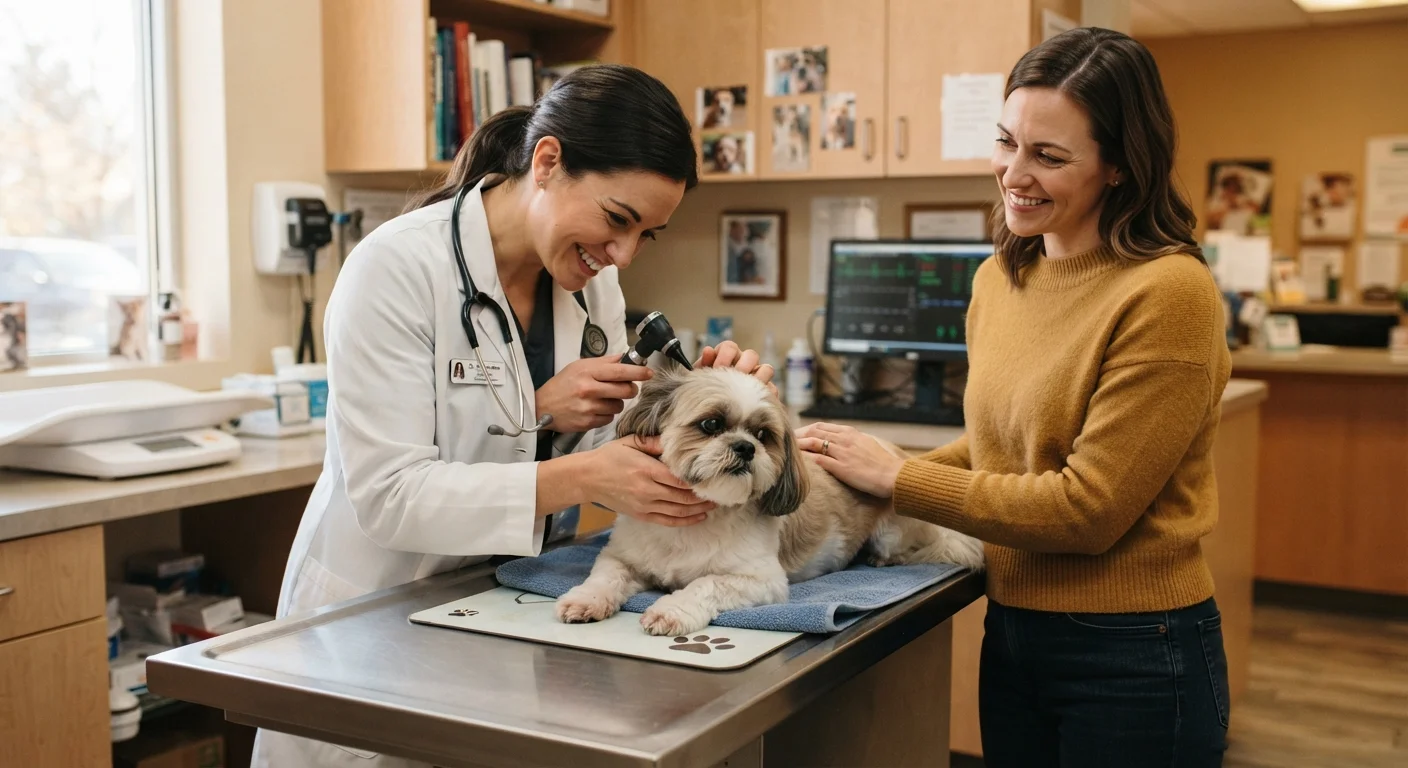
The veterinarian will perform a hands-on physical examination that covers your pet's entire body. While the exact order varies by vet, most exams follow a systematic head-to-tail approach. For a detailed breakdown of what each check reveals, see our article on what vets look at during a routine physical exam.
- Eyes and ears: Checked for discharge, redness, or signs of infection.
- Teeth and gums: Evaluated for tartar buildup, gum color, and early dental disease.
- Lymph nodes and neck: Felt for swelling that could indicate immune activity or infection.
- Heart and lungs: Listened to with a stethoscope for irregular rhythms or breathing concerns.
- Abdomen: Gently palpated to assess organ size and detect any unusual masses.
- Skin and coat: Checked for parasites, irritation, or signs of allergies.
- Musculoskeletal: Limbs and joints are assessed for range of motion and pain response.
Ask Questions During the Exam
The exam room is the best place to get answers about your pet's specific health. Come with your written list of questions and don't hesitate to ask the vet to explain what they're observing. A good vet will welcome the conversation - and you'll leave far better informed.
Don't hesitate to ask the vet to explain what they're doing and what they're finding. Good veterinarians welcome questions - this is your opportunity to learn about your specific pet's health.
Vaccinations, Parasite Prevention, and Next Steps
Based on your pet's age, species, prior history, and lifestyle, your vet will recommend a vaccination schedule. Core vaccines - those recommended for most pets regardless of lifestyle - differ between dogs and cats, and your vet will explain which apply to your animal. Non-core vaccines may be suggested depending on factors like whether your dog visits dog parks or your cat spends time outdoors.
Parasite prevention is another key discussion at this visit. Your vet will likely recommend a plan for fleas, ticks, heartworm, and intestinal parasites. These recommendations are based on your geographic region and your pet's exposure risk, so what's right for one pet may differ for another.
Before you leave, you should have a clear picture of when to schedule follow-up visits, what signs to watch for at home, and a general feeding and care plan. For a broader view of what to expect throughout your pet's early life, our guide to your pet's first year is a helpful companion resource.
Communicating Effectively With Your Veterinarian
Learn what to say, what to ask, and how to describe symptoms clearly so your vet can provide the best possible care for your pet.
What Vets Actually Look at During a Routine Physical Exam
A detailed walkthrough of the standard head-to-tail exam your vet performs, explaining what each check is looking for and why it matters.
Making the Visit Less Stressful for Your Pet
Veterinary anxiety is common in both pets and their owners. A few simple steps can make a meaningful difference. For cats, keep the carrier out at home in the days before the appointment so it becomes a familiar, non-threatening space rather than something that only appears on stressful days. For dogs, short practice car rides help reduce travel-related anxiety.
On the day of the visit, bring a favorite toy or a blanket with familiar scents. Avoid feeding a large meal immediately before travel if your pet is prone to motion sickness - ask your vet for guidance on this. Speak in a calm, reassuring voice and avoid transmitting your own nervousness, since many animals are attuned to their owner's emotional state.
Learning how to communicate your observations clearly - especially symptoms or behavioral changes - helps your vet make the most of your limited appointment time. Our article on communicating effectively with your veterinarian walks through exactly how to do that.
This article is for general informational purposes only and is not a substitute for professional veterinary advice. Always consult a licensed veterinarian for guidance specific to your pet's health needs.