

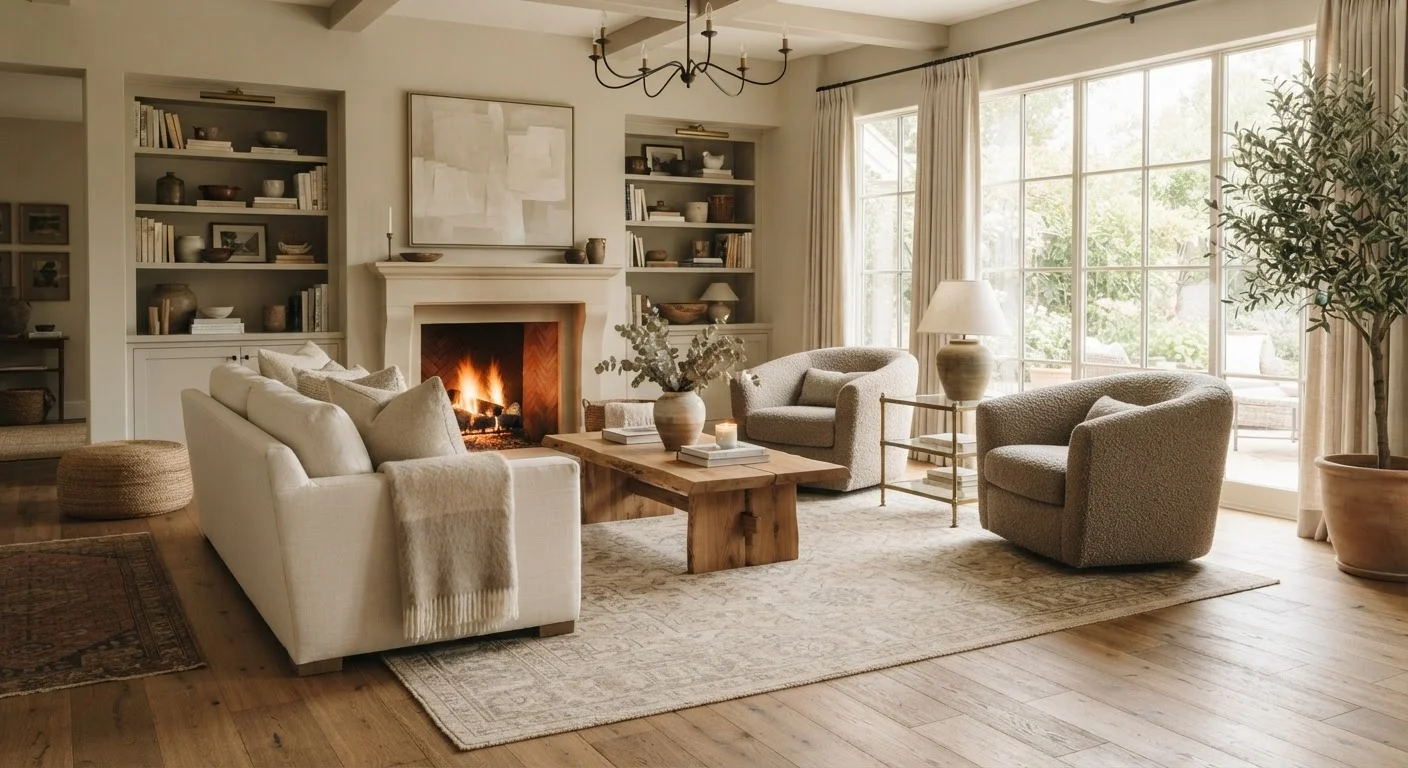
Key Takeaways
- An undersized rug is one of the most common and easiest-to-fix decorating mistakes in any room.
- At least the front legs of major furniture pieces should rest on the rug to visually anchor the space.
- Standard rug sizes rarely fit all rooms - always measure your space before purchasing.
- Layering a smaller patterned rug over a large neutral base adds depth without overwhelming a space.
- Room shape, furniture arrangement, and flooring type all influence the best rug placement strategy.
What you will need
Why Rug Sizing Is the Starting Point, Not an Afterthought
A rug does more than cover floor space - it functions as a visual anchor that ties a furniture arrangement together and signals where a room's activity zone begins and ends. Interior designers consistently cite undersized rugs as one of the most prevalent and most correctable decorating errors in American homes. When a rug is too small, furniture appears to float disconnected from any organizing principle, and the room can feel visually scattered even if the individual pieces are well-chosen.
Getting the rug right early in the decorating process also prevents costly downstream adjustments. If you're starting fresh, consider tackling a room-by-room declutter before selecting textiles - it's much easier to measure and plan with a clear canvas. And if your room still feels off even with the right rug in place, visual weight and scale issues may be contributing beyond the rug itself.
Use Painter's Tape as a Free Planning Tool
Before committing to any rug size, outline the dimensions in painter's tape on your floor. Live with it for a day or two to confirm it feels right with your furniture arrangement. This costs nothing and saves you from a costly return or exchange.
The steps below walk you through a systematic process - from measuring and planning to laying and optionally layering - so you can make a confident, well-sized choice for any room in your home.
Tools and Preparation
Successful rug placement starts with accurate information about your space. Gather your tools before you begin so the planning process is uninterrupted.
Measuring tape
Accurately measure room dimensions and furniture footprints before selecting a rug size.
Painter's tape
Mark the intended rug outline on the floor to visualize sizing before purchasing.
Rug pad
Prevents slipping, protects flooring, and adds underfoot cushioning beneath the rug.
Furniture sliders
Allows you to reposition heavy furniture onto or off the rug without scratching floors.
What you will need
Once you have measurements in hand, you're ready to work through the steps below.
Measure Before You Buy - Always
Returning a large rug is costly, inconvenient, and sometimes impossible depending on the retailer. Use painter's tape to mark your intended rug dimensions directly on the floor before purchasing. This single step eliminates guesswork and prevents the most expensive decorating mistakes.
Clear and measure your room
Before thinking about rug styles or patterns, establish your room's usable floor area. Measure the full length and width of the room, then note any architectural features - fireplaces, built-ins, or alcoves - that reduce usable floor space. Subtract roughly 18 inches from each wall to determine the maximum rug footprint that will leave a visible border of flooring around the edges.
Map your furniture arrangement
Sketch a rough floor plan and mark where each major furniture piece sits. The rug should relate to the furniture grouping, not the room's total floor space. In a living room, this typically means the sofa, chairs, and coffee table form the group the rug must serve. In a dining room, the table and chairs - including chairs pulled out for seating - define the required rug size.
Choose a placement style for your living area
Three classic placement approaches work for most living rooms:
- All legs on: Every furniture leg rests on the rug. Best for large rugs in open-plan spaces. Creates a cohesive, room-defining zone.
- Front legs on: Only the front legs of sofas and chairs touch the rug. The most versatile approach - works in mid-size rooms and visually connects furniture to the rug without requiring an oversized piece.
- All legs off: The rug floats independently in the center. This only works intentionally in very large rooms where the rug functions as a decorative accent rather than an anchor.
For most homes, the front-legs-on approach delivers the best balance of proportion and practicality.
Select the right rug size
Standard rug sizes include 5×8, 6×9, 8×10, and 9×12 feet, among others. Here's a general framework:
- Living rooms: 8×10 works in most medium-sized rooms; 9×12 suits larger seating arrangements.
- Dining rooms: Add at least 24 inches to each side of your table to accommodate pulled-out chairs comfortably.
- Bedrooms: Place a large rug under the lower two-thirds of the bed so it extends 18-24 inches on each side and at the foot.
When in doubt, size up. The single most common mistake is choosing a rug that is too small for the space.
Tape out your chosen size before purchasing
Using painter's tape, mark the exact dimensions of your intended rug on the bare floor. Position your furniture as it will normally sit and live with the taped outline for at least one day. Observe it from multiple vantage points - seated, standing at the room's entrance, and from adjacent spaces. Adjust the tape if needed, then finalize your dimensions.
Add a rug pad and lay the rug
Cut a rug pad to approximately one inch smaller than the rug on all sides - this keeps the pad hidden and prevents edge bunching. Lay the pad first, then center the rug on top. Use furniture sliders to move heavy pieces back onto the rug without dragging, which can distort the rug's weave or scratch hardwood floors.
Layer a second rug if desired
Layering works best when a large, neutral, low-pile rug serves as the base and a smaller, textured or patterned rug is placed on top, slightly off-center toward the seating or focal point of the room. The base rug should be significantly larger - ideally at least two feet of it should be visible on all sides of the layered piece. Natural fiber rugs like jute or sisal make excellent base layers. This technique is particularly effective in textile-rich rooms where you want to build depth and warmth.
Common Placement Mistakes and How to Avoid Them
Even with the right size rug, placement errors can undermine the result. The most frequent issues include:
- Centering the rug on the room rather than the furniture group: The rug should relate to your seating arrangement, not the room's geometric center, which are often not the same point.
- Ignoring traffic paths: A rug that blocks a natural walkway will shift over time and create a hazard. Keep main walking paths clear or use a runner configuration in corridor-like spaces.
- Mismatched scale in open-plan spaces: In open-plan homes, each defined zone - dining, living, reading - should have its own rug to prevent the space from reading as one undifferentiated expanse.
Avoid the Floating Furniture Effect
Placing a rug that is too small in the center of a room - with all furniture legs off the rug - creates what designers call the 'floating island' effect. It visually fragments the room rather than anchoring it. If your current rug leaves all legs floating, consider upsizing or repositioning furniture to overlap the rug's edge.
For rooms where furniture arrangement itself is part of the challenge, the principles covered in our small-space design guide apply equally to rug selection and zone definition. Rugs are just one component of a broader system of textiles that shape a room's feel - consider how your rug choice connects with curtains, cushions, and throws to build a cohesive interior.