

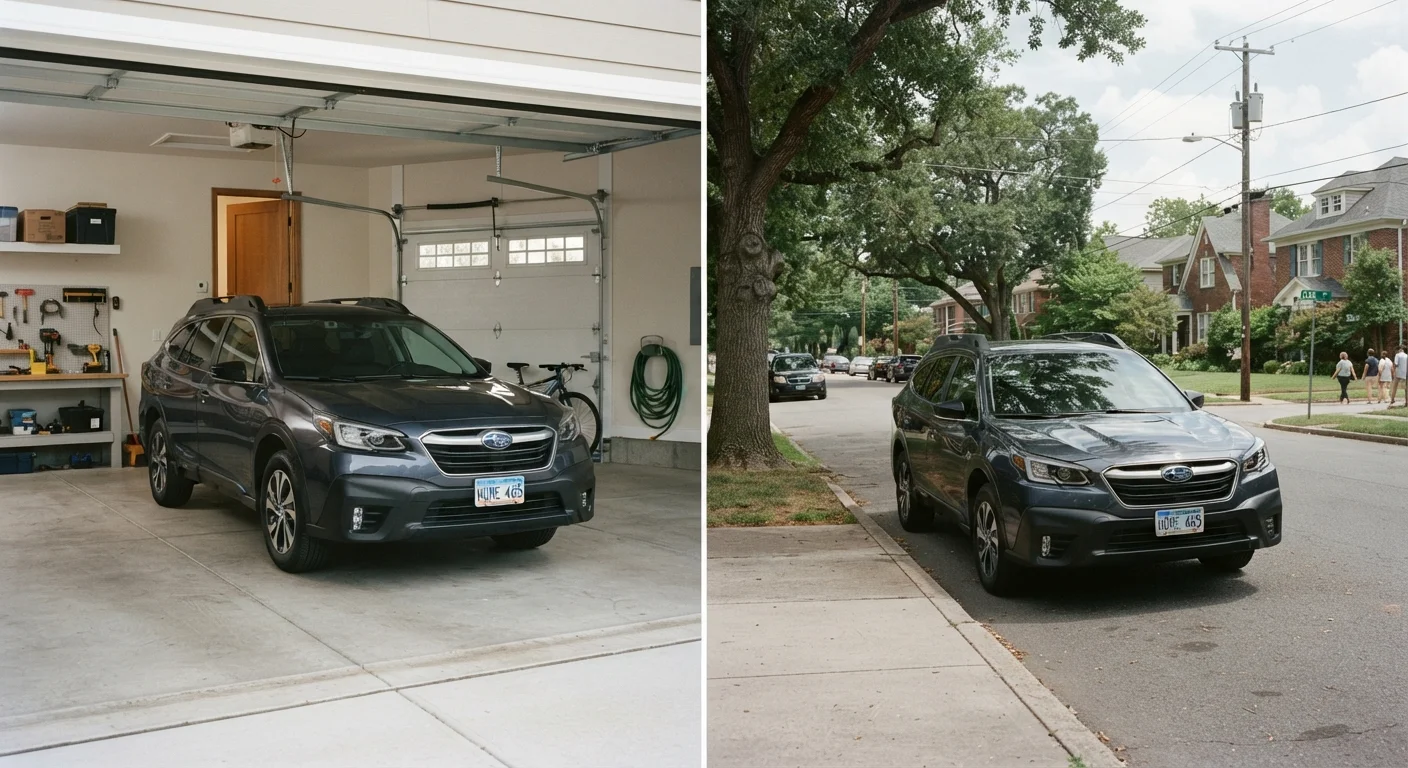
Key Takeaways
- Garage parking shields vehicles from UV damage, temperature extremes, and precipitation that accelerate wear.
- Street parking exposes vehicles to environmental hazards but is often unavoidable for urban and suburban drivers.
- Battery life, tire condition, and paint integrity are among the components most affected by parking environment.
- Even a covered carport offers meaningful protection compared to fully exposed street parking.
- Where you store your car can influence long-term depreciation and resale value.
Protects paint from UV fading and oxidation
Continuous sunlight exposure breaks down a vehicle's clear coat and paint layers. Garage storage eliminates this exposure almost entirely, helping maintain a vehicle's appearance and finish quality over years.
Reduces temperature extremes on mechanical components
Cold and heat stress batteries, fluids, rubber seals, and engine components. A garage moderates these temperature swings, reducing cumulative wear on critical systems.
Shields vehicle from precipitation and road debris
Rain, hail, sleet, and road salt can corrode metal surfaces and damage finishes over time. Enclosed storage keeps these environmental hazards away from the vehicle.
Improves battery performance in cold climates
Batteries stored in a garage retain more charge capacity in cold weather because they aren't exposed to overnight freezing temperatures, reducing the risk of hard starts or failure.
Slows tire degradation from UV and ozone
Rubber compounds in tires break down faster with sustained UV and ozone exposure. Garage storage significantly reduces the rate of dry rot and sidewall cracking.
Can support stronger resale value over time
A vehicle stored in a garage typically shows fewer cosmetic and surface-level signs of age, which can translate to a better impression - and potentially a higher price - at resale.
Not available to all drivers or housing situations
Garages are not a standard feature in many urban apartments, older homes, or dense neighborhoods. Renting dedicated garage space is an option but adds a recurring cost to vehicle ownership.
Risk of minor damage in tight parking spaces
Maneuvering in and out of a narrow garage increases the chance of door dings, scrapes on walls or pillars, and accidental contact with stored items.
Non-climate-controlled garages offer partial benefit
An uninsulated, unheated garage still fluctuates with outside temperatures - it simply does so more slowly than the open air. In extreme cold climates, the thermal benefit may be limited.
Garage environment can introduce its own hazards
Chemical storage, poor ventilation, or moisture buildup in a garage can expose a vehicle to vapors, dust, or humidity that create their own maintenance concerns.
Our Verdict
Garage parking offers clear advantages for preserving a vehicle's mechanical components, exterior finish, and overall longevity. That said, street parking is a daily reality for millions of Americans, and understanding its effects helps owners compensate with smarter maintenance habits. Neither situation is a dealbreaker - but awareness of the trade-offs allows you to make more informed decisions about upkeep and resale.
Garage parking delivers the most benefit to owners in regions with harsh winters, intense sun, or heavy precipitation, as well as anyone prioritizing long-term resale value.
How Parking Environment Affects Your Vehicle
Most drivers think about parking in terms of convenience or cost. But where a vehicle spends the majority of its time - exposed on a street or sheltered in a garage - has compounding effects on nearly every system in the car. Paint, rubber, metal, and electronics all respond differently to sustained exposure versus protection.
The effects aren't always immediate or dramatic. Instead, they accumulate over months and years, influencing everything from how the exterior looks to how reliably the engine starts on a cold morning. Understanding these dynamics can inform decisions about where to keep your vehicle and how to adjust your maintenance schedule accordingly.
Covered Carports: A Middle Ground
If a fully enclosed garage isn't available, a covered carport offers meaningful protection against UV exposure and precipitation without the cost of enclosed storage. It won't replicate the temperature-moderating benefits of a garage, but it can substantially slow paint and rubber degradation compared to fully exposed street parking. For many drivers, a carport is a practical and cost-effective compromise.
Advantages of Garage Parking
Storing a vehicle in a garage creates a controlled environment that buffers against the elements in several meaningful ways.
Protects paint from UV fading and oxidation
Continuous sunlight exposure breaks down a vehicle's clear coat and paint layers. Garage storage eliminates this exposure almost entirely, helping maintain a vehicle's appearance and finish quality over years.
Reduces temperature extremes on mechanical components
Cold and heat stress batteries, fluids, rubber seals, and engine components. A garage moderates these temperature swings, reducing cumulative wear on critical systems.
Shields vehicle from precipitation and road debris
Rain, hail, sleet, and road salt can corrode metal surfaces and damage finishes over time. Enclosed storage keeps these environmental hazards away from the vehicle.
Improves battery performance in cold climates
Batteries stored in a garage retain more charge capacity in cold weather because they aren't exposed to overnight freezing temperatures, reducing the risk of hard starts or failure.
Slows tire degradation from UV and ozone
Rubber compounds in tires break down faster with sustained UV and ozone exposure. Garage storage significantly reduces the rate of dry rot and sidewall cracking.
Can support stronger resale value over time
A vehicle stored in a garage typically shows fewer cosmetic and surface-level signs of age, which can translate to a better impression - and potentially a higher price - at resale.
Paint protection is one of the most visible benefits. Ultraviolet radiation from sunlight breaks down clear coat and underlying paint layers over time, causing fading and oxidation. A garage-kept car avoids this exposure almost entirely. Similarly, hail, tree sap, bird droppings, and road salt - all of which can etch or corrode a finish - are far less of a concern when the car is sheltered.
Mechanically, temperature stability matters. Extreme cold causes engine oil to thicken, battery charge capacity to drop, and rubber seals to contract. Extreme heat stresses coolant systems and accelerates fluid degradation. A garage moderates these swings, reducing the cumulative mechanical stress on components over a vehicle's lifespan - a factor that connects directly to how a car holds its value over time.
Disadvantages of Garage Parking
Garage parking isn't without trade-offs, and for many drivers, the drawbacks are practical rather than mechanical.
Not available to all drivers or housing situations
Garages are not a standard feature in many urban apartments, older homes, or dense neighborhoods. Renting dedicated garage space is an option but adds a recurring cost to vehicle ownership.
Risk of minor damage in tight parking spaces
Maneuvering in and out of a narrow garage increases the chance of door dings, scrapes on walls or pillars, and accidental contact with stored items.
Non-climate-controlled garages offer partial benefit
An uninsulated, unheated garage still fluctuates with outside temperatures - it simply does so more slowly than the open air. In extreme cold climates, the thermal benefit may be limited.
Garage environment can introduce its own hazards
Chemical storage, poor ventilation, or moisture buildup in a garage can expose a vehicle to vapors, dust, or humidity that create their own maintenance concerns.
The most obvious limitation is access. Many urban and dense suburban homes simply don't have garages, and renting a private garage or monthly parking structure adds a real cost to vehicle ownership - one worth factoring into the full picture of what it costs to own a car.
Garages also carry their own risks. Tight spaces increase the likelihood of door dings or minor collisions during parking. Garages used for multiple purposes may expose vehicles to chemical vapors, dust, or moisture if ventilation is poor. And a garage that isn't climate-controlled still fluctuates in temperature - it simply fluctuates less than the outdoors.
What Street Parking Does to a Vehicle Over Time
For drivers without garage access, it's worth knowing which components are most vulnerable to sustained outdoor exposure and what to watch for.
~20%
Battery capacity loss in extreme cold
Lead-acid batteries can lose a significant portion of their cranking power when temperatures drop well below freezing, according to general automotive engineering references.
5-7 years
Typical outdoor tire service life (UV-exposed)
Tire manufacturers and safety organizations generally recommend inspecting tires for dry rot and cracking beginning around the five-year mark for vehicles stored outdoors in sun-exposed conditions.
Paint and exterior: UV exposure and acid rain gradually degrade clear coat. Regular waxing or ceramic coating applications can meaningfully slow this process. Bird droppings and tree sap should be removed promptly, as they can etch paint within days in warm conditions.
Battery: Cold temperatures reduce a lead-acid battery's ability to deliver cranking amperage. A battery that performs adequately in a garage-kept car may struggle after repeated overnight exposure to freezing temperatures. Having your battery tested annually is a reasonable precaution for street-parked vehicles in cold climates.
Tires: Ozone, UV radiation, and temperature cycling cause rubber compounds to crack over time - a process called dry rot - even on tires with adequate tread depth. Parking in direct sunlight accelerates this. Tire covers or simply moving a vehicle regularly can help.
Rubber seals and trim: Door and window seals are susceptible to prolonged UV and moisture exposure. Cracked seals can allow water intrusion, which in turn may affect interior components and contribute to mold. Applying a rubber conditioner periodically can extend their service life.
If you're evaluating a used vehicle, its storage history can be a meaningful data point - a vehicle history report won't tell you where a car was parked, but a careful physical inspection often will.
Practical Steps for Drivers Without Garage Access
Garage access isn't available to every driver, but there are practical ways to partially offset the effects of outdoor parking.
- Use a car cover if the vehicle sits for extended periods. A quality, breathable cover blocks UV and debris while allowing moisture to escape.
- Park strategically - shaded spots reduce UV exposure, while avoiding low-lying areas limits flood and frost-settling risk.
- Keep up with protective treatments such as wax, paint sealants, and rubber conditioners more frequently than garage-kept vehicle owners typically need to.
- Monitor battery health more closely, especially heading into winter months in cold-climate states.
- Inspect tires regularly for signs of cracking, not just tread wear, particularly if the vehicle isn't driven daily.
None of these measures replaces enclosed storage, but they can materially slow the effects of outdoor exposure over years of ownership.