

Key Takeaways
- Most end breakage is caused by routine habits, not unavoidable damage or genetics.
- Moisture-protein balance inside the hair shaft is the core structural issue behind snapping.
- Regular trims, gentler styling, and consistent conditioning dramatically reduce breakage over time.
- Color-treated and heat-styled hair requires extra protective steps to maintain structural integrity.
Why Hair Breaks at the Ends - and Not Just at the Root
If you keep noticing short, wispy strands that never seem to grow past a certain length, you're likely dealing with breakage - not shedding. Shedding releases hair from the root with a tiny white bulb attached; breakage snaps the shaft mid-length or at the tips, and there's no bulb. Understanding that distinction matters because it points you toward the right solutions. Learn what's normal shedding vs. a concern if you're unsure which you're experiencing.
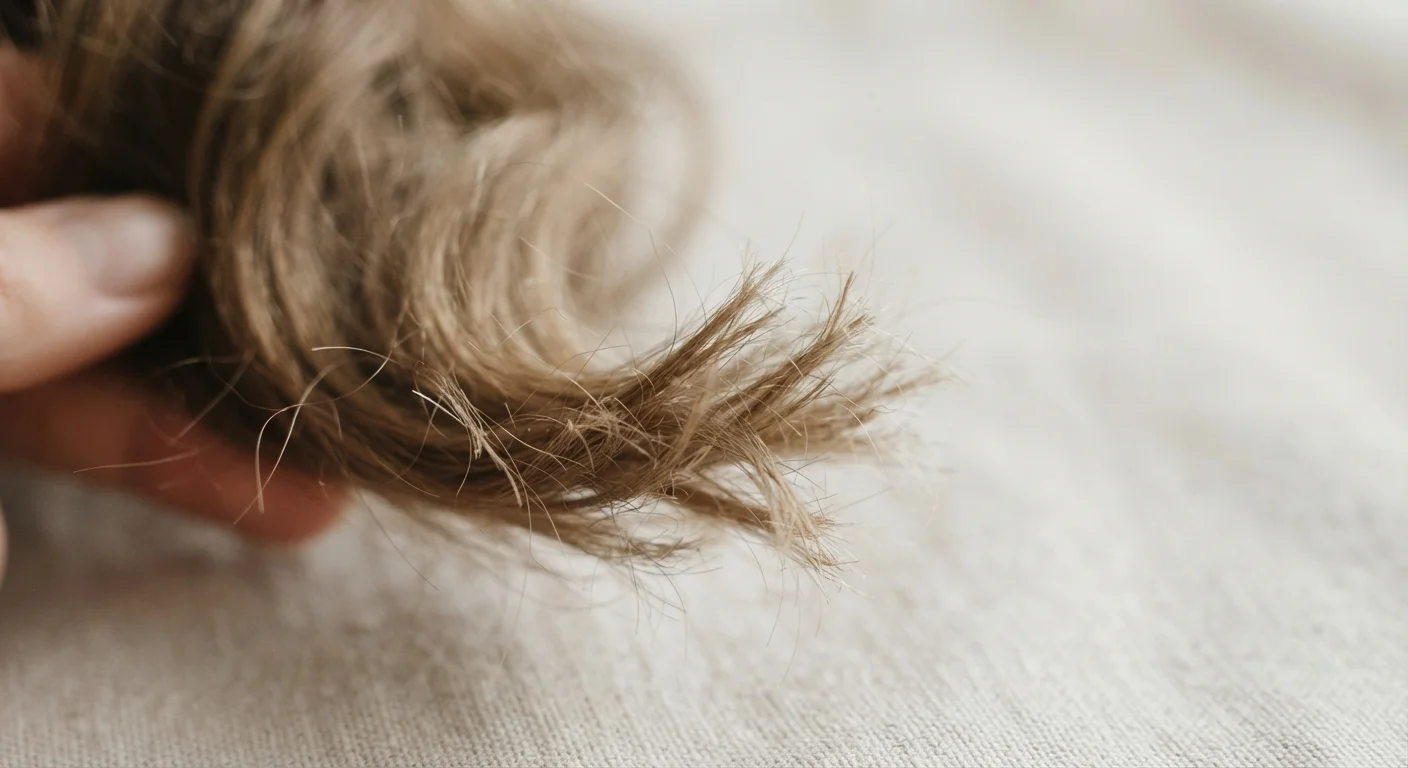
Hair ends are the oldest part of your strand - sometimes years old - which means they've absorbed the most cumulative stress from heat, friction, chemical processing, and environmental exposure. When they're not reinforced with proper care, they simply give out. The good news: most of the reasons this happens are entirely within your control.
The Most Common Mistakes That Cause End Breakage
Breakage rarely comes from one dramatic event. It builds up from repeated small errors that compound over weeks and months. Here are the mistakes that most consistently snap hair at the ends - and how to stop them.
Skipping regular trims because you want to grow length faster.
Why it happens: It feels logical - cutting hair shortens it, so avoiding cuts should mean more length. But split ends travel up the shaft if left unaddressed, causing more loss over time.
Using too much protein or too little moisture - or misreading which one you need.
Why it happens: Protein and moisture need to be balanced inside the hair shaft. Over-treated hair becomes brittle and snaps; under-treated hair becomes limp and stretches until it breaks. Many people apply products without knowing which deficit they're addressing.
Detangling dry hair or detangling from the root downward.
Why it happens: Rushing through detangling - especially on dry strands - causes friction and mechanical snapping. Starting at the root forces knots downward, creating more tangles and more force.
Applying high heat without any thermal protection or with tools set too hot for your hair type.
Why it happens: Heat styling feels effective precisely because high temperatures rapidly alter the hair's structure - but that same mechanism causes protein degradation and moisture loss when heat is excessive or unprotected.
Sleeping on rough cotton pillowcases or with hair loosely down.
Why it happens: Hours of friction against a rough surface abrades the cuticle - the outermost protective layer of each strand - leaving the cortex exposed and vulnerable to snapping at the ends.
If you style with heat regularly, it's worth auditing exactly how you're using those tools. Many widely repeated rules are actually misleading. Separate heat styling fact from habit so you're not inadvertently making things worse.
The Bigger Picture: How Routine Shapes Long-Term Hair Health
End breakage is almost always a cumulative story, which means the fix is also cumulative. No single treatment reverses structural damage overnight - hair that has already snapped cannot be repaired, only the new growth protected.
6 in.
Average hair growth per year
Hair typically grows about half an inch per month, meaning breakage at the ends can erase months of growth if left unaddressed.
~30%
Strength reduction from chemical processing
Research has shown that bleaching and chemical relaxing can reduce hair's tensile strength by roughly 30%, making ends significantly more vulnerable to mechanical breakage.
The most impactful shift you can make is building a consistent routine that addresses moisture retention, gentle handling, and regular maintenance. A structured weekly and monthly hair care checklist can help you audit your habits systematically rather than guessing what's working.
If your hair is color-treated, the structural stakes are higher - chemical processing disrupts the cuticle layer that protects against moisture loss. Evidence-backed habits for color-treated hair health can help you bridge the gap between appointments. And if you've been avoiding trims to preserve length, that instinct may actually be backfiring. Understand how trim frequency affects length retention - it's often counterintuitive.
Avoid Stacking Chemical Treatments Without Recovery Time
Bleaching, coloring, relaxing, and perming each stress the hair shaft individually. Combining or closely sequencing multiple chemical services dramatically increases structural vulnerability at the ends. If your hair is already experiencing significant breakage, consult a licensed stylist before adding any additional chemical service - the damage can escalate quickly and is not reversible once it occurs.