

| Most common workplace dress code in the U.S. | Business Casual (Widely cited across HR and workplace surveys) |
| Black tie event footwear expectation | Formal heels, dressy flats, or dress oxfords |
| Cocktail attire hem guideline | Knee to midi length is standard |
| Jeans allowed in smart casual? | Yes - dark, well-fitted, and free of distressing |
| White tie formality level | Most formal dress code; above black tie |
| Key differentiator between dress codes | Occasion context, not just the clothing item itself |
Why Dress Codes Still Matter (and Why They're Confusing)
Dress codes exist to set shared expectations - they help guests feel at ease and signal respect for the occasion. The problem is that terms like business casual and smart casual get used interchangeably, even though they mean different things. And with workplaces and social events evolving quickly, the rules have become more flexible while simultaneously less clearly defined.
The good news: once you understand what each code is actually trying to communicate, navigating them becomes much more intuitive. You don't need a massive wardrobe - you need a clear framework. For guidance on building versatile pieces that span multiple dress codes without breaking the bank, see our article on dressing well on a tight budget.
Business Casual
A workplace dress code that falls between formal business attire and everyday casual wear. It typically includes polished separates like chinos, blouses, and blazers, while excluding jeans, sneakers, and t-shirts.
Smart Casual
A flexible dress code that blends put-together pieces with relaxed elements. Think neat dark jeans with a structured top or a casual dress elevated by footwear - refined but not stiff.
Cocktail Attire
Semi-formal dress expected at evening events such as weddings, galas, or upscale parties. For most guests, this means a knee-length or midi dress, a dressy jumpsuit, or dress trousers with a polished top.
Black Tie
A formal dress code requiring floor-length gowns or formal separates for women, and a tuxedo or dark formal suit for men. It signals the most dressed-up expectation short of white tie.
Casual Dress Code
The most relaxed category, allowing everyday clothing like jeans, t-shirts, and sneakers. Context still matters - 'casual' at a backyard cookout differs from 'casual' at a creative office.
Business Formal
Traditional professional attire - suits, tailored dresses, and closed-toe heels. Expected in settings like court appearances, executive presentations, or conservative corporate environments.
A Plain-Language Guide to the Most Common Dress Codes
Here's what each standard American dress code typically calls for - broken down without the fashion jargon.
| Most common workplace dress code in the U.S. | Business Casual (Widely cited across HR and workplace surveys) |
| Black tie event footwear expectation | Formal heels, dressy flats, or dress oxfords |
| Cocktail attire hem guideline | Knee to midi length is standard |
| Jeans allowed in smart casual? | Yes - dark, well-fitted, and free of distressing |
| White tie formality level | Most formal dress code; above black tie |
| Key differentiator between dress codes | Occasion context, not just the clothing item itself |
Casual
Jeans, t-shirts, sneakers - essentially everyday clothing. But even casual has range. A creative office might call this dress code while still expecting clean, intentional outfits. Read the environment, not just the label.
Smart Casual
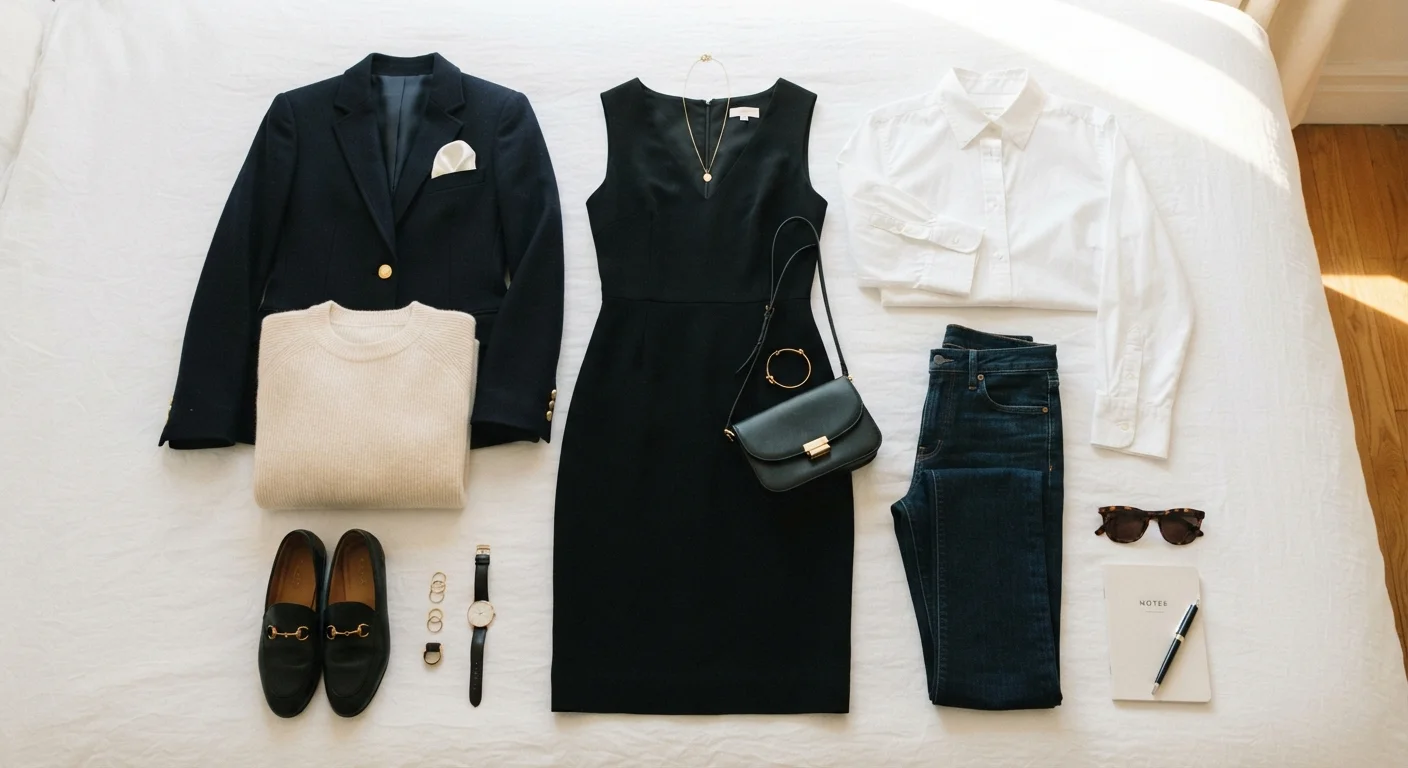
This is the code most people get tripped up on. Smart casual sits between casual and business casual. The goal is to look deliberately put-together without being stiff. Dark, clean jeans work here. Sneakers generally don't, unless they're sleek and minimal. A well-fitted blazer over a simple tee can land perfectly in this zone.
Business Casual
The dominant American workplace standard. Think tailored chinos or trousers, button-down shirts, blouses, and loafers or low heels. Suits aren't required, but the overall look should be polished. Denim is usually off the table unless explicitly permitted.
Business Formal
Reserved for conservative professional environments. Structured suits, tailored dresses, and closed-toe shoes. Accessories should be understated. This is the standard for courtrooms, executive presentations, and high-stakes client meetings.
Cocktail Attire
Semi-formal and event-specific - typically evening weddings, galas, or celebratory dinners. A knee-length or midi dress, a polished jumpsuit, or tailored dress trousers with a dressy top all work well. Fabrics matter here: choose materials with a bit of elegance, like satin, crepe, or structured knit. Our fabric basics guide can help you identify which materials read as elevated.
Black Tie
Formal and unambiguous. Floor-length gowns or sophisticated formal separates are standard. For those wearing menswear, a tuxedo is the expectation; a well-fitted dark suit is an acceptable substitute at most events. Footwear and accessories should match the formality of the outfit.
When in Doubt, Ask the Host
If an invitation lists an unfamiliar dress code or leaves the expectation vague, it's completely acceptable to ask the host or check whether others attending know more. Dressing slightly overdressed is generally more considerate than underdressing at formal events. Context - the venue, time of day, and occasion type - can also help you calibrate when explicit guidance isn't available.
Putting It Into Practice
Knowing the definitions is just the start - applying them confidently is the real skill. A few principles help bridge the gap.
- Fit matters more than price. A well-fitted thrifted blazer reads as more polished than an ill-fitting designer piece across every dress code.
- Shoes and bags signal formality quickly. When unsure about an outfit's level, elevate or simplify through footwear first.
- Occasion context overrides the label. A 'casual' summer wedding still calls for something more considered than a casual Friday at the office.
If you want to go deeper on how to build outfits that work reliably across these settings, our outfit formulas guide offers practical combinations you can repeat with confidence. And when shopping for pieces that span multiple dress codes, understanding fit and proportion can help you choose items that genuinely work for your body - not just on a hanger.