

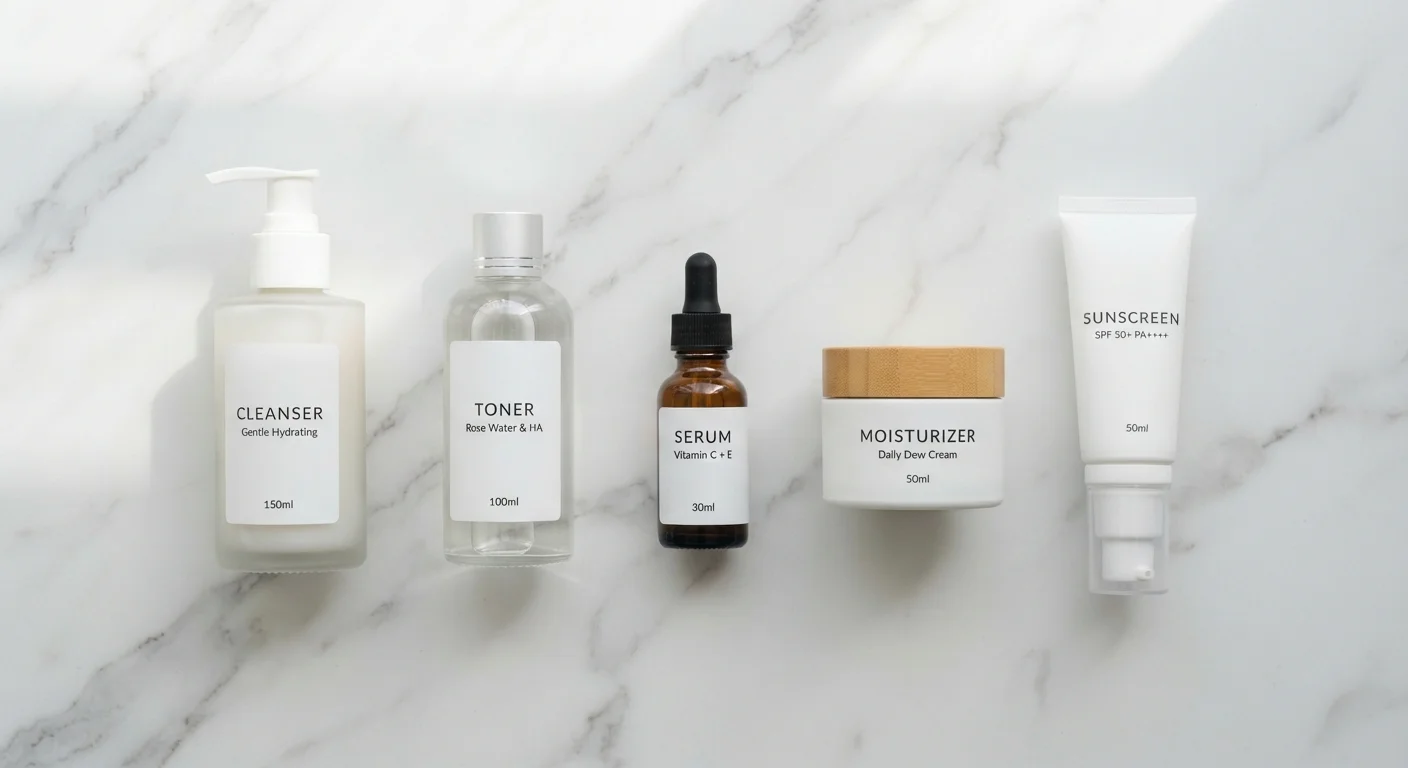
Key Takeaways
- Apply skincare products from thinnest to thickest consistency for best absorption.
- Water-based products should always go on before oil-based ones.
- Sunscreen is always the final morning step - nothing goes on top of it before makeup.
- Waiting 30-60 seconds between layers helps each product absorb properly.
- Active ingredients like retinoids and exfoliating acids need specific placement to avoid irritation.
What you will need
Why Order Actually Matters
Skincare layering isn't about ritual for its own sake - it's chemistry in action. Your skin is a selective barrier. When products are applied in the wrong sequence, heavier formulas can physically block lighter ones from penetrating, or active ingredients can become less effective when they encounter the wrong pH environment. The core principle is straightforward: go thinnest to thickest, and water-based before oil-based.
Think of it like applying paint to a wall. Primer goes on first, color coat second, sealant last. Reverse that order and nothing sits right. The same logic applies to your face. For a fuller picture of how a complete routine comes together morning and evening, see our everyday skincare routine guide.
What you will need
Tools and Products You May Be Working With
You don't need every product listed below - a simple routine with just a few well-chosen steps is completely valid. What matters is understanding where each product type lives in the sequence.
Cleanser
Removes dirt, oil, and residue to create a clean base for all subsequent products.
Toner or essence
Rebalances skin pH and adds an initial layer of hydration before serums.
Treatment serum
Delivers concentrated active ingredients (such as vitamin C, niacinamide, or hyaluronic acid) to target specific skin concerns.
Eye cream
A lighter, targeted formula for the delicate skin around the eyes, applied before heavier moisturizers.
Moisturizer
Seals in hydration and supports the skin barrier after lighter treatments have absorbed.
Face oil
An optional oil-based step applied after moisturizer to lock in hydration.
Sunscreen (SPF 30 or higher)
Provides UV protection and is always the final step of a morning routine.
How to Layer Your Skincare, Step by Step
Follow this sequence as a reliable framework. Your actual routine may include fewer steps - that's fine. The logic stays the same regardless of how minimal or involved your regimen is.
Cleanse your skin
Start every routine - morning or evening - with a clean canvas. Apply your cleanser to damp skin, work it in gently, and rinse with lukewarm water. Pat dry with a clean towel rather than rubbing, which can cause unnecessary irritation.
Apply toner or essence (if using)
While skin is still slightly damp, apply a toner or essence. These watery formulas help rebalance pH after cleansing and prep the skin to absorb what comes next. Pat - don't rub - into skin using clean hands or a cotton pad depending on the product's instructions.
Apply your treatment serum
Serums are the workhorse of most routines - thin, fast-absorbing, and packed with active ingredients. Apply a few drops and press gently into the skin. If you use more than one serum, apply the thinnest one first. Wait 30-60 seconds between layers. If you're unsure what's actually in your serum, our guide to reading skincare ingredient lists can help you decode the label.
Apply eye cream (if using)
Eye creams are typically lighter than facial moisturizers and go on before them. Use your ring finger - it applies the least pressure - and gently tap a small amount around the orbital bone, not directly on the lash line.
Apply moisturizer
Moisturizer creates a protective layer that holds in everything you've applied beneath it. Warm a small amount between your fingertips and press it into your face and neck using upward, gentle motions. Allow it to fully absorb before the next step.
Apply face oil (if using)
Face oils are lipid-based and go on after moisturizer - they can't be absorbed as deeply as water-based products, so they work best as a finishing layer that seals everything in. A few drops warmed between palms and pressed onto the face is typically enough.
Finish with sunscreen (morning only)
In the morning, sunscreen is always your final skincare step - nothing else goes over it before makeup. Apply a generous amount to face and neck and allow it to sit for a couple of minutes. Dermatologists generally recommend at least SPF 30 with broad-spectrum (UVA and UVB) coverage, applied every morning regardless of weather.
Patch Test Any New Active First
Before layering a new active ingredient - especially a retinoid, AHA, BHA, or vitamin C - into your full routine, patch test it on a small area of skin for several days. Introducing too many actives at once makes it impossible to identify what's causing a reaction. Our new product readiness checklist walks through exactly how to do this safely.
Keep It Simple If You're Just Starting Out
A three-step routine - cleanser, moisturizer, SPF - applied consistently will outperform a complicated ten-step routine used sporadically. Master the basics first, then build from there as your confidence and budget allow. Consistency is the real active ingredient.
Common Layering Mistakes to Avoid
Even with a solid lineup, a few missteps can undermine results. The most common error is applying a rich moisturizer before a water-based serum - the serum can't push through the barrier the moisturizer creates. Another frequent issue is using two active ingredients simultaneously without understanding how they interact. Vitamin C and niacinamide, for instance, were long thought to be a conflicting pair, though more recent formulation research suggests the risk is lower than previously believed - when in doubt, use them at different times of day.
If you're curious about which ingredients play well together - and which don't - our guide on fragrance in skincare touches on how certain additives can affect the way your skin responds to a routine overall. And before you introduce anything new, the new product readiness checklist is worth a read.
Don't Mix Retinoids and Exfoliating Acids
Using a retinoid and an AHA or BHA in the same application can cause significant irritation, redness, and skin barrier disruption. If you use both, alternate them on different evenings or use one in the morning and one at night - and always wear SPF the following day, as both increase sun sensitivity.