

Key Takeaways
- Periodontal disease affects most adult pets, but daily brushing can significantly slow its progression.
- Use only toothpaste formulated for pets - human toothpaste contains ingredients that can be toxic to animals.
- Starting slowly with finger brushing builds trust before introducing a toothbrush.
- Consistency matters more than perfection - even a brief daily session makes a meaningful difference.
- Regular dental cleanings at the vet complement home brushing but don't replace it.
What you will need
Why So Many Owners Skip This - and What It Costs
Dental care is consistently cited by veterinary organizations as one of the most neglected aspects of routine pet health. It's easy to understand why: pets can't tell us their teeth hurt, bad breath gets normalized, and brushing a squirming cat or a wriggly puppy can feel impossible. But the consequences of skipping it are significant.
Plaque begins forming on teeth within hours of a meal. Left undisturbed, it mineralizes into tartar within days - and tartar can't be removed by brushing at home. Once tartar accumulates beneath the gumline, it triggers inflammation, gum recession, and eventually tooth loss. Emerging veterinary research also suggests that chronic oral infections may place stress on internal organs over time, though the full picture is still being studied.
The good news: brushing doesn't need to be a perfect two-minute scrub to be beneficial. Partial cleaning done consistently is far more valuable than an occasional thorough attempt. For a broader look at how dental disease develops and how vets address it, see our article on dental disease in pets.
Signs Your Pet Needs a Vet First
If your pet has visibly red, swollen, or bleeding gums, persistent bad breath, loose teeth, or difficulty eating, schedule a veterinary exam before starting a brushing routine. Brushing an already-inflamed mouth can cause pain and set back your progress. Your vet can assess whether a professional dental cleaning is needed first.
If you have a young pet or are building foundational care habits, our guide on your pet's first year covers vet schedules, feeding, and other early priorities alongside dental care.
What You'll Need Before You Start
Setting yourself up with the right supplies before you begin makes every subsequent step easier. The most critical item is toothpaste formulated specifically for pets.
Never Use Human Toothpaste on Pets
Many human toothpastes contain xylitol and fluoride, both of which can be toxic to dogs and cats. Always use a toothpaste specifically formulated and labeled safe for pets. If you're unsure which product to choose, ask your veterinarian for a recommendation at your next visit.
Pet-Safe Toothpaste
Cleans tooth surfaces safely without the toxic ingredients found in human toothpaste; often flavored to appeal to pets.
Finger Brush
A soft silicone sleeve that fits over your fingertip, ideal for introducing pets to the sensation of brushing.
Soft-Bristled Pet Toothbrush
Provides better reach and coverage once your pet is comfortable with the brushing sensation.
Dental-Friendly Treats
Used as positive reinforcement immediately after brushing to build a positive association with the routine.
What you will need
Building the Brushing Habit Step by Step
The biggest mistake owners make is attempting a full brushing session on the first day. Pets need time to adjust to having their mouths handled, and skipping the desensitization process almost always results in a stressed animal and a frustrated owner. Take the gradual approach below - it typically takes one to three weeks before most pets tolerate a full brush, and that's completely normal.
Let Your Pet Taste the Toothpaste First
Before any brushing attempt, put a small amount of pet-safe toothpaste on your fingertip and let your pet lick it off. Do this for two or three days in a row. This step is purely about association - you want your pet to connect the toothpaste with something pleasant, not something stressful.
Introduce Touch Around the Mouth
With clean hands, gently lift your pet's lip and run a bare finger along the outer surface of the teeth and gums for five to ten seconds. Keep the interaction brief and calm. Repeat this over several sessions until your pet remains relaxed. Don't rush - a few extra days of this step will pay off later.
Add Toothpaste to a Finger Brush
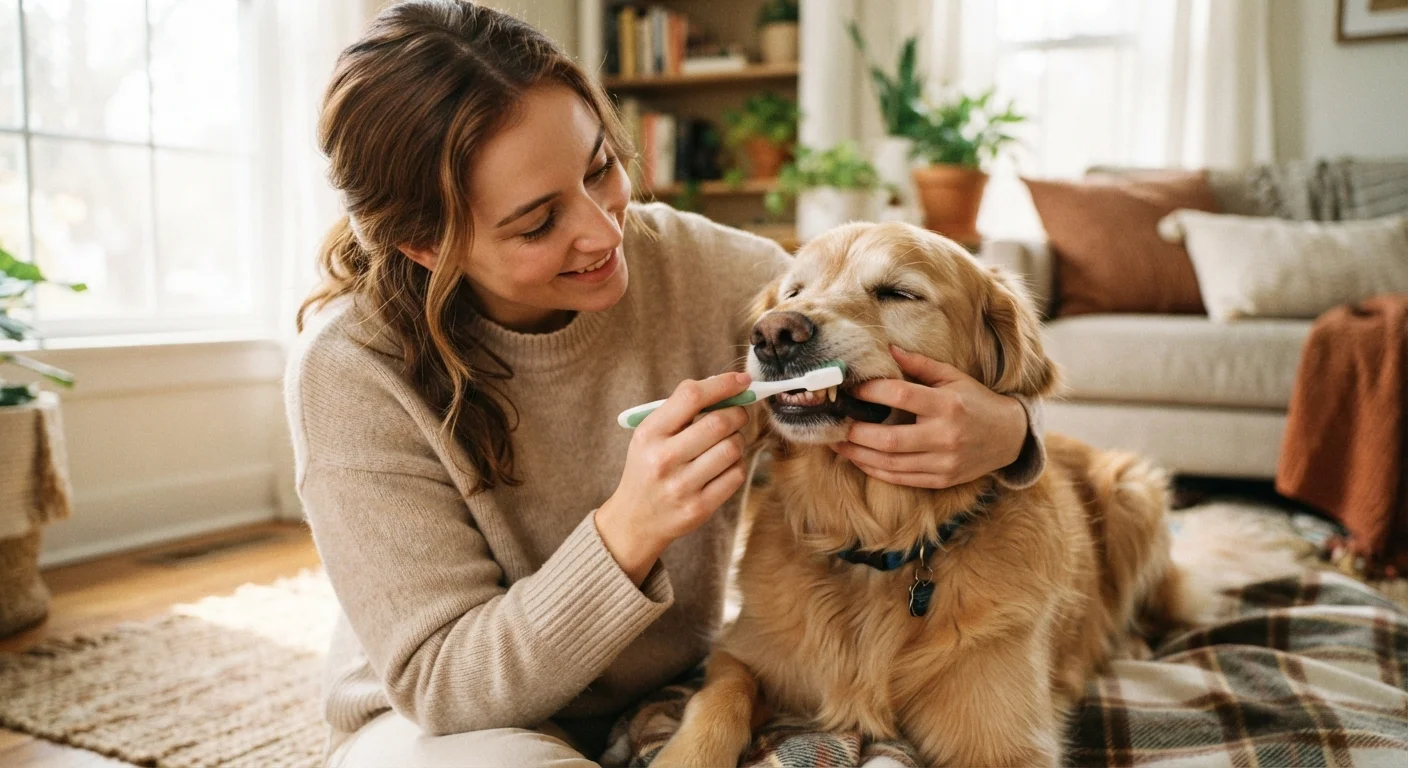
Once your pet is comfortable with mouth handling, apply a pea-sized amount of pet-safe toothpaste to a finger brush. Slip it over your index finger and gently rub it along the outer surfaces of a few teeth using small circular motions. Focus on the upper back teeth first - these accumulate the most tartar and are a high-priority area.
Transition to a Toothbrush
After your pet is relaxed with the finger brush, introduce a soft-bristled pet toothbrush. The angled head allows better access to back molars. Use the same small circular motion at a 45-degree angle to the gum line - this angle helps the bristles gently clean just below the gumline where plaque builds up fastest.
Work Up to a Full Mouth Session
Over the course of one to two weeks, gradually extend the session until you're covering all accessible outer tooth surfaces. A thorough brushing session for a medium-sized dog takes about two minutes. For cats, even 30 to 60 seconds of effective brushing offers real benefit. Aim for daily sessions - once a day is the standard veterinary recommendation for meaningful plaque control.
Make Every Session End on a Positive Note
Immediately after brushing, offer your pet praise, a brief play session, or a dental-friendly treat. Pairing the experience with something your pet already loves creates a positive association that makes future sessions easier. Over time, many pets come to accept - and even anticipate - the routine.
Dental brushing pairs naturally with a broader grooming routine. If you're building out a full care schedule, our piece on grooming habits that prevent skin and coat problems is a useful companion read.
Beyond Brushing: Supporting Dental Health Between Sessions
Brushing is the gold standard, but it works best as part of a layered approach. Dental chews, water additives, and specially formulated diets can complement your brushing routine - ask your veterinarian which options have earned recognition from veterinary dental organizations, as not all products on the market have been rigorously evaluated.
Diet also plays a role. Dry kibble doesn't clean teeth the way some owners assume, but certain therapeutic dental diets are designed with fiber structures that mechanically reduce plaque. If you're weighing food types for your pet, our overview of dry kibble vs. wet food breaks down what the differences actually mean for dental and overall health.
Finally, professional dental cleanings under anesthesia remain an important part of your pet's care - home brushing slows tartar accumulation but cannot remove existing buildup. Your vet can advise on how often your individual pet needs a professional cleaning based on breed, age, and oral health history. For a full-lifecycle perspective on pet health priorities, our end-to-end pet care overview covers how dental needs evolve as pets age.
This article provides general pet care information and is not a substitute for professional veterinary advice. Always consult a licensed veterinarian regarding your individual pet's health needs.