

Key Takeaways
- Wet food provides significantly more moisture, which matters most for cats and pets with urinary or kidney concerns.
- Dry kibble's texture may help reduce tartar buildup, but it is not a substitute for regular dental care.
- Calorie density differs: dry food packs more calories per cup, making portion control especially important.
- Cost per serving is generally lower for dry kibble; wet food costs more on a per-calorie basis.
- Many vets suggest a mixed feeding approach can capture benefits of both formats.
- Always check for an AAFCO nutritional adequacy statement on any food you choose.
Option A
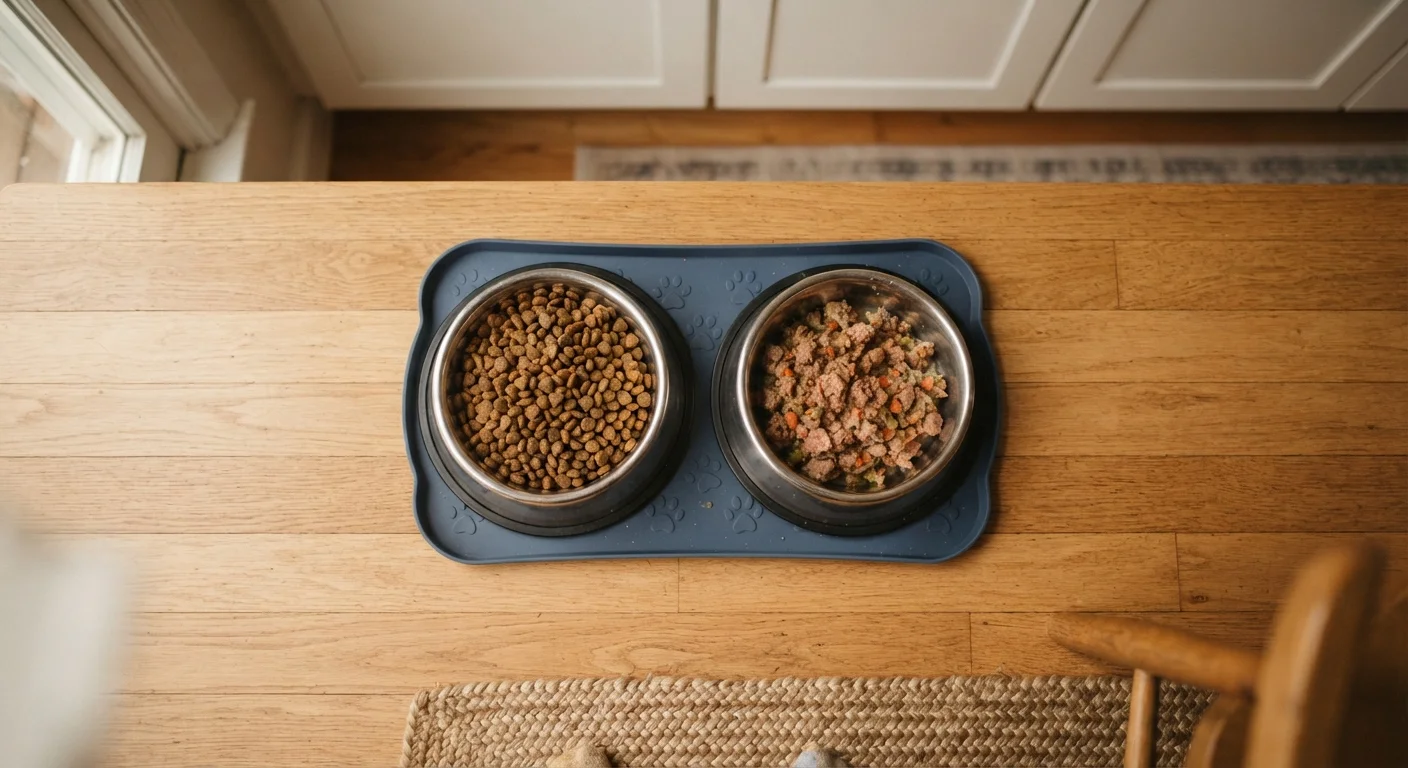
Dry Kibble
The convenient, budget-friendly everyday staple.
Best for: Pet owners seeking an affordable, shelf-stable food that supports dental abrasion and suits most healthy adult pets.
Option B
Wet Food
The moisture-rich, highly palatable option for picky or special-needs pets.
Best for: Pets needing extra hydration, senior animals with dental issues, or picky eaters who need encouragement to eat consistently.
If your cat has a history of urinary tract issues or drinks very little water
Wet Food
The high moisture content in wet food - often 70-80% water - meaningfully increases daily fluid intake, which can support urinary tract health in cats. Consult your vet for individualized guidance.
If you have a healthy adult dog on a tight household budget
Dry Kibble
Dry kibble delivers complete nutrition at a lower cost per serving, stores easily without refrigeration, and suits the digestive needs of most healthy adult dogs.
If your pet is a senior with dental pain or missing teeth
Wet Food
Soft wet food is far easier to chew for pets with dental disease or tooth loss, helping them maintain adequate nutrition without discomfort.
If you want the simplest, most flexible everyday feeding routine
Dry Kibble
Kibble can be portioned, left in a bowl without spoiling quickly, and is compatible with most automatic feeders - making daily feeding straightforward.
If your pet is a picky eater or has a reduced appetite
Wet Food
Wet food's stronger aroma and softer texture tend to be more appealing to reluctant eaters, making it easier to encourage consistent, adequate intake.
What's Actually Different Between the Two Formats
At their core, dry kibble and wet food deliver similar macronutrients - protein, fat, and carbohydrates - but they differ considerably in moisture content, texture, caloric density, and how they're processed. Understanding these structural differences helps you make a choice grounded in your pet's actual physiology rather than packaging claims.
Moisture is the most dramatic difference. Dry kibble typically contains around 6-10% moisture, while wet or canned food contains 70-80%. For cats especially - who evolved as desert animals with a naturally low thirst drive - getting water through food rather than a bowl is closer to their biological norm. Dogs can generally compensate by drinking more water, but pets with kidney disease or urinary conditions often benefit from the added hydration wet food provides.
Caloric density works in the opposite direction. Because kibble has so little moisture, those calories are concentrated. A single cup of dry food can contain 300-400 calories depending on the formulation. Wet food, diluted with water, delivers fewer calories per gram - which can be useful for weight management but means your pet needs larger serving volumes to meet their daily energy needs.
For a deeper look at how to interpret what's actually in any formula you buy, see our guide on reading pet food labels.
| Criterion | Dry Kibble | Wet Food |
|---|---|---|
| Moisture content | ~6-10% | ~70-80% |
| Caloric density | High (more calories per gram) | Lower (diluted by water content) |
| Cost per serving | Generally lower | Generally higher |
| Shelf life once opened | Days (airtight container) | 24-48 hours (refrigerated) |
| Dental abrasion benefit | Modest reduction in tartar | Minimal abrasion benefit |
| Palatability for picky eaters | Lower aroma appeal | Higher aroma and texture appeal |
| Ease for pets with dental pain | Can be difficult to chew | Soft and easy to eat |
| Compatible with auto-feeders | Yes | Generally no |
Dental Health, Palatability, and Special Needs
One of the most repeated claims in pet food marketing is that kibble cleans teeth. There's a kernel of truth here: the mechanical abrasion of crunching hard kibble pieces can reduce tartar accumulation compared to a food that requires no chewing. However, this effect is modest and varies by kibble size and texture. Most veterinary dental organizations agree that kibble alone is not sufficient dental care. Regular tooth brushing remains the most effective prevention - something our guide on brushing your pet's teeth covers in practical detail.
Wet food, by contrast, leaves more residue on teeth and does less to mechanically clean surfaces. For pets that already have significant dental disease or missing teeth, though, wet food is often the more compassionate choice - it's simply easier and less painful to eat.
Palatability tends to favor wet food. Its stronger scent and softer texture make it more appealing to picky eaters, older animals with diminished senses of smell, and pets recovering from illness. If your pet is consistently refusing meals, texture and aroma often matter more than ingredients.
~70-80%
Moisture content in typical wet pet food
According to AAFCO guidelines, canned pet foods must contain no more than 78% moisture unless labeled as a "stew," "gravy," or similar product.
~80%
Adult cats with dental disease by age 3
The American Veterinary Medical Association estimates that a large majority of cats show signs of dental disease by age three, underscoring that food format alone is insufficient dental care.
~2x
Typical cost difference per calorie, wet vs. dry
Consumer feeding cost comparisons generally show wet food costs roughly two to four times more per calorie than dry kibble of comparable quality, though prices vary widely by brand and region.
It's also worth noting that nutritional needs shift across a pet's life. A kitten's energy requirements differ markedly from a senior cat's. Our article on how pets age can help you think about food format as part of evolving care.
Cost, Convenience, and Mixing Both Formats
On a per-calorie basis, dry kibble is almost always the more affordable option. A pound of dry food delivers significantly more calories than a pound of canned food once you account for water weight. For multi-pet households or larger breeds, that cost difference adds up quickly over months of feeding.
Convenience also favors kibble: it has a longer shelf life once opened (days vs. hours for wet food), is compatible with timed automatic feeders, and doesn't need refrigeration. Wet food, once opened, should be refrigerated and used within 24-48 hours.
A Note on Mixed Feeding
If you choose to combine dry and wet food, keep total daily calorie intake consistent to avoid unintentional overfeeding. Both foods contribute to your pet's energy intake, so portions of each should be adjusted accordingly. Your veterinarian or a board-certified veterinary nutritionist can help you calculate appropriate amounts for your pet's size, age, and activity level.
Many veterinarians suggest a mixed feeding approach - dry food as the daily foundation with wet food added as a topper or offered on rotation. This strategy can provide the cost efficiency and dental benefits of kibble while delivering added moisture, variety, and palatability. There's no universal rule, though. The right balance depends on your pet's health status, age, and individual preferences. Always look for foods carrying an AAFCO (Association of American Feed Control Officials) nutritional adequacy statement to confirm the formula is complete and balanced for your pet's life stage.
For broader context on what nutrition science actually supports, including common misconceptions about pet diets, separating pet nutrition myth from fact is worth a read.
This article is for general informational purposes only and is not veterinary advice. Always consult a licensed veterinarian for guidance specific to your pet's health, diet, and medical history.