
Renters Insurance vs. Homeowners Insurance: Where the Coverage Boundaries Lie

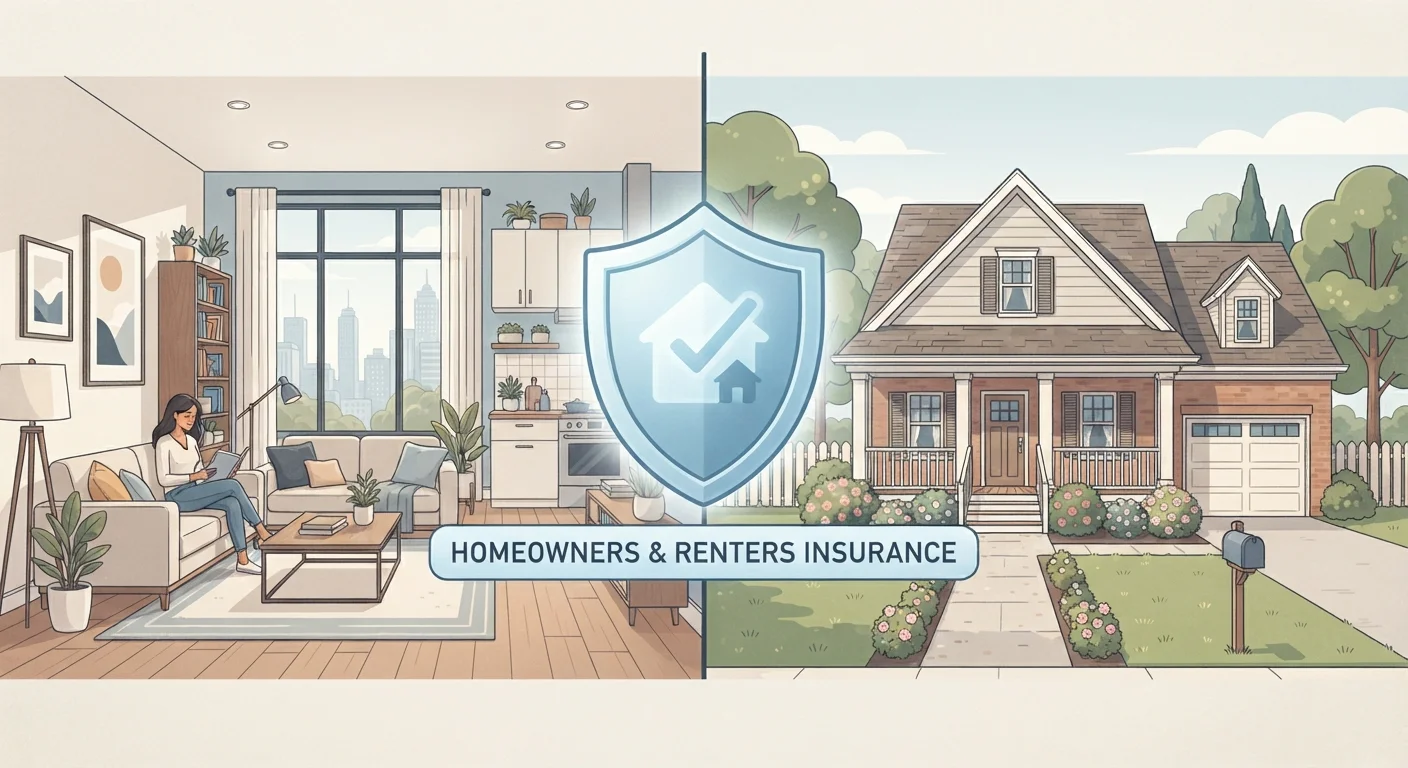
Key Takeaways
- Renters insurance covers personal belongings and liability but never the physical structure of the building.
- Homeowners insurance covers the dwelling itself, other structures, personal property, and liability in one policy.
- Both policy types include personal liability protection, which covers legal costs if someone is injured on your property.
- Homeowners insurance typically costs more because it must account for rebuilding or repairing the structure.
- Neither policy automatically covers floods or earthquakes - separate coverage is generally needed for those perils.
Option A
Renters Insurance
Protection for your belongings and liability - not the building.
Best for: Anyone who rents an apartment, condo, or home and wants coverage for personal property and liability without insuring the structure itself.
Option B
Homeowners Insurance
Broader coverage that wraps the structure and everything inside it.
Best for: People who own their home and need to protect both the physical dwelling and their personal property, plus liability.
If you rent your home and want to protect your belongings
Renters Insurance
Renters insurance is purpose-built for tenants. It covers your personal property and liability without paying to insure a building you don't own.
If you own your home - with or without a mortgage
Homeowners Insurance
Homeowners insurance protects your investment in the physical structure as well as your personal property and liability exposure.
If your mortgage lender requires insurance
Homeowners Insurance
Lenders nearly always require homeowners insurance as a condition of the mortgage - renters insurance does not satisfy that requirement.
If you want the most affordable liability coverage while renting
Renters Insurance
Renters policies typically carry lower premiums than homeowners policies and still provide meaningful liability and personal property protection.
The Core Difference: Who Owns the Building
The single biggest distinction between renters insurance and homeowners insurance comes down to one question: do you own the structure you live in?
A renters insurance policy covers your personal property and your personal liability - full stop. The walls, roof, plumbing, and electrical systems are the landlord's problem, and your landlord's insurance policy handles those. What that landlord policy does not cover is your furniture, electronics, clothing, or any other belongings. That gap is exactly what renters insurance fills.
A homeowners insurance policy takes on a wider mandate. It covers the dwelling itself (called Coverage A in standard policy language), separate structures like a detached garage or fence (Coverage B), your personal property inside the home (Coverage C), and your personal liability (Coverage D). Because the policyholder owns the physical structure, insuring it is part of the deal.
For a more detailed look at what each policy includes and excludes, see our side-by-side breakdown of homeowners vs. renters insurance.
| Criterion | Renters Insurance | Homeowners Insurance |
|---|---|---|
| Covers the physical dwelling | No | Yes |
| Covers personal property | Yes | Yes |
| Personal liability coverage | Yes | Yes |
| Additional living expenses | Yes | Yes |
| Covers other structures (garage, fence) | No | Yes |
| Typically required by lenders | No | Yes |
| Average annual premium range | Lower (often under $200) | Higher (often $1,000+) |
| Flood and earthquake coverage | Not standard | Not standard |
What Each Policy Actually Covers
Despite their structural differences, both policy types share a few common coverage categories.
Personal Property
Both renters and homeowners policies cover personal belongings against named perils - typically fire, theft, vandalism, wind, and certain water damage (not flooding). The key difference is how much the coverage needs to do. A homeowners policy may need to cover tens of thousands of dollars in contents spread across a larger home; a renters policy can often be calibrated to a smaller inventory.
Coverage is generally offered on either an actual cash value basis (accounting for depreciation) or a replacement cost value basis (paying what it costs to buy a comparable new item). Replacement cost coverage costs more in premiums but pays out more after a loss. To understand exactly what each line item on your policy is paying for, our guide on what you're actually paying for in home insurance breaks it down clearly.
Personal Liability
Both policy types include personal liability coverage. If a guest slips and falls in your apartment or on your property and sues you, liability coverage helps pay legal defense costs and any resulting damages, up to your policy limit. This coverage also typically extends to incidents that happen away from the home in certain circumstances.
Additional Living Expenses
If your home or apartment becomes uninhabitable due to a covered loss - a fire, for example - both policies generally cover temporary housing costs and increased living expenses while repairs are underway. This is sometimes called Loss of Use coverage.
Loss of Use Coverage: A Frequently Overlooked Benefit
Both renters and homeowners policies typically include Loss of Use (or Additional Living Expenses) coverage, but many policyholders don't know it exists until they need it. If a covered event - like a fire or significant water damage - makes your residence temporarily uninhabitable, this coverage can help pay for a hotel, short-term rental, and even meals above your normal spending. Coverage limits and duration vary by policy, so it's worth checking your declarations page to know what you have before a loss occurs.
Where the Coverage Ends
Understanding the boundaries of each policy is just as important as knowing what they cover.
For renters, the most common misconception is assuming the landlord's policy provides any protection for their stuff. It doesn't. Your landlord's building coverage is entirely separate from your personal property. If a pipe bursts and ruins your laptop and couch, you need your own renters policy to recover those costs. Our article on what renters insurance covers and what it doesn't walks through the common gaps renters overlook.
For homeowners, the structure coverage sounds comprehensive - but standard homeowners policies carry significant exclusions. Flood damage is almost universally excluded and requires a separate flood insurance policy, typically through the National Flood Insurance Program (NFIP) or a private insurer. Earthquakes are also excluded in nearly all standard policies. Our guide on what standard home insurance policies don't cover details these exclusions in full.
High-value items like jewelry, fine art, or collectibles may also be subject to sub-limits under both policy types. If your belongings include items with significant individual value, a separate scheduled personal property endorsement may be worth asking your insurer about.
This article provides general insurance education and is not personalized insurance advice. Coverage terms, exclusions, and eligibility vary by insurer and state. Always read your actual policy documents and consult a licensed insurance agent for guidance specific to your situation.