

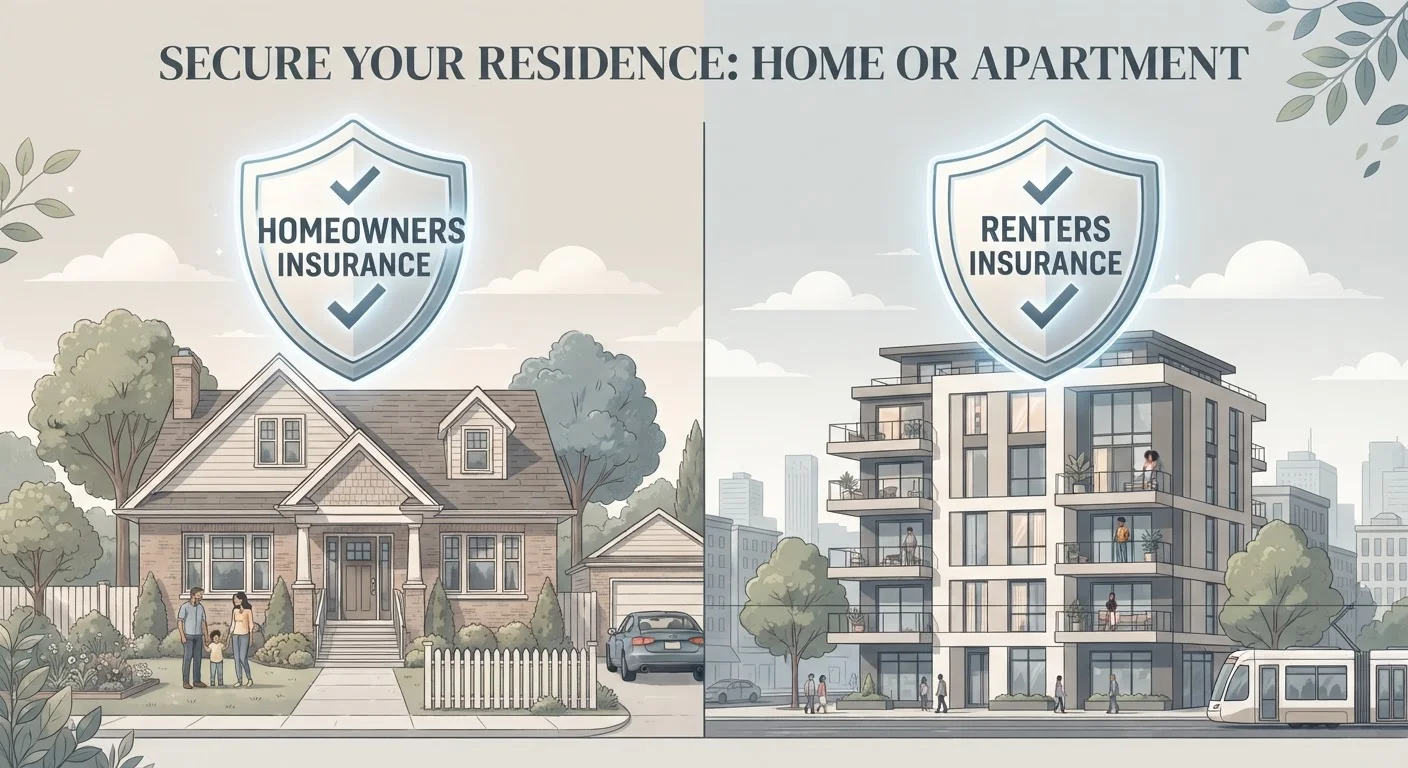
Key Takeaways
- Homeowners insurance covers the physical structure of a property; renters insurance does not.
- Both policies typically include personal property and liability coverage.
- Renters insurance is generally far less expensive than homeowners insurance.
- A landlord's insurance policy never covers a tenant's personal belongings.
- Neither standard policy automatically covers floods or earthquakes - separate coverage is needed.
- Your housing situation - owner or renter - determines which policy type applies to you.
Option A
Homeowners Insurance
The comprehensive coverage built for property owners.
Best for: Anyone who owns their home and needs protection for the structure itself, personal belongings, and liability.
Option B
Renters Insurance
The affordable, personal coverage built for tenants.
Best for: Anyone renting a home or apartment who wants protection for their belongings and personal liability - not the building itself.
If you own your home outright or carry a mortgage
Homeowners Insurance
Lenders typically require it, and it's the only policy that protects the building structure itself along with your belongings and liability.
If you rent an apartment or house
Renters Insurance
Your landlord's policy doesn't cover your possessions. Renters insurance fills that gap at a relatively low annual cost.
If you want liability protection but don't own property
Renters Insurance
Renters insurance includes personal liability coverage, protecting you if someone is injured in your rental unit or you accidentally damage someone else's property.
The Core Difference: What Each Policy Actually Covers
The single biggest distinction between homeowners and renters insurance is straightforward: homeowners insurance covers the building; renters insurance does not. When you own a home, you're responsible for the structure - the walls, roof, foundation, and built-in systems. Homeowners insurance reflects that responsibility. When you rent, the landlord owns the building and carries their own insurance for it. Your coverage need is narrower.
Both policy types share two common threads: personal property coverage (your furniture, electronics, clothing, and other belongings) and personal liability coverage (protection if you're held legally responsible for injuring someone or damaging their property). But only homeowners insurance adds dwelling coverage - the component that pays to repair or rebuild the structure itself after a covered loss.
| Criterion | Homeowners Insurance | Renters Insurance |
|---|---|---|
| Dwelling/structure coverage | Yes - core component | No |
| Personal property coverage | Yes | Yes |
| Personal liability coverage | Yes | Yes |
| Loss of use / additional living expenses | Yes | Yes |
| Typical annual cost range | Higher - structure adds cost | Lower - no structure to cover |
| Who it's designed for | Property owners | Tenants / renters |
| Flood damage (standard policy) | Not included | Not included |
| Earthquake damage (standard policy) | Not included | Not included |
For a closer look at what renters coverage actually includes - and where the gaps tend to appear - see our article on what renters insurance covers.
Cost, Structure, and What Drives Your Premium
Homeowners insurance costs significantly more than renters insurance, and that gap reflects coverage scope. A homeowners policy must account for the full replacement cost of the structure - which can run into hundreds of thousands of dollars. Renters insurance only needs to cover personal property and liability, making it one of the more affordable personal insurance products available.
~$1,400/yr
Average homeowners insurance premium
The National Association of Insurance Commissioners has reported average homeowners premiums in this range nationally, though costs vary widely by state and home value.
~$170/yr
Average renters insurance premium
Industry data consistently places average renters insurance well below $200 annually, making it one of the more accessible personal insurance products.
55%
Renters who lack renters insurance
Insurance Information Institute surveys have found that a majority of renters go without any renters insurance, often assuming their landlord's policy protects them.
Several factors shape premiums for both policy types. For homeowners, the age and condition of the home, local weather risks, the coverage limit on the dwelling, and the deductible chosen all play a role. For renters, the primary drivers are the total value of personal belongings, the liability limit selected, and geographic location.
Both policies allow you to choose between actual cash value (ACV) and replacement cost value (RCV) for personal property. ACV pays out what your belongings are worth today after depreciation; RCV pays what it actually costs to replace them new. The difference matters when you file a claim - and it's worth understanding before you choose a plan. You can find a broader breakdown of these line items in our guide to what you're actually paying for in home insurance.
Shared Gaps: What Neither Policy Covers by Default
Neither homeowners nor renters insurance is a catch-all. Both standard policy types generally exclude flood damage and earthquake damage. If you live in an area prone to either, you'd need a separate policy or endorsement to address those risks.
Other common exclusions include sewer backup, normal wear and tear, and damage from neglected maintenance. Homeowners should pay close attention to these gaps - our article on what standard home insurance doesn't cover walks through the most common ones in detail. Renters face similar personal property exclusions and should review their policy carefully.
Your Landlord's Policy Doesn't Protect You
A common misconception among renters is that the building's insurance policy extends to their personal belongings. It doesn't. A landlord's policy covers the structure and the landlord's liability - not a tenant's furniture, electronics, or clothing. If those items are damaged or stolen, only a renters insurance policy in the tenant's own name would typically respond.
High-value items - jewelry, art, musical instruments, collectibles - may have sub-limits under both policy types. A scheduled personal property endorsement (sometimes called a "floater") can provide broader protection for these items, typically for an additional premium.
This article is for general informational purposes only and does not constitute insurance, financial, or legal advice. Coverage terms, exclusions, and availability vary by insurer and state. Always read your actual policy documents and consult a licensed insurance professional for guidance specific to your situation.