

Key Takeaways
- Plant-based diets are consistently linked to lower rates of heart disease, type 2 diabetes, and certain cancers.
- Omnivore diets can be equally healthful when built around whole foods, lean proteins, and abundant vegetables.
- Key nutrients like B12, iron, calcium, and omega-3s require deliberate planning on a plant-based diet.
- Diet quality - not the label - is the strongest predictor of long-term health outcomes.
- Sustainable eating patterns are more effective than rigid dietary rules for most people.
Our Verdict
Neither plant-based nor omnivore eating is universally superior - the evidence consistently shows that diet quality, variety, and whole-food emphasis matter more than any single dietary label. Both patterns can support long-term health when planned thoughtfully, and the most sustainable choice is the one a person can maintain over time.
| Best for | Recommended |
|---|---|
| Those focused on reducing chronic disease risk and environmental impact | Plant-Based Diet |
| Those prioritizing dietary flexibility and ease of meeting all nutrient needs | Omnivore Diet |
| Those seeking a middle ground with strong evidence behind it | Primarily plant-based omnivore pattern (e.g., Mediterranean-style) |
Defining the Two Approaches
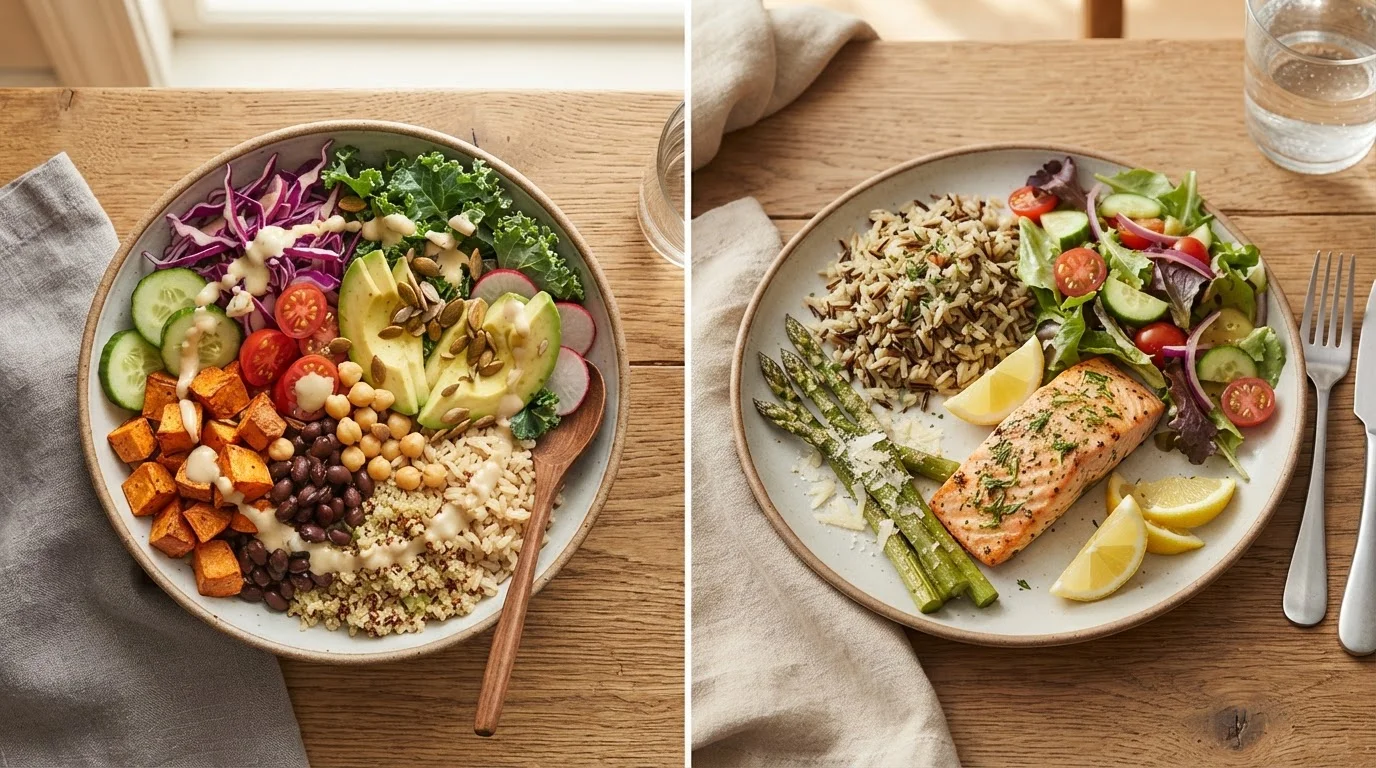
A plant-based diet emphasizes foods derived from plants - vegetables, fruits, legumes, whole grains, nuts, and seeds - while minimizing or eliminating animal products. This spectrum ranges from fully vegan (no animal products) to flexitarian (mostly plant foods, with occasional meat or fish).
A standard omnivore diet includes both plant and animal foods. In the United States, a typical omnivore pattern tends to include significant amounts of meat, dairy, and eggs alongside varying levels of produce and whole grains. However, calling any diet "standard" is broad - omnivore eating varies enormously in quality.
Understanding these distinctions matters because research rarely compares a well-designed plant-based diet to a poorly designed omnivore one, or vice versa. Fair comparisons hold diet quality constant on both sides, and that context shapes how we read the evidence. For a broader look at how eating patterns affect long-term habits, see our piece on why restrictive diets often fail.
What the Research Shows on Health Outcomes
Large-scale observational studies, including research from the Adventist Health Study and multiple European cohort studies, suggest that plant-based diets are associated with lower risks of cardiovascular disease, type 2 diabetes, hypertension, and colorectal cancer. These associations hold even after adjusting for lifestyle factors like smoking and physical activity.
Omnivore diets are not inherently unhealthy. Mediterranean and DASH dietary patterns - both technically omnivorous - have substantial evidence supporting heart health and blood pressure management. The common thread across these health-promoting omnivore patterns is a high intake of plant foods, with animal protein playing a supporting rather than central role.
Where the evidence tilts more clearly is in diets heavy in processed meats and refined foods. The World Health Organization classifies processed meats as Group 1 carcinogens based on sufficient evidence of colorectal cancer risk. This doesn't indict all animal foods equally - the source and preparation matter considerably. You can explore what the evidence says about processed food broadly in our article on the trade-offs of ultra-processed foods.
~25%
Lower cardiovascular disease risk in vegetarians
A large meta-analysis published in JAMA Internal Medicine found vegetarians had roughly 25% lower risk of dying from ischemic heart disease compared to non-vegetarians.
30-35g
Daily fiber recommended for adults
Most Americans consume only about half the recommended daily fiber intake, a gap more easily closed with abundant plant food consumption, according to USDA dietary data.
Nutritional Trade-Offs to Understand
Each eating pattern carries distinct nutritional considerations that require awareness.
Plant-Based Diets: Nutrients That Need Attention
- Vitamin B12: Found almost exclusively in animal products. Deficiency is a genuine risk for vegans; supplementation is widely recommended by dietitians for those who avoid all animal foods.
- Iron and Zinc: Plant sources (non-heme iron) are less bioavailable than animal sources. Pairing with vitamin C-rich foods improves absorption.
- Calcium: Obtainable from fortified plant milks, tofu, and leafy greens, but requires intentional planning.
- Long-chain Omega-3s (EPA/DHA): Fatty fish is the richest dietary source. Algae-based supplements offer a vegan alternative.
- Complete protein: No single plant food provides all essential amino acids in ideal ratios, though variety across the day addresses this adequately.
Omnivore Diets: Common Nutritional Pitfalls
- Excess saturated fat from frequent red meat and full-fat dairy consumption
- Lower fiber intake when plant foods are not prioritized
- Higher sodium exposure from processed and packaged meat products
| Plant-Based Diet | Omnivore Diet | |
|---|---|---|
| Cardiovascular risk | Generally lower in well-designed versions | Varies widely by food quality |
| Protein adequacy | Achievable with variety; requires planning | Easily met from diverse sources |
| Vitamin B12 | Supplementation typically required | Naturally adequate from animal foods |
| Dietary fiber | Typically high | Often lower; depends on plant food intake |
| Saturated fat intake | Generally lower | Higher if red/processed meat is frequent |
| Environmental footprint | Lower on average | Higher, especially with red meat |
| Flexibility and social ease | Can require more planning in social settings | Generally easier in most food environments |
Our guide to building a balanced meal without a formula offers practical strategies for meeting nutrient needs regardless of which pattern you follow.
Sustainability, Practicality, and Individual Fit
Research consistently shows that the most health-supportive diet is one a person can actually sustain. Rigid, all-or-nothing approaches tend to underperform flexible, habit-based strategies over time. A person who thrives on a primarily plant-based diet will benefit more than one who adopts it reluctantly and abandons it within months.
Practical factors - food access, cultural background, cooking skills, budget, and taste preferences - all influence which approach is realistic for a given individual. Neither dietary philosophy maps cleanly onto every life circumstance.
Start With Addition, Not Elimination
If shifting toward a more plant-forward diet feels overwhelming, focus first on adding more whole plant foods rather than removing animal products. Increasing vegetables, legumes, and whole grains delivers real nutritional benefit regardless of where you land on the spectrum. Small, consistent changes tend to stick far better than dramatic overnight overhauls.
There is also meaningful overlap between the two patterns. Most dietary researchers agree that increasing plant food intake benefits health across eating styles - including for committed omnivores. A diet that centers plants while allowing for moderate, high-quality animal foods occupies evidence-supported middle ground reflected in patterns like the Mediterranean diet.
This article is for general informational and educational purposes only and does not constitute medical or dietary advice. Individual nutritional needs vary. Please consult a registered dietitian or qualified healthcare professional before making significant changes to your diet, especially if you have an existing health condition.