
Lithium-Ion vs. Lithium-Polymer Batteries: Which Powers Your Gadgets and Why It Matters

Key Takeaways
- Lithium-ion batteries use a liquid electrolyte; lithium-polymer batteries use a gel or solid-state electrolyte.
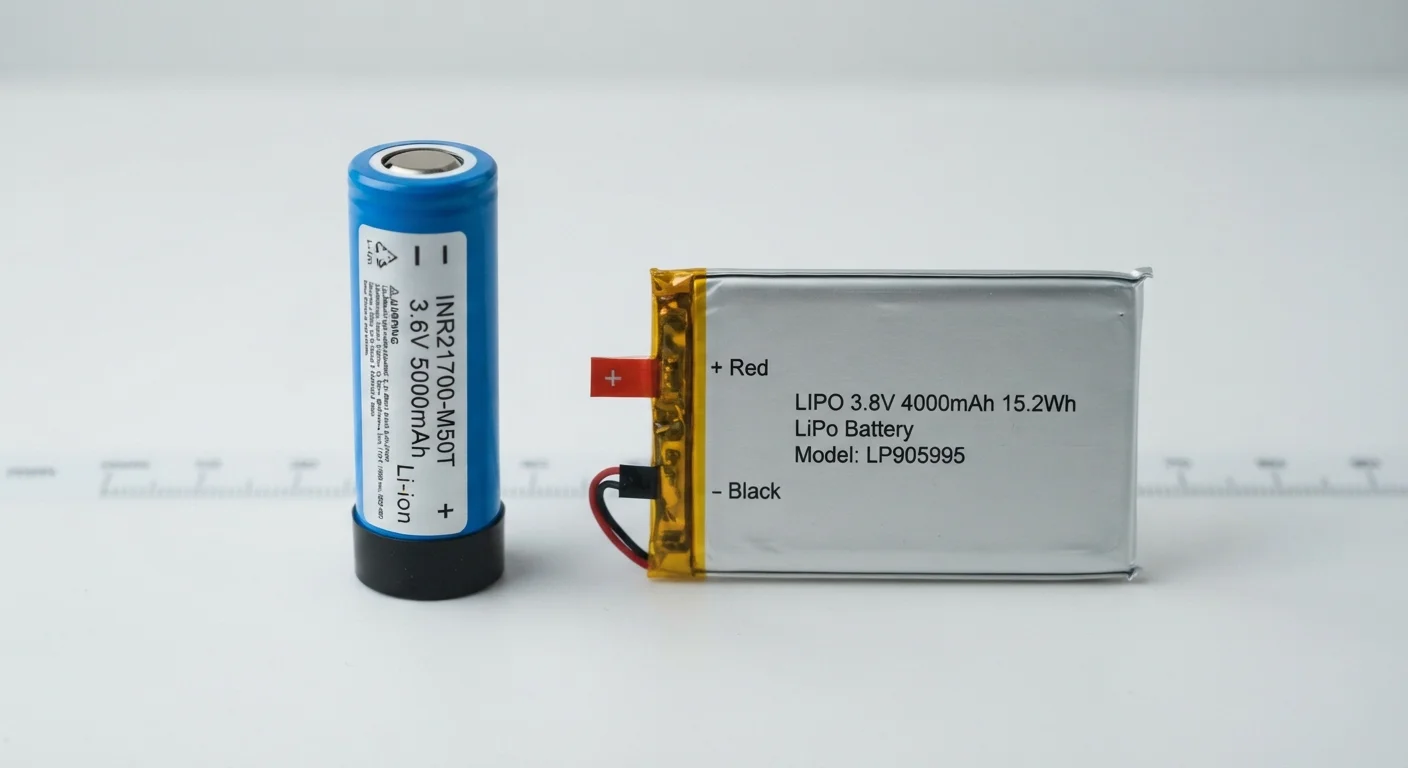
- LiPo cells can be manufactured in almost any shape, enabling slimmer device designs.
- Li-Ion generally offers higher energy density and a longer proven cycle life in most consumer applications.
- LiPo batteries carry a lower risk of electrolyte leakage but can swell if damaged or improperly charged.
- Both chemistries benefit from avoiding extreme temperatures and partial rather than full discharge cycles.
- Understanding which battery type your device uses helps you adopt better charging and storage habits.
Option A
Lithium-Ion (Li-Ion)
The established, high-capacity workhorse of consumer electronics.
Best for: Devices where energy density and long cycle life are the priority, such as laptops and power tools.
Option B
Lithium-Polymer (LiPo)
The flexible, slim-profile solution for design-forward devices.
Best for: Thin smartphones, wearables, and drones where shape flexibility and light weight take precedence.
If you need maximum run time from a laptop or portable power bank
Lithium-Ion (Li-Ion)
Li-Ion cells typically deliver higher volumetric energy density and a well-documented multi-year cycle life, making them the practical choice when outright capacity matters most.
If your device is ultrathin or has an irregular internal shape
Lithium-Polymer (LiPo)
LiPo's flexible pouch format can be manufactured to fit curved or unusually shaped cavities, which is why most flagship smartphones and smartwatches rely on it.
If you are evaluating safety and leakage risk
Lithium-Polymer (LiPo)
The gel or dry-polymer electrolyte eliminates the liquid leakage risk present in conventional Li-Ion cells, though proper charging habits remain essential for both types.
If you need a proven, cost-effective solution for high-drain power tools
Lithium-Ion (Li-Ion)
Li-Ion cells in cylindrical formats have a mature manufacturing ecosystem, lower per-cell cost, and robust performance under sustained high-current draw.
The Core Chemistry: What Sets These Two Apart
Both battery types belong to the same lithium-based electrochemical family and share a fundamental operating principle: lithium ions move between a cathode and an anode during charge and discharge. The critical difference lies in the electrolyte - the medium those ions travel through.
In a conventional lithium-ion battery, the electrolyte is a liquid solution, typically a lithium salt dissolved in an organic solvent. This liquid is housed in a rigid metal or hard-plastic casing, which gives Li-Ion cells their familiar cylindrical or prismatic shape.
A lithium-polymer battery replaces that liquid with a gel-polymer or dry solid-polymer electrolyte. Because the electrolyte is semi-solid, it can serve simultaneously as the separator between electrodes. The result is a pliable, pouch-style cell that can be pressed flat or shaped to almost any dimension a device designer requires.
This structural distinction cascades into nearly every performance and safety characteristic the two types display in real-world use. Understanding how batteries degrade at the chemical level can help you appreciate why electrolyte choice matters so much for longevity.
| Criterion | Lithium-Ion (Li-Ion) | Lithium-Polymer (LiPo) |
|---|---|---|
| Electrolyte type | Liquid solution | Gel or solid polymer |
| Typical cell form | Cylindrical or prismatic | Flexible pouch |
| Energy density (typical) | 150-265 Wh/kg | 100-180 Wh/kg |
| Design flexibility | Limited by rigid casing | Very high - any shape |
| Leakage risk | Possible if casing breached | Lower - no liquid electrolyte |
| Swelling risk | Lower under normal use | Higher if overcharged or damaged |
| Typical cycle life | 300-1,000+ cycles | 200-500 cycles (varies) |
| Common applications | Laptops, power tools, EVs | Smartphones, wearables, drones |
| Relative cost (manufacturing) | Generally lower per Wh | Generally higher per Wh |
Performance, Safety, and Design Trade-Offs
Energy density is where Li-Ion historically holds an edge. Mature Li-Ion cells commonly reach 150-265 Wh/kg, while most consumer LiPo cells land in the 100-180 Wh/kg range, though ongoing advances continue to narrow this gap. For high-capacity applications - laptops, electric-vehicle auxiliary packs, power tools - that difference translates into meaningful run time.
Form-factor flexibility swings decisively toward LiPo. Manufacturers can produce cells less than 1 mm thick or with curved profiles, which is why thin smartphones, smartwatches, and compact drones almost universally rely on LiPo. The tradeoff is mechanical fragility: puncture or severe deformation can cause the cell to swell (a condition called thermal runaway precursor swelling) and, in extreme cases, ignite.
Cycle life - the number of charge-discharge cycles before a battery retains only 80% of its original capacity - tends to favor Li-Ion in heavy-use scenarios. Quality cylindrical Li-Ion cells are routinely rated for 300-500 cycles or more under standardized test conditions, with some formulations exceeding 1,000 cycles.
Safety considerations apply to both types. Li-Ion's liquid electrolyte can leak if the casing is breached; LiPo eliminates that specific risk but is more vulnerable to swelling from overcharging or physical damage. Reputable device manufacturers pair either chemistry with battery management systems (BMS) that regulate voltage, temperature, and current to keep cells within safe operating parameters.
~80%
Capacity retained after rated cycle life
Industry convention defines end-of-life for both Li-Ion and LiPo cells as retaining 80% of original capacity under standardized test conditions.
265 Wh/kg
Upper energy density for mature Li-Ion cells
High-performance lithium-ion cells used in consumer electronics and electric vehicles approach this figure, according to published electrochemical literature.
<1 mm
Minimum thickness achievable with LiPo
The pouch-cell architecture of lithium-polymer batteries allows manufacturers to produce cells thinner than a credit card for ultra-slim wearable devices.
Regardless of which type powers your device, the same care habits apply. Practical long-term device care - avoiding extreme heat, not consistently charging to 100%, and storing devices partially charged during long periods of disuse - benefits both Li-Ion and LiPo cells.
How to Identify Which Battery Your Device Uses
Most consumers never need to know which chemistry is inside their device, but the information is publicly available. Check the device's user manual, the manufacturer's specification page, or the battery label visible after removing a replaceable battery. Li-Ion cells are almost always marked Li-Ion or ICR/INR/LFP (depending on cathode chemistry). LiPo cells are typically labeled LiPo, Li-Polymer, or LiPB.
As a general heuristic: if your device is slim, light, and sealed (non-removable battery), it is very likely LiPo. If it uses a swappable battery pack or a large cylindrical cell configuration (as in many laptops and power banks), it is more likely Li-Ion.
Knowing your battery type is most useful when choosing replacement cells, third-party chargers, or storage accessories. Always use chargers rated for your specific battery chemistry and capacity - mismatched chargers are a leading cause of premature battery failure and, in rare cases, safety incidents. When in doubt, use the original equipment manufacturer's (OEM) recommended charging accessories.
A Note on 'Lithium Polymer' Marketing
Some manufacturers label batteries as 'lithium polymer' when the cells technically use a gel electrolyte rather than a true dry solid-state polymer. In everyday consumer contexts, both are sold under the LiPo designation and share similar handling requirements. True solid-state lithium batteries - with no liquid or gel component - are a distinct emerging category still largely in commercial development as of the time of writing. If you encounter 'solid-state' claims on a consumer product, review the manufacturer's technical documentation carefully.