

Key Takeaways
- Inspection requirements - and what's checked - differ by state, county, and sometimes vehicle age or type.
- Most inspections cover brakes, lights, tires, steering, mirrors, windshield wipers, and horn.
- States with emissions programs add an OBD-II scan or tailpipe test to the safety check.
- Common failure reasons include worn brake pads, burned-out lights, and check-engine lights triggered by emissions faults.
- Arriving prepared - with functional lights and no dashboard warning lights - can prevent a costly re-inspection visit.
State Vehicle Inspection
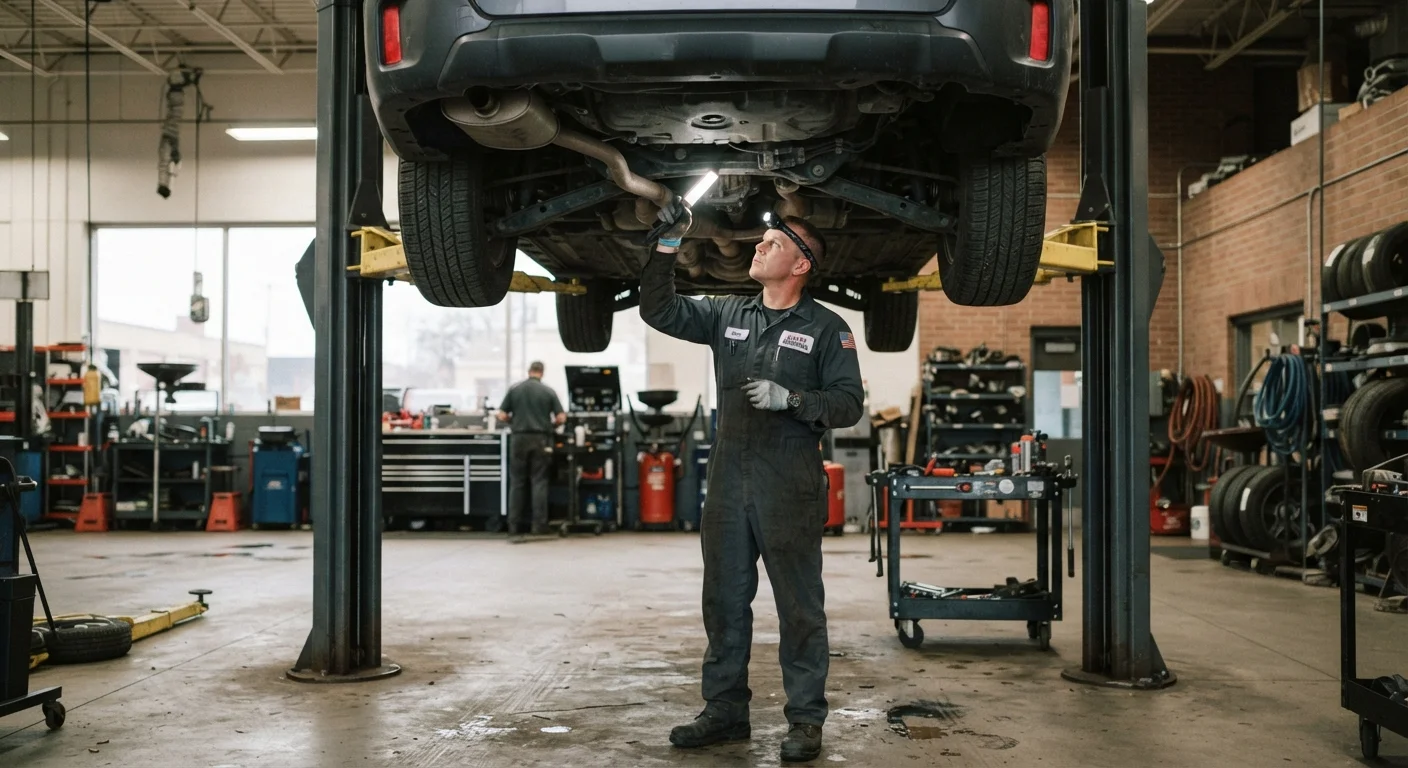
A state vehicle inspection is a mandatory safety and/or emissions check required by many U.S. states before a vehicle can be legally registered or driven on public roads. A licensed inspector examines key systems - such as brakes, lights, tires, and exhaust - to confirm the vehicle meets minimum safety and environmental standards. Requirements vary significantly by state, and some states have eliminated mandatory inspections entirely.
Emissions testing, where required, typically uses an OBD-II (On-Board Diagnostics) port scan or a tailpipe probe test to measure pollutant output against state-set thresholds.
Why States Require Vehicle Inspections
Mandatory vehicle inspections exist to keep roadways safer and, in many regions, to reduce air pollution from aging or malfunctioning vehicles. The logic is straightforward: a brake system that's failing or a tire near blowout condition poses risk not just to the driver but to everyone sharing the road.
Inspection programs are administered at the state level, which is why requirements vary so much across the country. Some states inspect every registered vehicle annually; others inspect only certain vehicle classes, model years, or counties with air-quality concerns. A handful of states have phased out mandatory inspections altogether. Before assuming what applies to you, always check your state's DMV or equivalent agency for current rules.
If you've recently purchased a used vehicle, a thorough inspection history can reveal a lot about prior maintenance habits - something a vehicle history report can also help surface.
What Inspectors Typically Check
While the exact checklist depends on your state, most safety inspections cover the following systems:
- Brakes: Inspectors assess pad and rotor condition, brake fluid presence, and whether the parking brake functions correctly. Worn pads below minimum thickness are among the most common failure points.
- Lights: All exterior lights - headlights, taillights, brake lights, turn signals, and hazard flashers - must be functional. A single burned-out bulb can result in a failed inspection.
- Tires: Tread depth is measured against state minimums (commonly 2/32 of an inch), and tires are checked for visible damage, sidewall bulging, or uneven wear that could indicate alignment or suspension problems.
- Steering and suspension: Inspectors look for excessive play in the steering wheel and check ball joints, tie rods, and shocks for wear.
- Windshield and wipers: Significant cracks in the driver's line of sight or inoperable wipers can trigger a failure.
- Horn: Yes, the horn - it's a required safety device in all states.
- Mirrors: Rearview and at least one side mirror must be present and properly positioned.
- Seat belts: Belts must retract properly and latch securely.
~26
U.S. states with mandatory periodic safety inspections
According to the Insurance Institute for Highway Safety, roughly half of U.S. states require periodic vehicle safety inspections, though specific program structures vary widely.
30-45 min
Typical inspection duration for a standard vehicle
Most licensed inspection stations complete a combined safety and emissions check within this window under normal conditions, though wait times vary by facility.
In states with emissions programs, the inspector will also connect a scan tool to the vehicle's OBD-II port - the standardized diagnostic interface found on all vehicles built after 1996 - to check for active fault codes and confirm that emissions-related monitors have completed their self-tests.
Common Reasons Vehicles Fail
Understanding why vehicles fail helps you arrive better prepared. The most frequently cited failure categories include:
- Illuminated check-engine light: In emissions-program states, any active fault code that triggers the check-engine light is an automatic failure. The underlying cause - whether an oxygen sensor, loose gas cap, or catalytic converter issue - must be diagnosed and repaired before re-inspection.
- Worn brake components: Pads and rotors that have degraded below minimums are flagged routinely. If you hear grinding or feel pulsing when braking, address it before your appointment.
- Inoperative lights: A quick walk-around with a helper before your appointment catches most lighting failures before the inspector does.
- Tire condition: Low tread depth or visible sidewall damage disqualifies a tire immediately.
- OBD-II readiness monitors not set: If you recently had battery work or a fault code cleared, your vehicle's self-diagnostic monitors may not have completed. Driving a normal mix of city and highway miles for a few days resets them.
Drive Before You Inspect
If you've recently had battery work done or a diagnostic code cleared, drive your vehicle for at least 100 to 200 miles across a mix of city and highway conditions before your inspection appointment. This allows the onboard diagnostic monitors to complete their self-tests - incomplete monitors are a common and easily avoidable reason for emissions-related failures.
How to Prepare for Your Inspection
A few straightforward checks before your appointment can save time and the cost of a re-inspection fee.
- Test every exterior light yourself - or ask someone to walk around while you cycle through headlights, brake lights, and signals.
- Check tire tread with a quarter: insert it into the tread groove with Washington's head facing down. If the top of his head is visible, tread is getting thin.
- Address any dashboard warning lights ahead of time. Even if a warning seems minor, resolve it before the inspection if you're in an emissions-testing state.
- Confirm your windshield wipers clear the glass cleanly and that there are no cracks obstructing your sightlines.
- Make sure your vehicle registration and proof of insurance are in the car - some stations check documentation as part of the process.
If you're inspecting a used vehicle you recently acquired, pairing preparation with a review of its maintenance record is worthwhile. Our pre-purchase checklist for used cars outlines what to verify before you're even on the road.
Keep in mind that a failed inspection may affect how you think about your vehicle's insurance coverage. If repairs are significant, it's worth revisiting your policy - our insurance policy review checklist is a useful starting point.
This article is for general informational purposes only. Vehicle inspection requirements vary by state and are subject to change. Always verify current rules with your state's DMV or equivalent agency, and consult a qualified mechanic for diagnosis and repair decisions.