

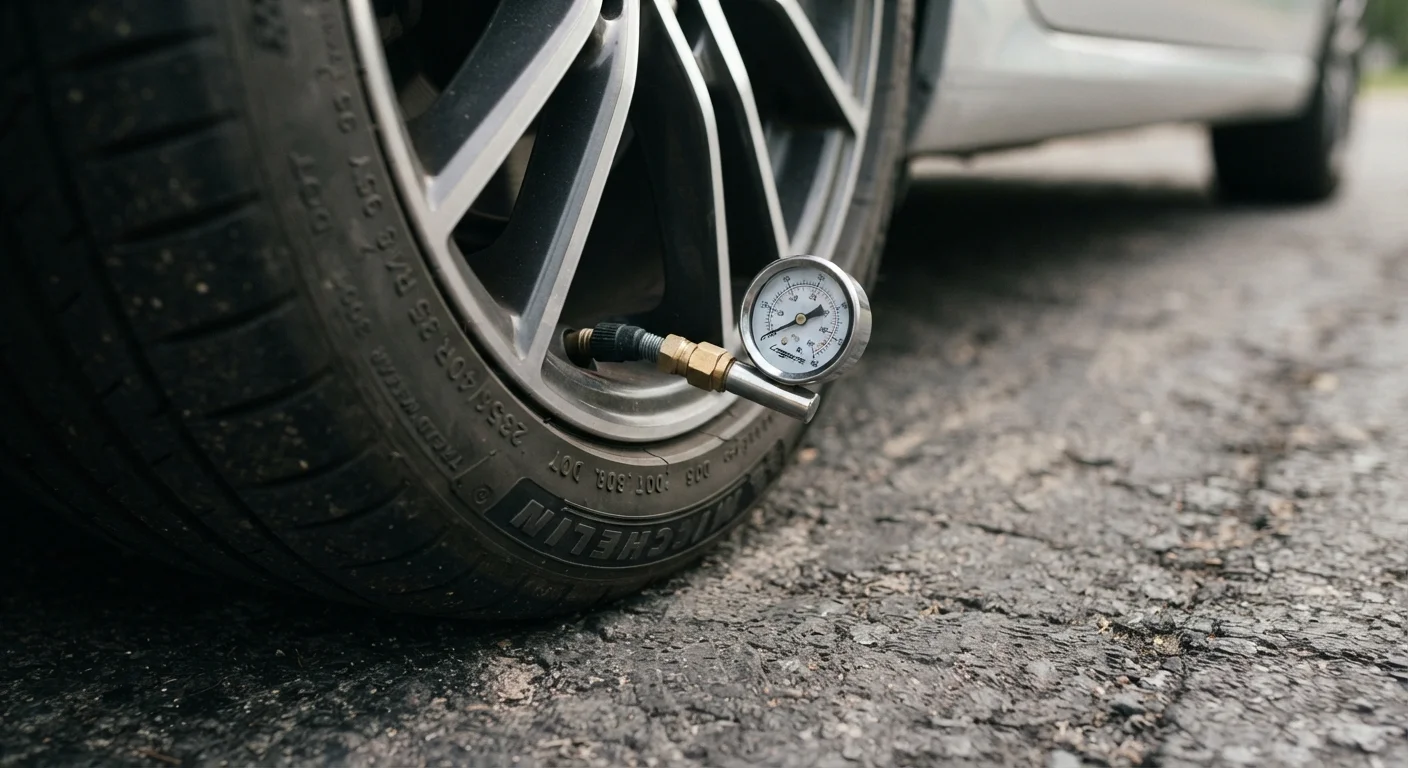
Key Takeaways
- The number printed on your tire sidewall is the maximum pressure, not the recommended driving pressure.
- Temperature swings naturally cause tire pressure to fluctuate - check pressure when tires are cold.
- Visually inspecting a tire cannot reliably detect underinflation; always use a gauge.
- Overinflation is just as damaging to tread wear and handling as underinflation.
- Your vehicle's recommended tire pressure is found on the door jamb sticker, not the tire itself.
Why Tire Pressure Myths Are So Persistent
Tire pressure is one of the most misunderstood aspects of routine vehicle maintenance. The consequences of getting it wrong range from accelerated tread wear and reduced fuel efficiency to compromised handling and, in severe cases, a blowout. Yet several stubborn myths continue to circulate in parking lots, social media threads, and even well-meaning advice from friends.
Part of the confusion stems from information printed directly on the tire itself - a number many drivers mistake for their inflation target. Clearing up that single misconception alone could extend the life of your tires significantly. Like the spec misreadings that trip up electronics shoppers, tire labeling can be genuinely misleading without the right context.
Myth
The pressure number printed on the tire sidewall is what you should inflate your tires to.
Fact
That number is the maximum pressure the tire can safely hold - not the recommended operating pressure for your vehicle.
The sidewall figure (often something like 51 PSI MAX) is a tire manufacturing specification, not a driving instruction. Inflating to that level on most passenger vehicles would result in a rock-hard ride, reduced contact patch with the road, and uneven center-tread wear. The correct inflation target for your specific vehicle is printed on the placard located on the driver's side door jamb or in the owner's manual.
Myth
If a tire looks fine visually, it doesn't need to be checked with a gauge.
Fact
A tire can be significantly underinflated - sometimes by 10 PSI or more - with no visible signs of low pressure.
Modern radial tires are designed to hold their shape even when substantially underinflated. Relying on a visual inspection means you will routinely miss meaningful pressure loss. The only reliable method is a calibrated pressure gauge. Driving on underinflated tires generates excess heat in the tire's sidewalls, accelerates tread wear on the outer edges, and reduces fuel economy - all before the tire ever looks noticeably flat.
Myth
Overinflating tires slightly gives better fuel economy and is harmless.
Fact
Overinflation does marginally reduce rolling resistance, but it also causes uneven wear, reduces grip, and increases blowout risk.
While a slightly higher PSI does reduce the rolling resistance a tire generates, the trade-offs are not worth it. An overinflated tire rides on a smaller contact area in the center of the tread, causing that section to wear faster than the edges. Handling and braking distances can also be negatively affected, particularly on wet roads. Staying within the manufacturer-recommended range achieves an optimized balance of efficiency, longevity, and safety.
Myth
You only need to check tire pressure when you visit a gas station or notice a problem.
Fact
Tires naturally lose pressure over time and should be checked at least once a month regardless of apparent condition.
Even a tire with no punctures or leaks loses approximately 1-3 PSI per month through normal permeation of air through the rubber. Temperature changes compound this: tire pressure drops roughly 1 PSI for every 10°F decrease in ambient temperature. A tire properly inflated in summer can be noticeably underinflated by the time winter arrives. Monthly checks take less than five minutes and pay dividends in tread life and safety.
Myth
All four tires on a vehicle should always be inflated to the same pressure.
Fact
Many vehicles specify different pressures for front and rear tires - always follow the vehicle placard, not a single universal number.
Weight distribution, axle load, and suspension geometry vary between the front and rear of a vehicle. On some trucks, SUVs, and performance cars, the manufacturer specifies meaningfully different pressures for front versus rear tires to account for this. Setting all four tires to the same number - especially if that number comes off the sidewall - can produce handling imbalance and uneven wear. The door jamb placard lists both front and rear recommendations separately where applicable.
How to Check and Maintain Pressure Correctly
Once the myths are out of the way, the practical steps are straightforward. Check your tire pressure at least once a month and before any long road trip. Always measure when the tires are cold - meaning the vehicle has been parked for at least three hours or driven fewer than a mile at low speed. Heat from driving causes air to expand and artificially raises the reading.
Don't Rely Solely on Your TPMS Light
A tire pressure monitoring system warning light is a useful last-resort alert, not a routine maintenance tool. By the time the light illuminates, your tires may already have been underinflated long enough to affect tread wear and fuel economy. Treat the TPMS as a safety net, not a replacement for monthly manual pressure checks with a calibrated gauge.
Your vehicle's door jamb sticker (typically on the driver's side B-pillar or door edge) lists the recommended cold inflation pressure for both front and rear tires. Use a quality digital or dial gauge; the stick-type gauges that came with older tire inflator kits are notoriously imprecise. Many service stations have free or low-cost air machines, and some newer vehicles include onboard tire pressure monitoring systems (TPMS) - but note that TPMS warnings typically only activate when pressure has dropped roughly 25% below the recommended level, well past the point where efficiency and wear are already affected.
~1-3 PSI
Monthly pressure loss through normal permeation
Rubber compounds allow air to slowly escape even without punctures, making monthly gauge checks essential for accurate inflation.
25%
Pressure drop before TPMS warning activates
The U.S. National Highway Traffic Safety Administration (NHTSA) requires TPMS alerts at 25% below the recommended pressure - a level where efficiency and wear are already impacted.
If you find yourself frequently adding air, have the tire inspected for a slow leak at a qualified tire shop. Consistent pressure loss is not normal and should not be managed by simply topping off repeatedly.
Understanding your tires is part of a broader pattern of separating automotive fact from fiction - the same careful thinking that applies when reviewing common insurance misconceptions that cost vehicle and homeowners real money.