

Key Takeaways
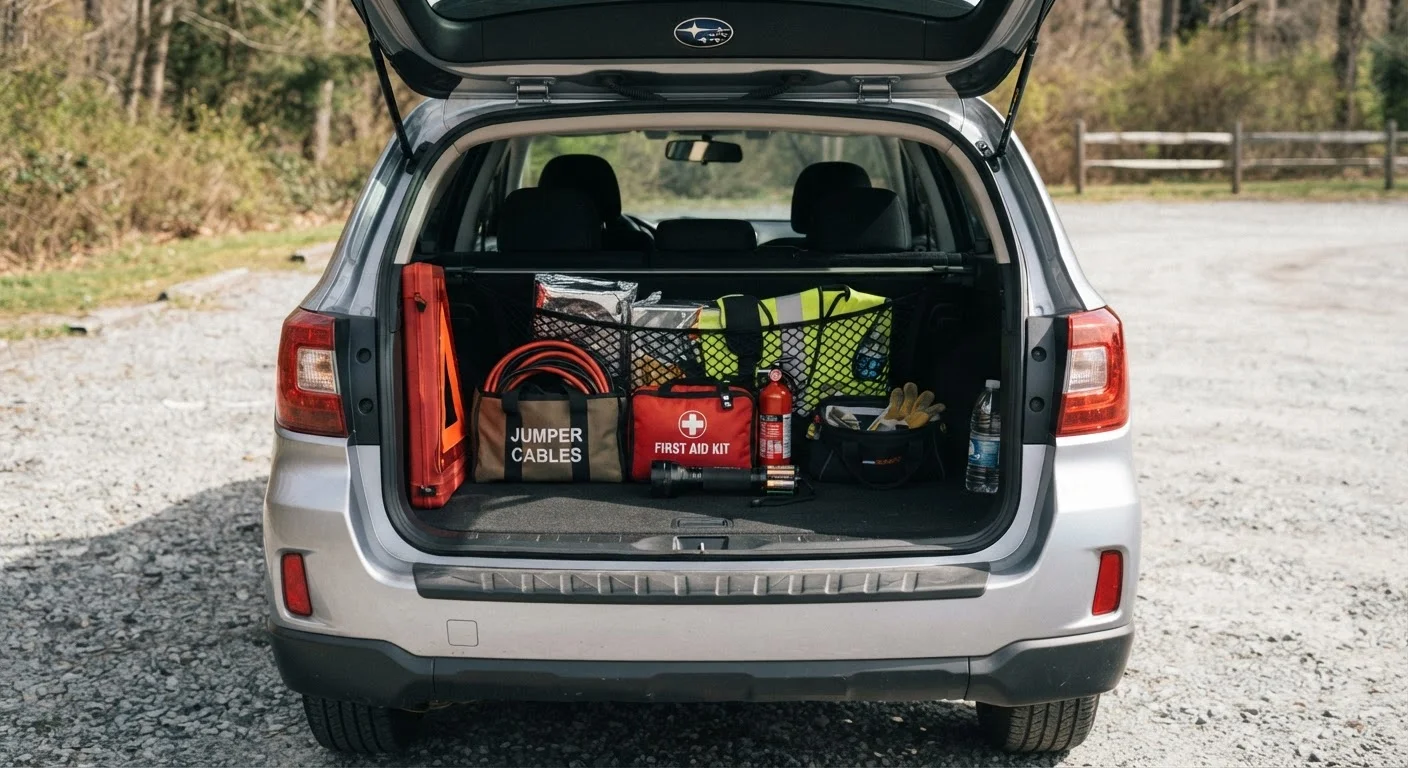
- A roadside emergency kit should address flat tires, dead batteries, visibility, and basic first aid.
- Jumper cables or a portable jump starter are among the most frequently needed items drivers overlook.
- Reflective triangles and a high-visibility vest protect you when stopped on or near traffic.
- Kits should be checked and refreshed periodically - batteries drain and supplies expire.
- Pairing a physical kit with roadside assistance coverage adds an important safety net.
Why Every Driver Needs a Trunk Kit
Most drivers assume a breakdown won't happen to them - until it does. Flat tires, dead batteries, overheated engines, and minor accidents can strike on any road, in any weather, at any time. Being prepared doesn't require a truckload of gear; it requires the right gear, organized and ready to use when adrenaline is already running high.
The items below are organized by priority - starting with the most broadly useful and moving toward situation-specific additions. Keeping them in a dedicated bag or bin in your trunk means you're not scrambling when it matters most. Think of this as the vehicle equivalent of a household emergency plan - similar in spirit to what's covered in our family emergency preparedness guide.
Jumper cables or a portable jump starter
A dead battery is one of the most common reasons drivers are stranded. Traditional jumper cables require a second vehicle, while a portable lithium jump starter lets you restart your engine independently - a meaningful advantage when you're parked alone or in a low-traffic area. Either option works; choose based on how often you drive solo in remote areas.
If you opt for cables, choose a set rated for your engine size (check gauge thickness - lower numbers mean heavier, more capable cables). Store them coiled loosely to avoid cracking the insulation.
A portable jump starter lets you restart your engine without needing a second vehicle nearby.
Reflective warning triangles or flares
When your vehicle is stopped on or near a road, visibility is your first line of defense. Reflective triangles can be placed 100-300 feet behind your vehicle to warn approaching drivers. Electronic LED flares are a reusable, safer alternative to traditional road flares, which carry a fire risk.
Place warning devices as soon as it is safe to exit the vehicle, before doing anything else. Your safety takes priority over assessing damage or calling for help.
Place warning triangles before anything else - your visibility to traffic matters most.
A high-visibility safety vest
If you must stand outside your vehicle - to change a tire, direct traffic away, or flag for help - a bright reflective vest dramatically increases how visible you are to drivers. These are inexpensive, fold flat, and take up almost no space. Many professional roadside responders consider this a non-negotiable item.
Keep it near the top of your kit or in a door pocket so it's accessible before you step out, not buried under other gear.
A reflective vest costs almost nothing and dramatically increases your visibility to passing traffic.
A flashlight with extra batteries
Breakdowns don't schedule themselves around daylight. A reliable flashlight - or a headlamp, which keeps your hands free - is indispensable for inspecting tires, reading your owner's manual, or signaling for help at night. Avoid relying solely on your phone's flashlight; you'll need battery power for calls and navigation.
Check the batteries at least twice a year. Consider a crank- or solar-powered backup if you frequently drive long distances.
Reserve your phone battery for calls - keep a dedicated flashlight or headlamp in your kit.
Basic first aid kit
Minor injuries - cuts from broken glass, scrapes from changing a tire - are far more common roadside emergencies than dramatic accidents. A compact first aid kit covering bandages, antiseptic wipes, gauze, medical tape, and gloves handles most of these situations adequately.
Pre-assembled kits are widely available and are a practical starting point. Check expiration dates annually and replace used or expired items promptly.
Even a compact first aid kit handles the most common roadside injuries - cuts, scrapes, and abrasions.
Tire inflator and sealant or a portable air compressor
A slow leak or puncture doesn't always mean an immediate blowout. A can of tire inflator and sealant can temporarily seal small punctures and re-inflate the tire enough to reach a service station - it's not a repair, but a short-term solution. A compact 12V air compressor is a more versatile option, useful for topping off pressure in any tire.
Neither replaces knowing where your spare tire is and how to use the jack and lug wrench that came with your vehicle. Review that process before you need it.
Tire sealant is a short-term fix, not a repair - it buys you time to reach a service station safely.
Water, a blanket, and non-perishable snacks
If you're stranded in extreme heat or cold - especially in a rural area with limited cell service - comfort and hydration become safety concerns. A few bottles of water, a compact emergency blanket (which retains body heat effectively), and a handful of long-shelf-life snacks can make an extended wait manageable rather than dangerous.
This is especially relevant for families with children or pets traveling with you. Keeping a small supply in the trunk costs little and can matter significantly in a prolonged wait.
In extreme weather or remote areas, water and an emergency blanket can turn a dangerous wait into a manageable one.
Maintaining and Reviewing Your Kit
Assembling the kit is only half the job. Batteries in flashlights and portable chargers discharge over time. First aid supplies have expiration dates. Tire inflators and sealants can degrade in extreme heat or cold. A quick inspection every six months - perhaps tied to an oil change or seasonal vehicle check - keeps everything functional.
Set a Recurring Reminder to Inspect Your Kit
Link your kit review to something you already do regularly - a seasonal tire rotation, an oil change, or even daylight saving time. Check that batteries are charged, supplies are unexpired, and nothing has shifted or leaked in the trunk. A five-minute check twice a year is all it takes to keep your kit reliable.
It's also worth considering whether roadside assistance coverage fits into your broader financial safety net. A breakdown can carry unexpected costs; having a plan - whether through an auto club membership, an insurance rider, or a well-stocked kit - is part of responsible vehicle ownership. For a broader look at financial preparedness, our emergency fund guide walks through the fundamentals of building a financial cushion from scratch.