

Key Takeaways
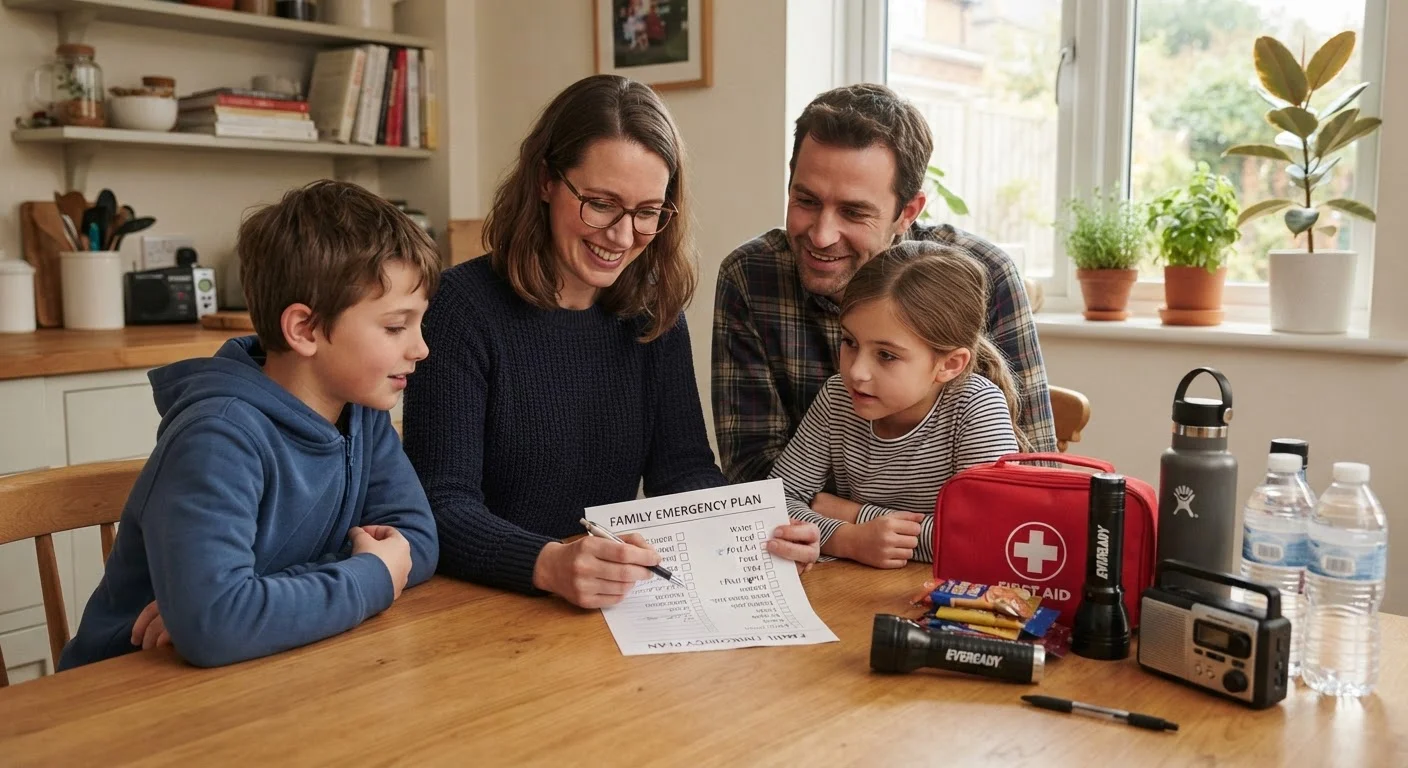
- A basic emergency kit should cover at least 72 hours of food, water, and essential supplies.
- Every household member - including children - should know the family communication plan.
- Local hazards vary widely; tailor your plan to the specific risks in your area.
- Pets, young children, and anyone with medical needs require extra planning steps.
- Review and refresh your emergency kit and plan at least once a year.
Start here
Why Every Family Needs a Plan
Next
Building Your Emergency Supply Kit
Then
Creating a Family Communication Plan
Go deeper
Know Your Local Risks and Evacuation Routes
Don't overlook
Special Considerations: Pets, Kids, and Medical Needs
Finish strong
Keeping Your Plan Up to Date
Why Every Family Needs a Plan
Emergencies rarely announce themselves. A severe thunderstorm can knock out power for days; a wildfire evacuation order may give you only minutes to leave. The families who navigate these moments most calmly tend to share one thing: they prepared before anything went wrong.
Emergency preparedness doesn't require a bunker or a survivalist mindset. At its core, it's simply deciding - ahead of time - how your household will handle disruptions that affect millions of American families every year, from winter storms and flooding to extended power outages. Having even a basic plan in place reduces panic, protects your loved ones, and helps you make clearer decisions under pressure.
Emergency supply kit
A collection of essential items - food, water, first aid supplies, and documents - stored in one place so your household can sustain itself for at least 72 hours without outside help.
Family communication plan
A pre-agreed set of contacts, meeting locations, and procedures that family members follow to reach each other and coordinate during an emergency.
Evacuation route
A planned path for leaving your home or neighborhood quickly and safely when staying in place is dangerous, such as during a wildfire or flooding event.
Emergency alert system
A local or national notification service that sends warnings about imminent hazards - such as severe weather or chemical spills - via text, radio, or television.
Go bag
A pre-packed bag containing critical supplies and documents that can be grabbed quickly if your household needs to evacuate on short notice.
Building Your Emergency Supply Kit
A well-stocked kit is the foundation of home preparedness. Aim to cover at least 72 hours of self-sufficiency, since local emergency services may be stretched thin in the immediate aftermath of a major event.
- Water: At least one gallon per person per day, stored in sealed, food-grade containers.
- Food: Non-perishable items your family will actually eat - canned goods, dried fruits, nut butters, crackers. Include a manual can opener.
- First aid kit: Bandages, antiseptic wipes, adhesive tape, over-the-counter pain relievers, and any prescription medications (keep a small rolling supply).
- Flashlights and batteries: Or a hand-crank/solar-powered option. Don't rely solely on phone flashlights.
- Battery-powered or hand-crank radio: For receiving emergency alerts when internet and power are down.
- Important documents: Copies of IDs, insurance cards, prescriptions, and financial account information stored in a waterproof bag.
- Cash in small bills: Card readers and ATMs may be offline.
- Basic tools: Wrench or pliers to shut off utilities if needed.
Store your kit in a cool, dry location that every adult in the home can access quickly. Check expiration dates on food and medications at least once a year.
Build Your Kit Gradually
You don't have to purchase everything at once. Add a few extra non-perishable items to your grocery cart each week and set aside batteries or a flashlight as you can. Within a month or two, you'll have a solid starter kit without a significant upfront cost.
Creating a Family Communication Plan
When an emergency strikes while family members are scattered - at work, at school, across town - a shared communication plan prevents confusion and panic.
- Designate an out-of-area contact: Local phone lines may be congested; a relative or friend in another state can serve as a central message hub.
- Establish two meeting spots: One right outside your home (for a house fire) and one away from your neighborhood (if evacuation is needed).
- Make sure everyone knows the plan: Even younger children should know their full name, address, and the name of the family contact to call.
- Text when possible: Text messages often get through when voice calls cannot during network congestion.
Write the plan down and keep a copy in your emergency kit, in each child's backpack, and in your wallet. Our family readiness checklist can help you coordinate logistics before the school year begins, which is a natural time to review your communication plan.
Know Your Local Risks and Evacuation Routes
Emergency preparedness isn't one-size-fits-all. A family in coastal Florida faces different risks than one in tornado-prone Oklahoma or earthquake country California. Identifying your region's most likely hazards helps you prioritize.
Visit your local emergency management agency's website - most counties and municipalities post hazard maps, shelter locations, and evacuation routes online. Sign up for your community's emergency alert system (many are free, text-based services).
Map at least two exit routes from your neighborhood and practice driving them. Know the location of the nearest emergency shelter and confirm whether it accepts pets, since many do not.
Never Ignore an Official Evacuation Order
If local authorities issue a mandatory evacuation, leave as early as possible - traffic congestion builds quickly and conditions deteriorate fast. Staying behind can put not only your family but also first responders at risk. Know your routes before you need them.
Special Considerations: Pets, Kids, and Medical Needs
Standard preparedness advice doesn't always account for the full picture of a household. Think through each person - and animal - under your roof.
Pets
Include enough pet food, water, and any medications in your kit for at least 72 hours. Have a carrier or leash ready to go, and keep vaccination records accessible. For more detail, see our guide on preparing your pet for an emergency.
Young children and infants
Factor in formula, diapers, comfort items, and any age-specific medications. Practice explaining evacuation drills to children in calm, reassuring language so they know what to do without feeling frightened.
Household members with medical needs
Anyone who depends on powered medical equipment - oxygen concentrators, refrigerated medications, dialysis - should register with their local utility provider's medical baseline program and contact their healthcare provider about emergency contingency plans. This is general guidance; always consult a qualified healthcare professional for decisions specific to your situation.
Keeping Your Plan Up to Date
A plan that's two years out of date may be only marginally better than no plan at all. Life changes - new household members, new addresses, new medical needs - and your preparedness plan should keep pace.
Set a recurring reminder (many families use the daylight saving time clock changes as a trigger) to:
- Check and rotate food and water supplies.
- Update contact information and document copies.
- Review evacuation routes for any changes.
- Confirm that all household members - including new family members - know the communication plan.
Emergency preparedness also has a financial dimension. Having a dedicated savings buffer means you can cover unexpected costs - temporary housing, replacement supplies, or medical co-pays - without going into debt. If that's an area you want to strengthen, our resource on building your first emergency fund is a practical place to start.
This article is for general informational and educational purposes only. It does not constitute medical, financial, legal, or professional emergency management advice. Consult qualified professionals for guidance specific to your household's circumstances and health needs.