

Key Takeaways
- Under federal law, only manufacturers can issue true "warranties"; dealers sell vehicle service contracts, not extended warranties.
- Vehicle service contracts vary widely in coverage, exclusions, and the financial strength of the administrator backing them.
- Reading the actual contract document - not the sales pitch - is the only reliable way to understand what is and is not covered.
- Both products cover mechanical breakdowns, but neither typically covers wear-and-tear items, accident damage, or neglected maintenance.
- A vehicle service contract's value depends heavily on who administers it and how claims are processed.
Option A
Extended Warranty
The manufacturer-backed promise of continued coverage.
Best for: Buyers who want coverage that flows directly from the original manufacturer without involving a third party.
Option B
Vehicle Service Contract
The flexible, third-party contract covering mechanical repairs.
Best for: Buyers seeking flexible, customizable mechanical breakdown coverage from a dealer, automaker finance arm, or independent administrator.
If you want coverage backed directly by the vehicle manufacturer
Extended Warranty
A manufacturer-backed warranty carries the financial weight of a large automaker and typically has a straightforward, standardized claims process.
If you want to customize coverage for an older or high-mileage vehicle
Vehicle Service Contract
Vehicle service contracts are widely available for vehicles that no longer qualify for manufacturer coverage, and many allow you to choose coverage tiers.
If you want the simplest, most regulated form of consumer protection
Extended Warranty
True warranties are governed by the Magnuson-Moss Warranty Act, giving consumers clearer federal protections compared to service contract regulation, which varies by state.
If you are buying a used vehicle from a third-party dealership
Vehicle Service Contract
Manufacturer warranties may not transfer fully or may have expired; a vehicle service contract is typically your only option for mechanical breakdown coverage in this scenario.
Why the Terminology Confusion Matters
Walk into a dealership finance office and you will almost certainly hear someone offer you an "extended warranty." In everyday speech the phrase is convenient shorthand - but legally it is almost always inaccurate, and that distinction has real consequences for consumers.
Under the federal Magnuson-Moss Warranty Act, the word warranty can only be used by the party that manufactured or sold the original product. When an automaker extends its factory coverage for an additional period or mileage - sometimes called a "certified pre-owned" program - that can legitimately be called an extended warranty. Everything else a dealer or third-party company sells is, legally speaking, a vehicle service contract (VSC): a separate service agreement governed by contract law rather than federal warranty law.
This is not a technicality. Knowing which document you actually hold tells you who is responsible if coverage is denied, which laws apply, and how disputes are resolved. Just as understanding what separates liability and comprehensive auto insurance prevents unpleasant surprises at claim time, knowing whether you hold a warranty or a service contract helps you set realistic expectations.
| Criterion | Extended Warranty | Vehicle Service Contract |
|---|---|---|
| Legal definition | True warranty under Magnuson-Moss Act | Private service agreement, contract law |
| Who issues it | Original manufacturer only | Dealer, automaker finance arm, or third party |
| Federal regulation | Governed by Magnuson-Moss Warranty Act | Regulated at state level; varies widely |
| Coverage consistency | Standardized by manufacturer | Varies significantly by administrator |
| Availability for used vehicles | Limited; typically CPO programs only | Broadly available, including older vehicles |
| Claims process | Through any franchised brand dealer | Depends on contract; may restrict repair shops |
| Financial risk bearer | Automaker | Third-party administrator or insurer |
| Transferable at sale | Often yes, per manufacturer terms | Varies by contract; check terms |
How Each Product Actually Works
A true extended warranty is an extension of the original manufacturer's coverage. Claims typically go directly to any franchised dealer of that brand and are honored network-wide. The automaker bears the financial risk, which generally means a stable, predictable claims experience. Coverage terms are relatively standardized because the same entity that built the car defines what it will fix.
A vehicle service contract is a private agreement between you, the selling dealer, and an administrator - which could be the automaker's own finance arm, the dealership's parent company, or a standalone third-party firm. The administrator collects premiums and pays claims. This structure creates meaningful variation: two contracts with identical-sounding names can differ dramatically in covered components, deductible structures, repair facility restrictions, and how disputes are handled.
~$1,800
Average vehicle service contract cost at dealerships
Industry estimates from consumer advocacy organizations suggest dealer-sold VSCs often range from roughly $1,000 to over $3,000 depending on vehicle type, coverage tier, and term length.
50 states
Jurisdictions with differing VSC regulations
Vehicle service contracts are regulated at the state level, meaning consumer protections, required disclosures, and administrator licensing requirements differ across all 50 states.
3 days
Typical minimum cancellation window for VSCs
Many states require a minimum free-look cancellation period for vehicle service contracts, though the exact window and refund terms vary by state law and contract terms.
VSCs are regulated at the state level, meaning consumer protections differ depending on where you live. Some states require administrators to maintain reserve funds or obtain licenses; others have lighter requirements. Before signing, it is worth confirming the administrator's financial standing - an insolvent administrator cannot pay your repair bill.
Neither product is a maintenance plan. Routine services such as oil changes, tire rotations, and brake pad replacement are virtually always excluded. Wear-and-tear items - belts, filters, wiper blades - are similarly outside scope. Coverage is specifically for unexpected mechanical or electrical failure of covered components.
Reading the Contract Before You Sign
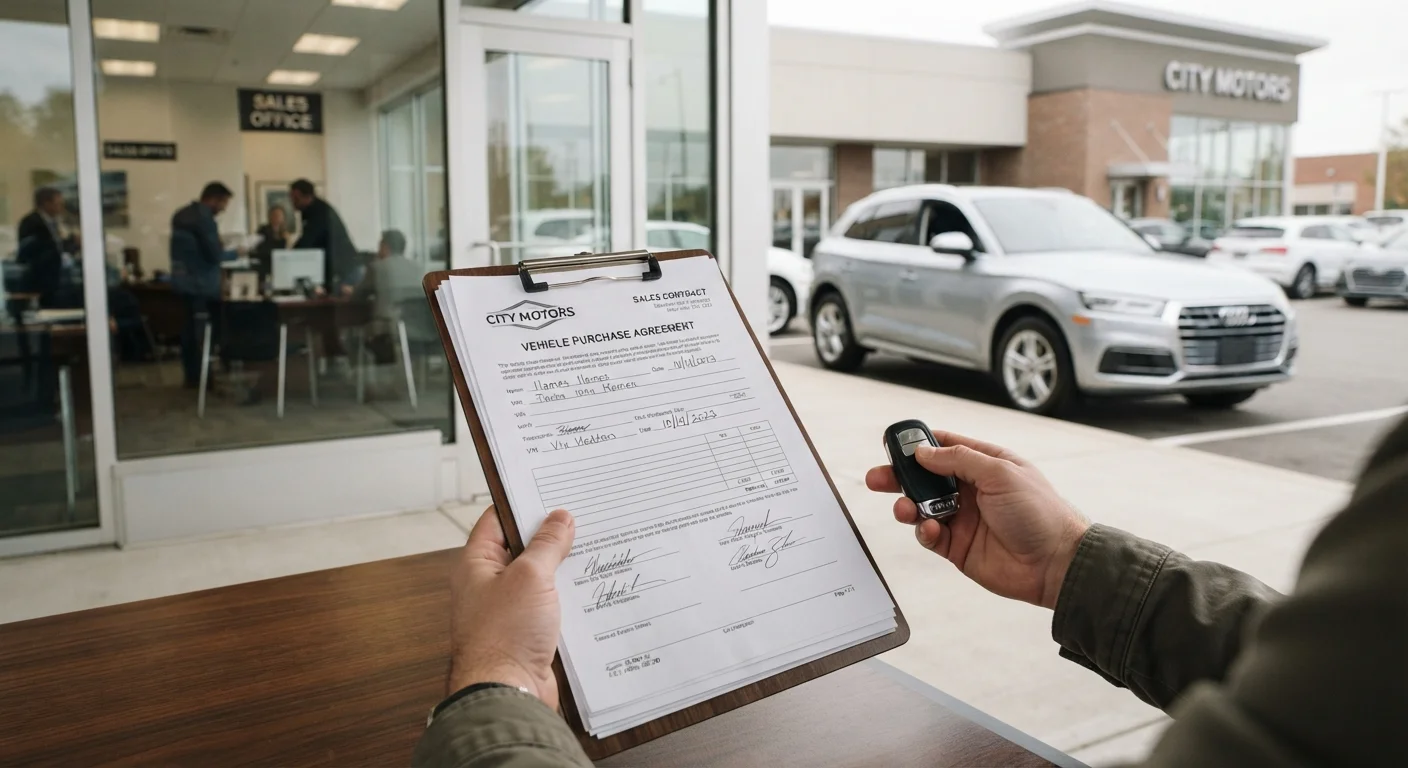
The single most important step when evaluating either product is reading the actual document. Sales presentations focus on what is covered; the contract language defines what is not covered - and exclusion lists are often extensive.
Key questions to answer in the document itself include:
- Exclusionary vs. inclusionary language: Does the contract list specific covered parts, or does it cover everything except what is listed? Inclusionary contracts ("only these parts are covered") tend to have narrower coverage than exclusionary ones ("everything except these items").
- Who administers claims? Is this the manufacturer, the dealership, or a third party? What is the administrator's track record?
- Where can repairs be performed? Some contracts restrict you to a dealer network; others allow any ASE-certified facility.
- What triggers a denial? Missed maintenance, pre-existing conditions, and "consequential damage" clauses are common denial grounds.
- Is the contract transferable? Transferability can add resale value to your vehicle - worth checking before purchasing.
If you are also weighing broader financial decisions around your vehicle - such as whether to lease or finance - understanding the trade-offs between leasing and financing is a useful parallel exercise. The same habit of reading terms carefully applies across all vehicle-related contracts.
Certified Pre-Owned Programs: A Hybrid Case
Automaker-run certified pre-owned (CPO) programs often include what manufacturers legitimately call an extended limited warranty - coverage underwritten directly by the automaker. These differ from third-party VSCs because the manufacturer bears the financial obligation and claims are typically handled through the dealer network. CPO warranties usually have stricter vehicle eligibility requirements, such as mileage caps and inspection standards, that third-party contracts do not impose.
This article provides general educational information about vehicle coverage terminology and is not legal or financial advice. Contract terms, consumer protections, and state regulations vary. Always read the full contract document and consult a qualified professional if you have questions about your specific situation.