

Key Takeaways
- Liability coverage pays for damage and injuries you cause to others - it does not cover your own vehicle.
- Comprehensive coverage protects your own car from non-collision events like theft, hail, and fire.
- Most states require liability coverage by law; comprehensive is optional unless your lender requires it.
- Carrying only liability leaves your vehicle unprotected if it is stolen or damaged by weather.
- These two coverages address completely different risks and are not substitutes for each other.
Option A
Liability Coverage
The legally required foundation of most auto policies.
Best for: Drivers who need to meet state minimum requirements and cover costs they cause to others in an at-fault accident.
Option B
Comprehensive Coverage
The optional add-on that protects your own vehicle from non-collision events.
Best for: Drivers who want protection against theft, weather damage, and other incidents that happen outside of a crash.
If you want to meet your state's legal minimum requirement
Liability Coverage
Liability is the coverage most states mandate before you can legally register and drive a vehicle. Comprehensive does not satisfy this requirement.
If your car is financed or leased
Comprehensive Coverage
Most lenders and leasing companies require comprehensive (along with collision) to protect their financial interest in the vehicle.
If you want to protect yourself from events like hail, theft, or flooding
Comprehensive Coverage
Liability pays only for harm you cause to others. Comprehensive is specifically designed to cover your own vehicle from these types of non-collision losses.
If you drive an older vehicle with low market value
Liability Coverage
Adding comprehensive to an older, low-value car may cost more over time than the payout would be worth. A licensed agent can help you run the numbers.
What Each Coverage Type Actually Does
Auto insurance policies are built from separate coverage types, each covering a distinct category of risk. Liability coverage and comprehensive coverage are two of the most commonly misunderstood - partly because the word "coverage" gets applied to both, and partly because people assume more coverage means more protection in every direction. That's not how it works.
Liability coverage kicks in when you are at fault in an accident. It pays for the other party's vehicle repairs, medical bills, and related expenses - up to your policy limits. It does not pay for any damage to your own car or your own injuries. In most U.S. states, some level of liability coverage is a legal requirement to drive.
Liability is typically expressed as three numbers, such as 25/50/25. These represent, in thousands of dollars: the per-person bodily injury limit, the per-accident bodily injury limit, and the property damage limit. If costs exceed those limits, you are personally responsible for the difference.
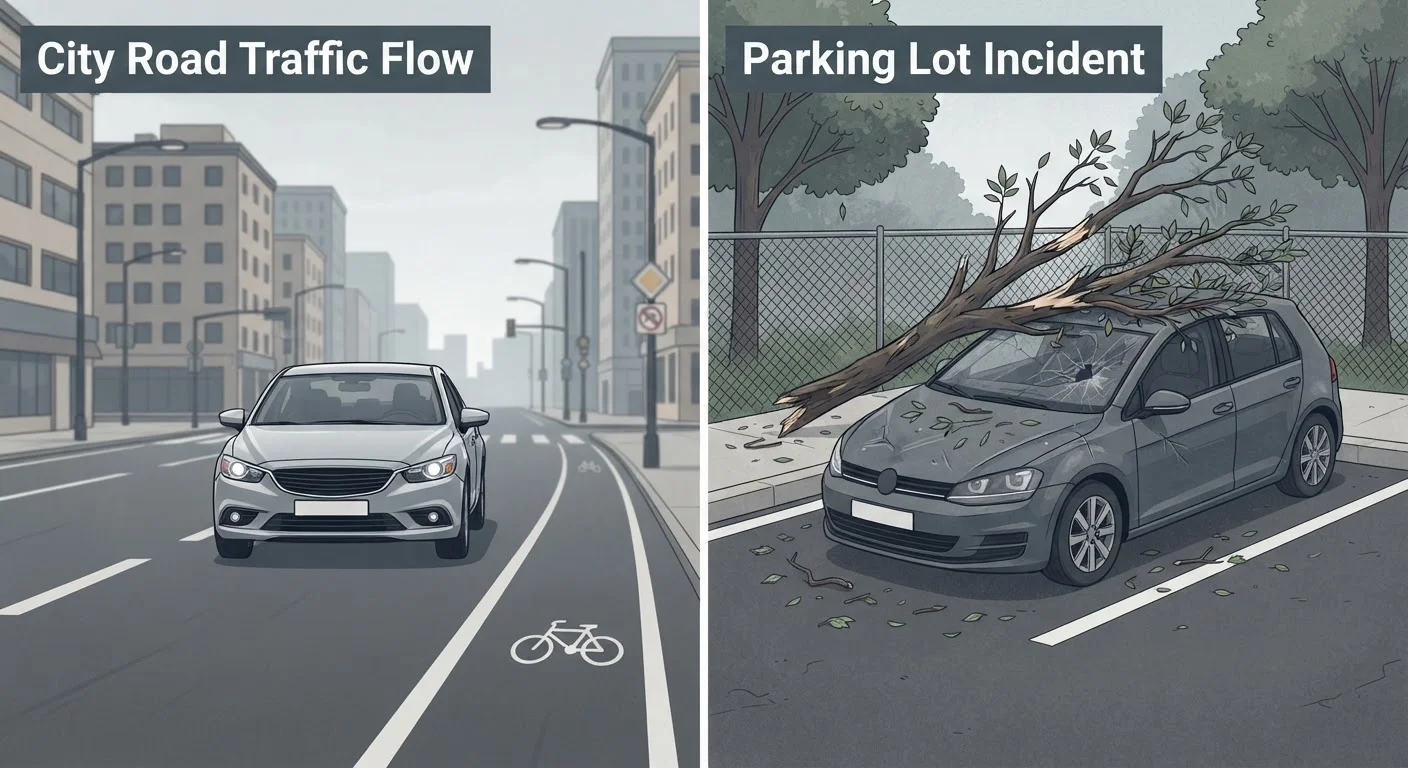
Comprehensive coverage is entirely different in scope. It covers damage to your own vehicle from events that are not a collision - things like theft, vandalism, fire, hail, flooding, falling trees, and collisions with animals. Comprehensive does not pay for damage from hitting another car or object; that falls under collision coverage, which is a separate category altogether.
For a broader look at how these pieces fit together, see what you're actually paying for in auto and home insurance.
| Criterion | Liability Coverage | Comprehensive Coverage |
|---|---|---|
| What it covers | Damage/injuries you cause to others | Damage to your own vehicle from non-collision events |
| Covers your own car? | No | Yes |
| Legally required? | Yes, in most states | No (may be required by lender) |
| Applies to theft? | No | Yes |
| Applies to weather damage? | No | Yes |
| Applies to at-fault collisions? | For others' costs only | No (collision coverage applies) |
| Deductible applies? | Typically no | Yes, you choose the amount |
Common Gaps People Don't Expect
One of the most frequent surprises after an incident is discovering that the coverage a driver assumed they had doesn't apply. Here are the most common mismatches:
- Your car is stolen. Liability does not cover this. Only comprehensive would apply.
- A hailstorm dents your hood. Again, liability pays nothing here. Comprehensive is designed for exactly this scenario.
- You rear-end another driver. Liability pays for their car and injuries. Your own vehicle damage would require collision coverage - not comprehensive, and not liability.
- A deer runs into your car. This is a comprehensive claim, not a collision claim, in most policy definitions - even though a physical impact occurred.
Understanding where each type ends helps you spot the gaps. Drivers who carry only the state-required liability minimum are exposed to the full cost of repairing or replacing their own vehicle in any of these scenarios.
Comprehensive Is Not the Same as "Full Coverage"
The phrase "full coverage" is informal and has no standard definition in the insurance industry. It's commonly used to mean a policy that includes liability, collision, and comprehensive - but the exact combination varies. When reviewing a policy, check each coverage type individually rather than relying on a blanket label. Ask your insurer specifically what is and isn't included.
If you're new to buying auto insurance independently, this first-timer's orientation to auto insurance walks through how all the coverage types relate to each other.
When Lenders and State Laws Enter the Picture
Whether you're required to carry comprehensive coverage depends on two things: state law and your loan or lease agreement.
State law governs liability. Every state except New Hampshire sets a legal minimum for liability limits, and driving without it can result in fines, license suspension, or worse. The minimums vary significantly by state, so what's legally sufficient in one place may be well below the standard in another.
Lenders govern comprehensive (and collision). If you finance or lease a vehicle, the lender typically requires both comprehensive and collision coverage for the duration of the loan. This protects their financial interest - the vehicle serves as collateral, and they need it insured against loss or damage. Once a loan is paid off, that requirement disappears, and the choice becomes yours.
For drivers who carry only basic liability and want additional protection beyond their policy limits, umbrella insurance is worth understanding - it extends liability protection beyond what a standard auto policy provides.
~80%
U.S. drivers with comprehensive coverage
According to the Insurance Research Council, a large majority of insured U.S. drivers carry comprehensive coverage, often because lenders require it.
49 of 50
States requiring some liability coverage
All U.S. states except New Hampshire set a legal minimum for auto liability insurance, though minimum limits vary considerably by state.
This article is for general informational purposes only and does not constitute personalized insurance, legal, or financial advice. Coverage terms, exclusions, and requirements vary by insurer and by state. Always review your actual policy documents and consult a licensed insurance agent for guidance specific to your situation.