

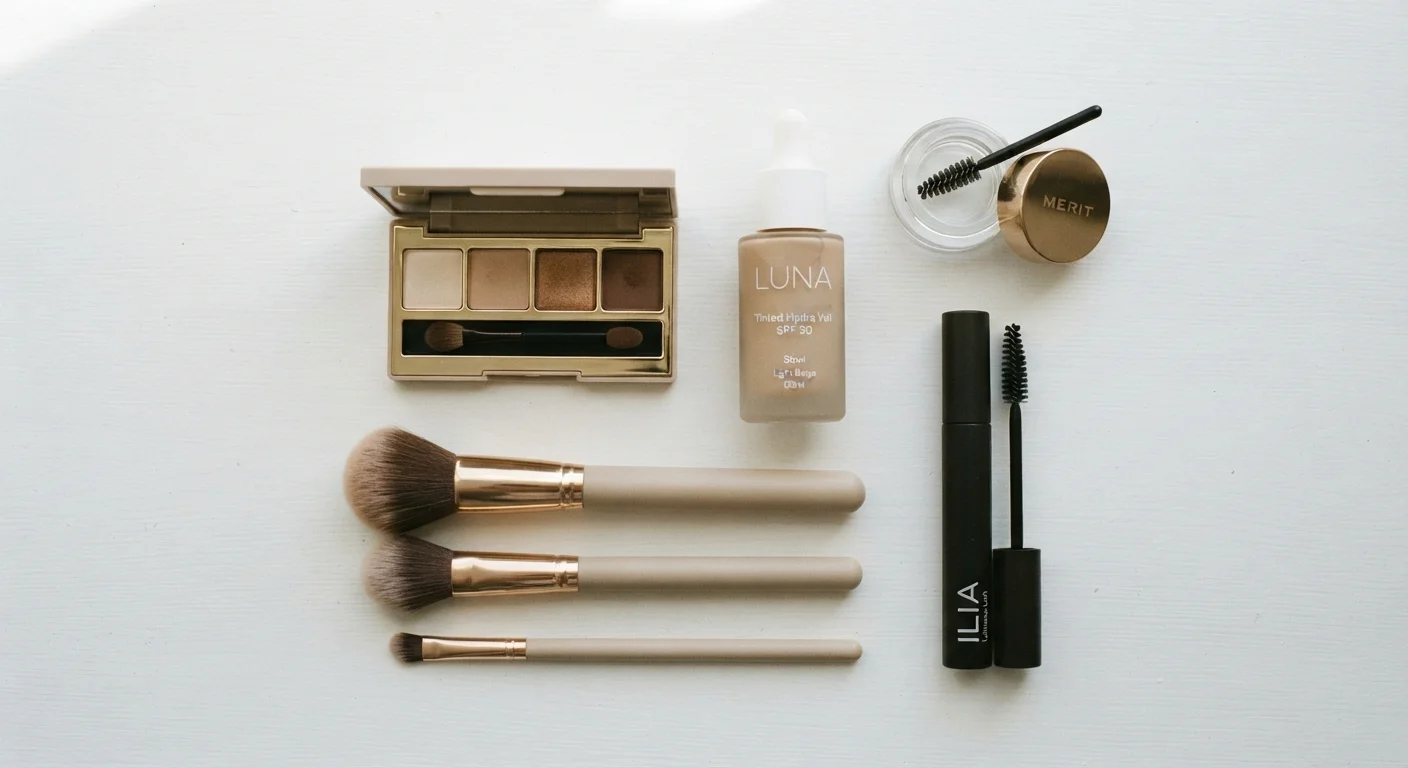
Key Takeaways
- A minimal routine of four focused steps can deliver a polished, everyday look without overwhelm.
- Skin preparation - moisturizer and SPF - is the single highest-impact foundation for any makeup look.
- Choosing products that do double duty (like tinted moisturizer) reduces decision fatigue and morning time.
- Technique and consistency matter more than owning a large product collection.
- Good hygiene habits protect your skin and extend the life of your makeup.
Start here
Why Minimal Works
Build your kit
The Core Four: What Your Routine Actually Needs
Apply with confidence
Putting It Together: A Simple Application Order
Personalize it
Adapting the Routine to Your Skin
Keep it working
Keeping Your Routine Healthy and Effective
Why Minimal Works
The beauty industry's business model depends on convincing you that more is always better. In practice, a shorter, intentional routine almost always outperforms a sprawling one - especially for beginners. Fewer products mean fewer chances for ingredients to conflict, fewer mornings spent frustrated at a counter, and a much clearer sense of what's actually doing the work on your face.
A minimal approach also pairs naturally with good skin prep. Before any makeup enters the picture, your skin's baseline condition shapes how everything looks. Check out The Everyday Skincare Routine, Step by Step for a clear walkthrough of moisturizer and SPF - the two steps that give every makeup look a better starting point.
Start With One Change, Not a Full Overhaul
If you're new to makeup or rebuilding a routine, pick just one category from the core four and get comfortable with it before adding the next. Mastering concealer placement or brow technique individually builds real skill faster than attempting all four steps at once and feeling rushed.
The Core Four: What Your Routine Actually Needs
Strip away everything optional and four categories remain genuinely useful for most people building an everyday look:
Tinted moisturizer
A lightweight, sheer product that combines hydration with a small amount of pigment to even out skin tone. It provides less coverage than foundation but feels more natural and applies quickly.
Coverage
How much a base product conceals or evens the skin. Sheer coverage is very light; full coverage masks most imperfections. Most minimal routines work best with light to medium coverage.
Setting powder
A fine, translucent or lightly tinted powder pressed or dusted over makeup to reduce shine and help it stay in place longer throughout the day.
PAO symbol
The period-after-opening symbol - a small open-jar icon on cosmetic packaging - indicates how many months a product is safe and effective to use after you first open it.
T-zone
The forehead, nose, and chin area of the face, which tends to produce more oil than the cheeks. Many people with combination or oily skin focus shine-control products specifically on this area.
- A skin-evening base. Tinted moisturizer, BB cream, or light-coverage foundation unifies skin tone without masking your natural texture. These products do double duty when they include SPF.
- Concealer. A creamy concealer targeted only where you need it - under eyes, around the nose, or over any spots - is far more versatile than full-face foundation for most skin concerns.
- A brow product. Filled-in brows frame the face and visually lift the eye area. A tinted brow gel or a fine-tip pencil matched to your natural hair color is all most people need.
- Mascara. A single coat of mascara on upper lashes opens the eye more effectively than almost any other single product. It's the highest return-on-time item in most minimal routines.
A tinted lip balm or sheer lip color is an easy fifth addition that adds warmth and life to the face without requiring precision application.
Putting It Together: A Simple Application Order
Order matters. Applying products from thinnest to thickest texture lets each layer adhere and perform as intended.
- Moisturizer and SPF (skincare, not makeup - but sets the canvas)
- Tinted moisturizer or light base, blended with fingertips or a damp sponge
- Concealer, patted - not rubbed - into targeted areas
- Brows, using short, hair-like strokes rather than a solid line
- Mascara, wiggled at the root and swept to the tips of upper lashes
- Lip tint or balm, applied last
The entire sequence, once practiced, takes most people under ten minutes. If you're running into common snags like patchy concealer or fading brows, Common Makeup Application Errors and Why They Happen explains the root causes and practical fixes.
Adapting the Routine to Your Skin
No single routine template fits every skin type equally well. A few targeted adjustments make the core four perform better across different concerns:
- Oily skin: Choose a mattifying or oil-free base. A light translucent powder pressed only over the T-zone (forehead, nose, chin) helps control shine without looking cakey.
- Dry skin: A hydrating, dewy-finish base blends most naturally. Skip powder entirely or use it only on the nose. Avoid matte formulas, which can settle into dry patches.
- Combination skin: Apply mattifying products selectively to oily zones and a hydrating base elsewhere. You don't have to use the same product uniformly across your face.
- Sensitive skin: Patch-test new products before wearing them on your full face. Fragrance-free formulas tend to cause fewer reactions for reactive skin types.
Patch-Test New Products Before Full Use
Even products labeled for sensitive skin can cause reactions in some individuals. Apply a small amount to the inner arm or jawline and wait 24 hours before using a new product on your full face. If redness, itching, or irritation develops, discontinue use and consult a dermatologist.
Your routine will also naturally shift with seasons - heavier hydration in winter, lighter coverage in humid summer months. Treating the routine as adjustable rather than fixed makes it more sustainable long-term.
Keeping Your Routine Healthy and Effective
A minimal routine only stays effective if basic hygiene habits support it. Dirty brushes and expired products are among the most common - and most overlooked - reasons a routine stops performing well.
Wash any brushes or sponges used for liquid products at least once a week; tools used for powder products can go every two weeks. Check the period-after-opening (PAO) symbol on your products - that small open-jar icon tells you how many months each item remains safe to use after opening. Mascaras in particular should be replaced every three months to reduce the risk of eye irritation or infection.
For a deeper dive into these practices, Makeup Hygiene Habits Worth Building Into Your Routine covers brush cleaning, product expiration timelines, and storage habits worth adopting from the start.
A simple, consistent routine maintained well will always outperform an elaborate one that's skipped half the time. Start small, practice the basics, and add only what genuinely earns its place in your morning.