

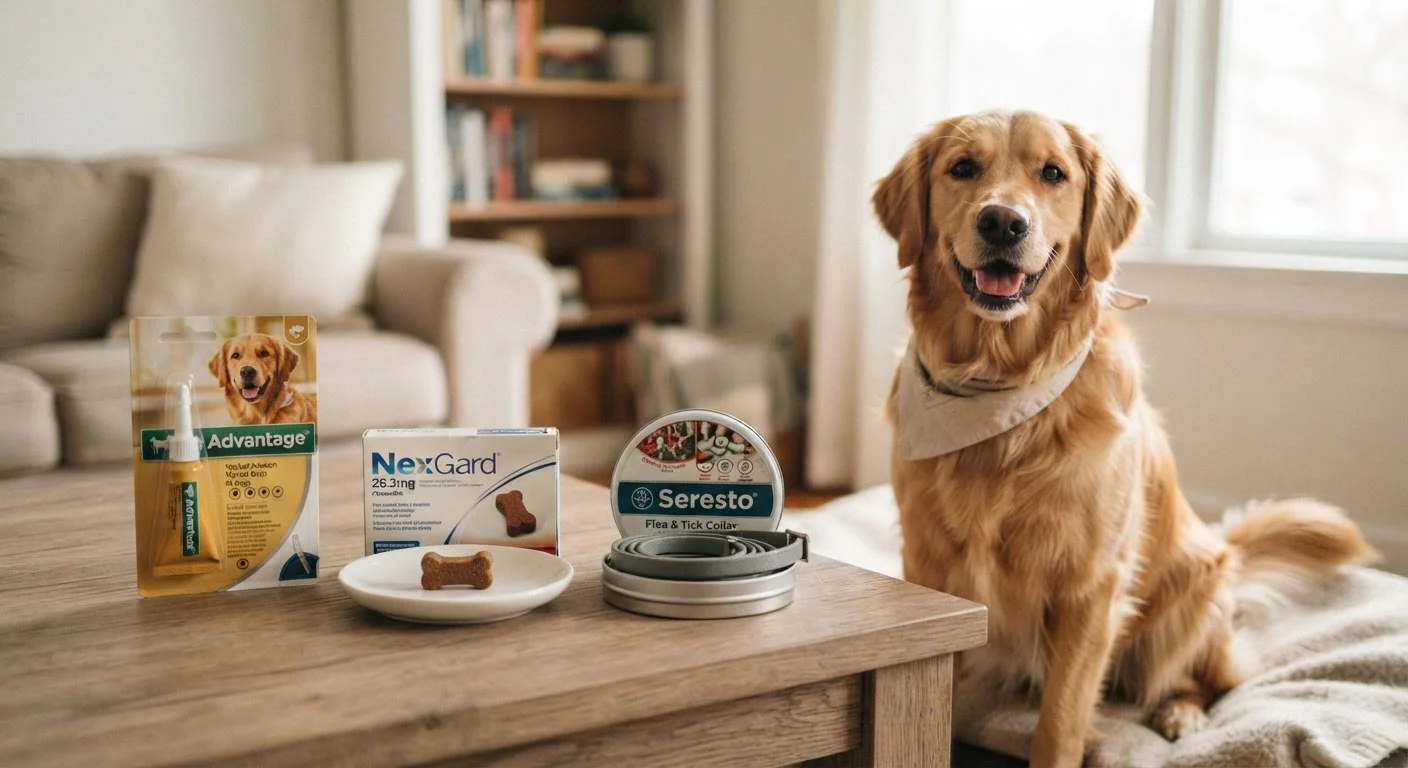
Key Takeaways
- Topical, oral, and collar-based preventatives work through different mechanisms and suit different lifestyles.
- No single format is universally best - your pet's species, age, weight, and health history all matter.
- Always consult your veterinarian before starting, switching, or combining any parasite prevention product.
- Year-round prevention is generally recommended, even in cooler climates, because parasite risk varies by region.
- Some products target fleas and ticks only, while others also address heartworm, mites, or intestinal parasites.
Our Verdict
Each parasite prevention format has genuine advantages, and the right choice depends on your pet's individual profile and your household's routine. Topical treatments offer flexibility; oral options remove application guesswork; collars provide long-duration convenience. What matters most is working with your vet to find a safe, consistently used approach - because any prevention used reliably outperforms the perfect product used sporadically.
| Best for | Recommended |
|---|---|
| Pets with outdoor exposure and owners who prefer simplicity | Oral chewable preventatives |
| Households with children or other pets requiring post-application contact caution | Oral or collar-based options |
| Pet owners seeking long-duration, low-maintenance coverage | Parasite prevention collars |
| Owners wanting broad multi-parasite coverage in a single product | Prescription oral preventatives (vet-guided) |
Why Parasite Prevention Isn't One-Size-Fits-All
Fleas, ticks, heartworm, and intestinal parasites pose real risks to pets across the United States - risks that vary by region, season, and individual lifestyle. The good news is that effective tools exist. The challenge is that parasite prevention comes in multiple forms, each working differently and carrying its own set of practical considerations.
Understanding these differences helps you have a more informed conversation with your veterinarian, who can recommend an approach matched to your pet's age, weight, species, health status, and where you live. For a broader view of pet care fundamentals, including grooming and feeding basics, it helps to think of parasite prevention as one pillar of an overall health routine rather than a standalone fix.
Year-Round Prevention Is Often Recommended
Many veterinarians recommend year-round parasite prevention even in regions with cold winters, because fleas can survive indoors and tick activity can extend further into cooler months than most owners expect. Heartworm-carrying mosquitoes also have a wider seasonal window than many people assume. Talk with your vet about what makes sense for your specific location and pet's lifestyle.
Topical (Spot-On) Treatments
Topical preventatives - sometimes called spot-on treatments - are applied directly to the skin, typically at the back of the neck or between the shoulder blades where the pet cannot lick the area. They spread through the skin's natural oils and are absorbed or distributed across the coat.
Common coverage: Depending on the formulation, topicals may address fleas, ticks, mites, and some also cover lice. They do not typically address heartworm or intestinal parasites.
Application interval: Most topicals are applied monthly, though some formulations last longer.
Practical considerations: Pets should not be bathed or swim for at least 24-48 hours after application. Households with young children or other animals should take care to avoid contact with the application site until it dries fully. Some cats are sensitive to certain ingredients found in dog-formulated topicals - species-specific use is critical.
Oral Preventatives
Oral preventatives are administered by mouth - typically as a chewable tablet or flavored treat. Once ingested, the active ingredient enters the bloodstream and either kills parasites on contact with the pet's blood or disrupts the parasite's life cycle.
Common coverage: Many oral products target fleas and ticks. Prescription oral preventatives may also include heartworm prevention and coverage for intestinal parasites. Understanding why heartworm prevention and treatment work differently can help clarify why consistent monthly dosing matters so much with these products.
Application interval: Most oral flea and tick products work for 30 to 90 days depending on the formulation.
Practical considerations: Because there's no topical residue, bathing and swimming don't affect efficacy. However, oral medications must be given with or without food as directed, and pets with certain health conditions - including a history of seizures - may require extra caution. Always confirm suitability with your vet.
| Topical (Spot-On) | Oral Chewable | Prevention Collar | |
|---|---|---|---|
| How it works | Absorbed through skin oils | Enters bloodstream via digestion | Released through skin or coat surface |
| Typical coverage interval | Monthly (most formulas) | Monthly to 90 days | Several months up to ~8 months |
| Flea & tick coverage | Yes (varies by product) | Yes (varies by product) | Yes (varies by product) |
| Heartworm coverage possible | Rarely | Yes (prescription formulas) | No |
| Affected by bathing/swimming | Yes - wait 24-48 hrs post-application | No | Varies by product water resistance |
| Household contact concern | Avoid until dry | Minimal - no surface residue | Prevent chewing between pets |
| Species sensitivity risk | High - never use dog products on cats | Moderate - confirm with vet | Moderate - confirm with vet |
Flea and Tick Collars
Prevention collars release active ingredients either through the skin (systemic absorption) or across the coat's surface (contact kill). The technology and duration vary significantly by formulation, so it's worth reading product guidance carefully and discussing options with your vet.
Common coverage: Most collars focus on fleas and ticks. Some provide broader coverage including lice and mites.
Application interval: Some collars are designed to last several months - occasionally up to eight months - making them a longer-duration option compared to monthly topicals or orals.
Practical considerations: Fit matters - a collar that is too loose may not make adequate skin contact, and one that is too tight poses a physical risk. Water resistance varies by product. In multi-pet households, pets should not chew on each other's collars, as this can cause ingestion of concentrated active ingredients. Regular grooming checks, as covered in our guide on grooming habits that protect skin and coat, also give you a chance to inspect collar fit and condition.
Never Use Dog Products on Cats
Certain active ingredients found in dog-formulated topicals and some collars - particularly permethrin - are highly toxic to cats. Even brief exposure can cause serious neurological symptoms. Always verify that any product is labeled for the specific species and weight range of your pet, and consult your veterinarian if you're unsure.
How to Choose: Working With Your Vet
No comparison table fully replaces a veterinary conversation, because product safety and efficacy depend on factors that vary pet to pet. Before starting or changing a preventative, share your pet's complete health history, any known sensitivities, and your household composition - including whether children or other animals are present.
A few questions worth raising with your vet:
- Which parasites are most prevalent in my area and what coverage do I actually need?
- Does my pet's age, weight, or any current medications affect which options are safe?
- Is year-round prevention recommended given where I live and my pet's lifestyle?
- If I adopt a multi-parasite product, does it cover heartworm, or do I need a separate preventative?
Unexpected veterinary costs - including those related to parasite-borne illness - are one reason some pet owners explore how pet insurance works and what policies typically include. Prevention is generally far less costly than treating a tick-borne disease or heartworm infection, making consistent use one of the most practical investments in a pet's long-term health.
This article is for general informational purposes only and is not a substitute for professional veterinary advice. Always consult a licensed veterinarian before starting, changing, or combining parasite prevention products for your pet.