

Key Takeaways
- Indoor cats live significantly longer on average than cats allowed to roam freely outside.
- Outdoor access exposes cats to traffic, predators, disease, and toxins - but also provides natural stimulation.
- Indoor cats can thrive with proper environmental enrichment such as climbing structures and interactive play.
- Free-roaming cats have a measurable impact on local wildlife, particularly birds and small mammals.
- A cat's individual temperament and history should factor into any lifestyle decision.
Significantly longer average lifespan indoors
Indoor cats are shielded from traffic, predators, infectious disease, and toxins that substantially shorten the lives of outdoor cats.
Lower risk of infectious disease transmission
Diseases like FIV and FeLV spread primarily through contact with other cats; keeping cats indoors reduces exposure dramatically.
No impact on local wildlife populations
Indoor cats do not contribute to the documented decline of bird and small mammal populations caused by free-roaming cats.
Outdoor access satisfies natural instincts
Cats have evolved as hunters and explorers; outdoor environments provide genuine sensory and behavioral stimulation that is difficult to fully replicate indoors.
Fresh air and variable environments support wellbeing
Exposure to changing smells, sounds, and terrain can reduce boredom and stress-related behaviors in cats with high activity drives.
Outdoor cats face serious physical dangers
Traffic injuries, dog attacks, and encounters with wildlife are among the leading causes of early death in outdoor cats, regardless of supervision level.
Indoor cats need active enrichment to thrive
Without adequate stimulation, indoor cats may develop boredom-driven behavioral problems such as destructive scratching, overgrooming, or anxiety.
Free-roaming cats harm wildlife at scale
Peer-reviewed research estimates billions of birds and small mammals are killed by free-roaming cats in the US each year, raising serious ecological concerns.
Outdoor cats have higher parasite and disease exposure
Fleas, ticks, intestinal parasites, and upper respiratory infections are significantly more common in cats with outdoor access.
Our Verdict
Neither lifestyle is universally right for every cat or every household. The research consistently shows that indoor living reduces physical risks substantially, while outdoor access offers stimulation that must otherwise be actively provided indoors. The best approach depends on your cat's temperament, your environment, and your commitment to enrichment.
Indoor living is well-suited to cats in urban or high-traffic areas, those with health vulnerabilities, or owners committed to providing rich environmental stimulation; outdoor or supervised outdoor access may suit confident, previously outdoor-adapted cats in low-risk rural settings.
The Lifespan Gap Is Real
One of the most consistently cited findings in feline research is the difference in average lifespan between indoor and outdoor cats. Indoor cats typically live between 12 and 18 years, while cats that roam freely outdoors average far fewer - some studies cite medians as low as 2 to 5 years for unowned or free-roaming cats, though owned outdoor cats fare somewhat better.
The risks driving this gap are well-documented: vehicle strikes, attacks by dogs or wildlife, infectious diseases like feline leukemia virus (FeLV) and feline immunodeficiency virus (FIV) spread through contact with other cats, and accidental poisoning from antifreeze, rodenticides, or toxic plants. For cats who have always been indoors, exposure to these hazards is dramatically reduced.
That said, longevity isn't the only measure of a good life. Understanding the full picture means looking at quality of life alongside length of life - and that's where the conversation becomes more nuanced. As your cat ages, their needs shift considerably; see our guide to senior pet veterinary care for what to expect in later years.
What Outdoor Access Provides - and What It Costs
Cats are natural hunters with strong territorial and exploratory instincts. Outdoor environments offer genuine stimulation: variable terrain, scent marking opportunities, live prey interactions, and social encounters. Some behaviorists argue that denying outdoor access entirely can contribute to boredom-related behaviors like excessive vocalization, destructive scratching, or overgrooming in cats with high prey drives.
However, the costs of unrestricted outdoor access are significant. Beyond personal risk to the cat, there is a broader ecological concern. Research - including large-scale studies published in peer-reviewed journals - estimates that free-roaming cats in the United States kill billions of birds and small mammals annually, making them one of the leading human-linked causes of wildlife mortality. This is not a trivial consideration for environmentally conscious owners.
Significantly longer average lifespan indoors
Indoor cats are shielded from traffic, predators, infectious disease, and toxins that substantially shorten the lives of outdoor cats.
Lower risk of infectious disease transmission
Diseases like FIV and FeLV spread primarily through contact with other cats; keeping cats indoors reduces exposure dramatically.
No impact on local wildlife populations
Indoor cats do not contribute to the documented decline of bird and small mammal populations caused by free-roaming cats.
Outdoor access satisfies natural instincts
Cats have evolved as hunters and explorers; outdoor environments provide genuine sensory and behavioral stimulation that is difficult to fully replicate indoors.
Fresh air and variable environments support wellbeing
Exposure to changing smells, sounds, and terrain can reduce boredom and stress-related behaviors in cats with high activity drives.
Outdoor cats face serious physical dangers
Traffic injuries, dog attacks, and encounters with wildlife are among the leading causes of early death in outdoor cats, regardless of supervision level.
Indoor cats need active enrichment to thrive
Without adequate stimulation, indoor cats may develop boredom-driven behavioral problems such as destructive scratching, overgrooming, or anxiety.
Free-roaming cats harm wildlife at scale
Peer-reviewed research estimates billions of birds and small mammals are killed by free-roaming cats in the US each year, raising serious ecological concerns.
Outdoor cats have higher parasite and disease exposure
Fleas, ticks, intestinal parasites, and upper respiratory infections are significantly more common in cats with outdoor access.
Enriching an Indoor Cat's Life
The strongest argument for keeping cats indoors rests on an important condition: that owners actively compensate for the stimulation cats would otherwise seek outside. An indoor environment that offers nothing but food and a sofa is genuinely inadequate for most cats.
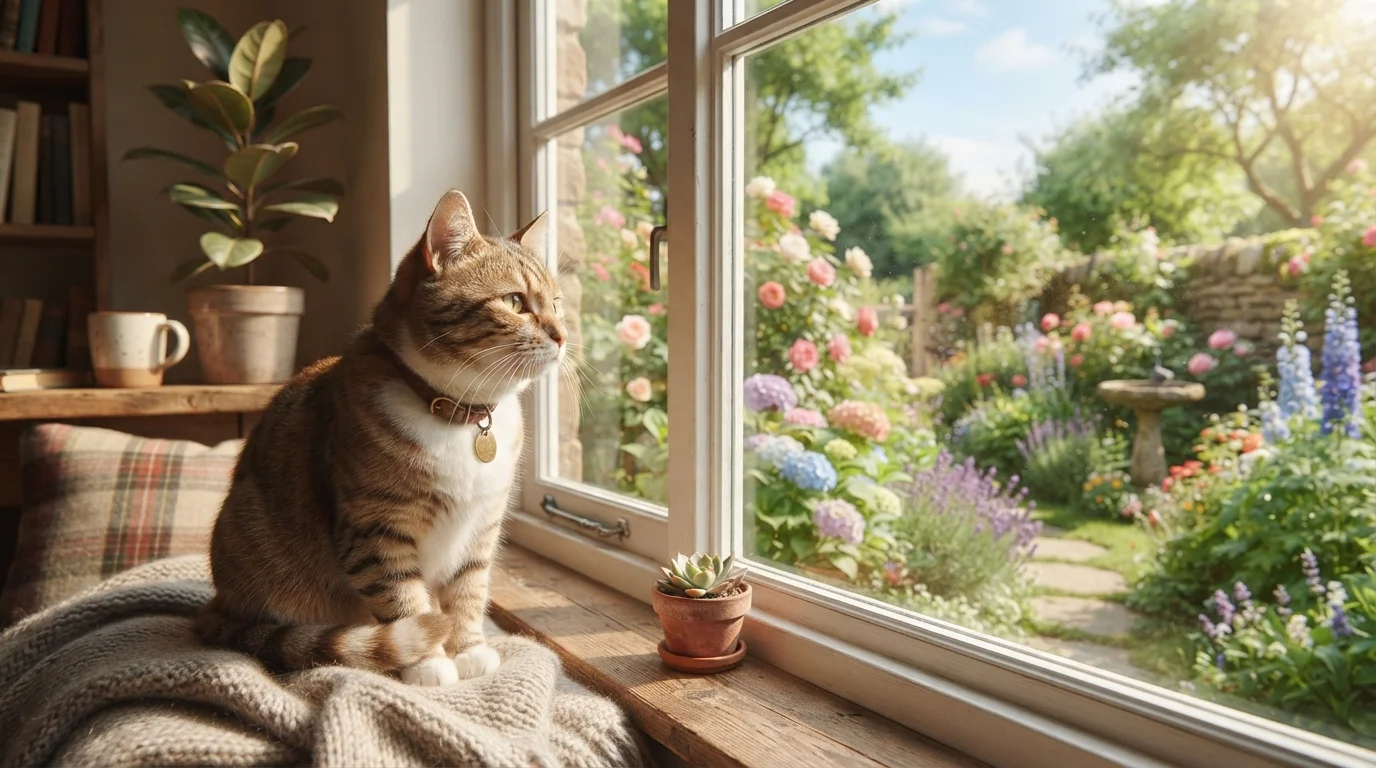
Effective indoor enrichment typically includes vertical space (cat trees, wall-mounted shelves), puzzle feeders, rotating toys that mimic prey movement, window perches with bird feeders visible outside, and regular interactive play sessions. Some owners have success with leash training, which allows supervised outdoor exploration without the risks of free-roaming. Catio enclosures - screened outdoor spaces attached to the home - are another option that provides fresh air and sensory input while containing the cat safely.
Supervised Outdoor Options Are a Middle Ground
Catios, leash walks, and enclosed garden runs allow cats to experience fresh air and natural stimulation without the risks of unsupervised roaming. These options require upfront investment in time or materials but are increasingly popular with owners who want to balance safety with enrichment. Ask your vet whether your cat's temperament makes them a good candidate for leash training.
If you share your home with children, balancing pet enrichment with family safety is a related challenge worth thinking through - our article on raising kids and pets together covers practical strategies for multi-species households.
Making the Decision for Your Cat
There is no one-size-fits-all answer. A cat who has spent years outdoors is unlikely to adjust easily to full-time indoor living without significant enrichment and patience. Conversely, a cat raised indoors from kittenhood typically has no strong drive to roam and adapts well to indoor life when their needs are met.
12-18 years
Typical indoor cat lifespan
Veterinary and feline welfare organizations commonly cite this range for indoor cats with routine care.
~1.3-4 billion
Birds killed by free-roaming cats annually (US estimate)
A frequently referenced estimate from a 2013 study published in Nature Communications by Loss, Will, and Marra.
Your local environment matters, too. A house on a quiet rural property carries different risks than an apartment near a busy road. Cats in multi-pet households face additional dynamics - introducing a new animal without disrupting existing health routines is itself a careful process, as outlined in our piece on bringing a second pet home.
Discuss the decision with your veterinarian, who can assess your individual cat's health, temperament, and history. Whatever you decide, commit to regular veterinary check-ups, up-to-date vaccinations, and parasite prevention - regardless of lifestyle. This article is for general informational purposes only and is not a substitute for advice from a licensed veterinarian familiar with your cat's individual needs.