
Disability Insurance vs. Life Insurance: Protecting Income vs. Protecting Dependents

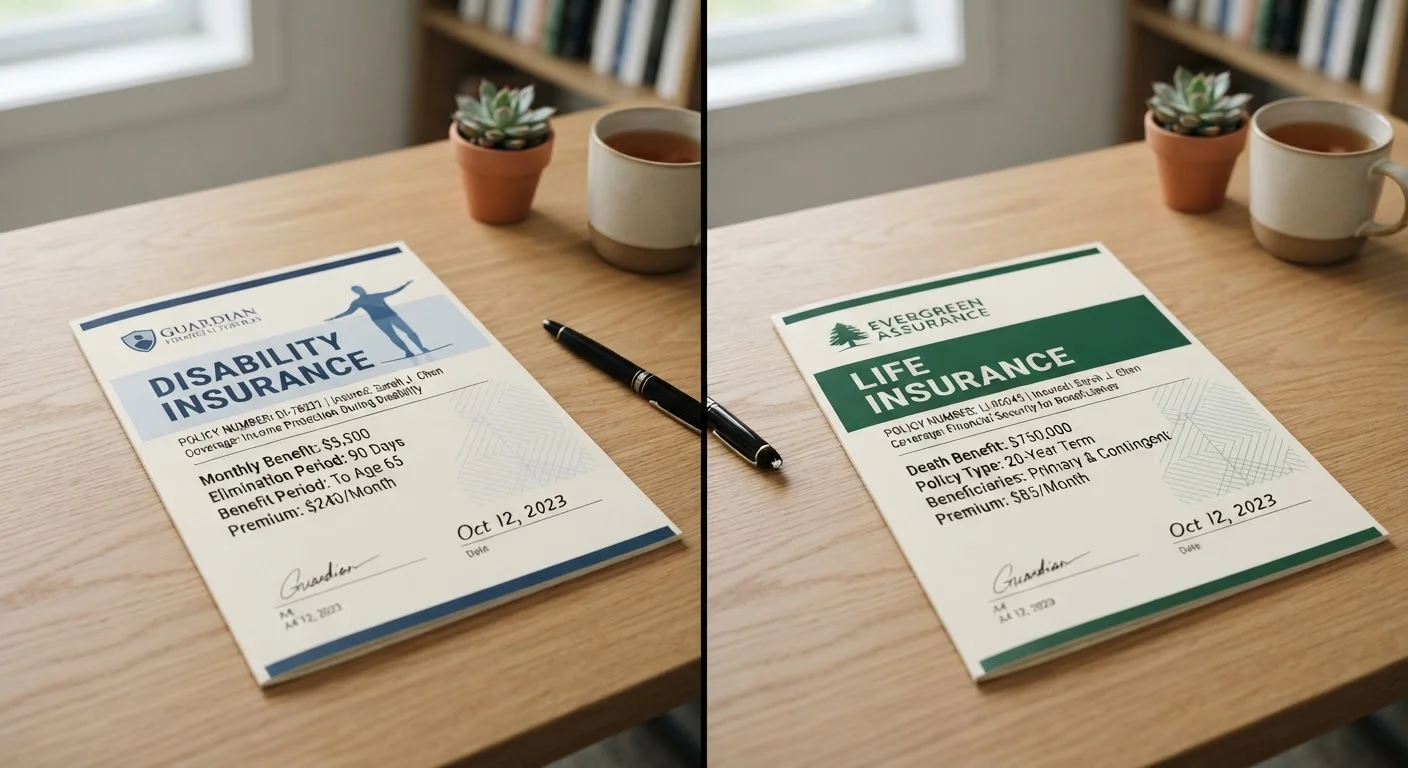
Key Takeaways
- Disability insurance replaces a portion of your income if you can't work due to illness or injury.
- Life insurance pays a lump sum to named beneficiaries when the policyholder dies.
- Most Americans are more likely to experience a disabling injury or illness before retirement than to die prematurely.
- You can hold both types of coverage simultaneously - they address different financial risks.
- Policy definitions, benefit periods, and waiting periods vary widely; always read the actual documents.
Option A
Disability Insurance
The income-replacement safety net while you're still alive.
Best for: Workers who rely on their paycheck to cover living expenses and would struggle financially if illness or injury kept them from working.
Option B
Life Insurance
The financial backstop for people who depend on you.
Best for: People with dependents, co-signed debts, or a partner who would face financial hardship if the policyholder died.
If you're a working adult with no dependents
Disability Insurance
Your income is your most valuable asset. If you can't work, you still have bills - disability coverage helps bridge that gap even without dependents in the picture.
If you have a spouse, children, or others who rely on your earnings
Life Insurance
Life insurance ensures your dependents have financial support if you die unexpectedly. It's specifically designed to protect the people who count on your income.
If you have both dependents and a salary you couldn't easily replace
Both types of coverage
These policies protect against two distinct risks. Carrying both means you're covered whether you're unable to work or no longer alive - neither policy does the other's job.
If your employer provides group disability coverage
Disability Insurance
Group plans often only replace 60% of base pay and may not follow you if you change jobs. An individual policy can fill gaps left by employer-sponsored coverage.
What Each Policy Actually Does
These two types of coverage get lumped together in "financial protection" conversations, but they solve entirely different problems.
Disability insurance pays you - typically a percentage of your pre-disability income, often 60-70% - if you become unable to work because of a qualifying illness or injury. You're alive, but your paycheck has stopped. The policy steps in to help cover rent, groceries, and other ongoing expenses while you recover or if you can't return to your previous job. Coverage can be short-term (weeks to a few months) or long-term (years, or until retirement age).
Life insurance pays a death benefit - a lump sum - to the beneficiaries you've named when you die. It doesn't help you while you're living. Its purpose is to replace your economic contribution to the people who depended on it: a spouse, children, or anyone else who would face financial hardship without your income. For a deeper look at the different forms life insurance takes, see our plain-English guide to life insurance types.
| Criterion | Disability Insurance | Life Insurance |
|---|---|---|
| What triggers a payout | Qualifying illness or injury preventing work | Death of the insured |
| Who receives the benefit | The policyholder directly | Named beneficiaries |
| Benefit structure | Ongoing income replacement (% of salary) | One-time lump-sum death benefit |
| Benefit duration | Months to retirement age, depending on policy | Single payment upon death |
| Primary financial risk addressed | Loss of income while living | Loss of income after death |
| Waiting period | Elimination period (typically 60-90 days) | None once policy is active |
| Common availability | Group (employer) or individual policy | Group (employer) or individual policy |
The Coverage Gap Most People Don't See
Many workers assume life insurance is the priority - but the odds tell a different story. According to the Social Security Administration, roughly one in four 20-year-olds will experience a disability lasting 90 days or more before they reach retirement age. A serious illness, a back injury, or a long recovery can sideline your paycheck for months or years without ending your life - and that's exactly the scenario life insurance won't touch.
1 in 4
Workers who will become disabled before retirement
The Social Security Administration estimates approximately one in four 20-year-olds today will experience a disability lasting 90 or more days before reaching retirement age.
60-70%
Typical income replaced by disability insurance
Most individual and group long-term disability policies replace between 60% and 70% of pre-disability base income, not total compensation.
34.6%
Private-sector workers with long-term disability coverage
According to the U.S. Bureau of Labor Statistics, fewer than 35% of private-sector workers had access to employer-sponsored long-term disability insurance as of recent survey data.
Employer-sponsored short-term disability policies are common, but long-term disability coverage is less consistent. Even when it exists, group plans may only cover base salary, not bonuses or variable pay, and they typically don't follow you to a new employer. Individual disability policies can be structured to fill those gaps, though premiums and definitions of "disability" vary significantly by insurer. Always read how a policy defines the term - some require you to be unable to perform any work, others only require you to be unable to perform your own occupation.
Life insurance has its own blind spots. A term life policy - the most common type - expires after a set period, often 10-30 years. If your dependents are grown and your debts are paid off by then, that may be fine. But if your circumstances change, you'll want to revisit coverage. For a comparison of term vs. permanent options, see Term Life vs. Whole Life.
How to Think About Which Coverage You Need
Start with two questions: Who depends on your income? And what happens to your finances if you can't earn it?
If the answer to the first question is "no one but me," life insurance is less urgent - but disability insurance is still relevant, because you still have bills. If you have a partner, children, or aging parents relying on your paycheck, life insurance addresses what happens after you're gone.
These aren't mutually exclusive. Many financial planners suggest that working adults with dependents think about both: disability coverage protects income during your lifetime, life insurance protects dependents after your death. The coverage types Americans often overlook article covers additional options worth knowing about.
Social Security Disability Insurance Is Not a Substitute
Social Security Disability Insurance (SSDI) exists as a federal safety net, but it has strict eligibility requirements and the application process can take months or years. Benefit amounts are typically modest - the average monthly payment is well below a full working salary. Most financial professionals treat SSDI as a supplement, not a replacement, for private disability coverage.
When evaluating disability coverage, pay attention to the elimination period - the waiting period before benefits begin, often 60-90 days - and how long benefits will last. For life insurance, naming beneficiaries correctly is critical; a policy with the wrong beneficiary on file may not accomplish what you intended. Our article on choosing a life insurance beneficiary walks through key considerations.
This article is for general informational purposes only and is not personalized financial, legal, or insurance advice. Coverage terms, costs, and eligibility vary by provider and state. Consult a licensed insurance professional for guidance specific to your situation.