

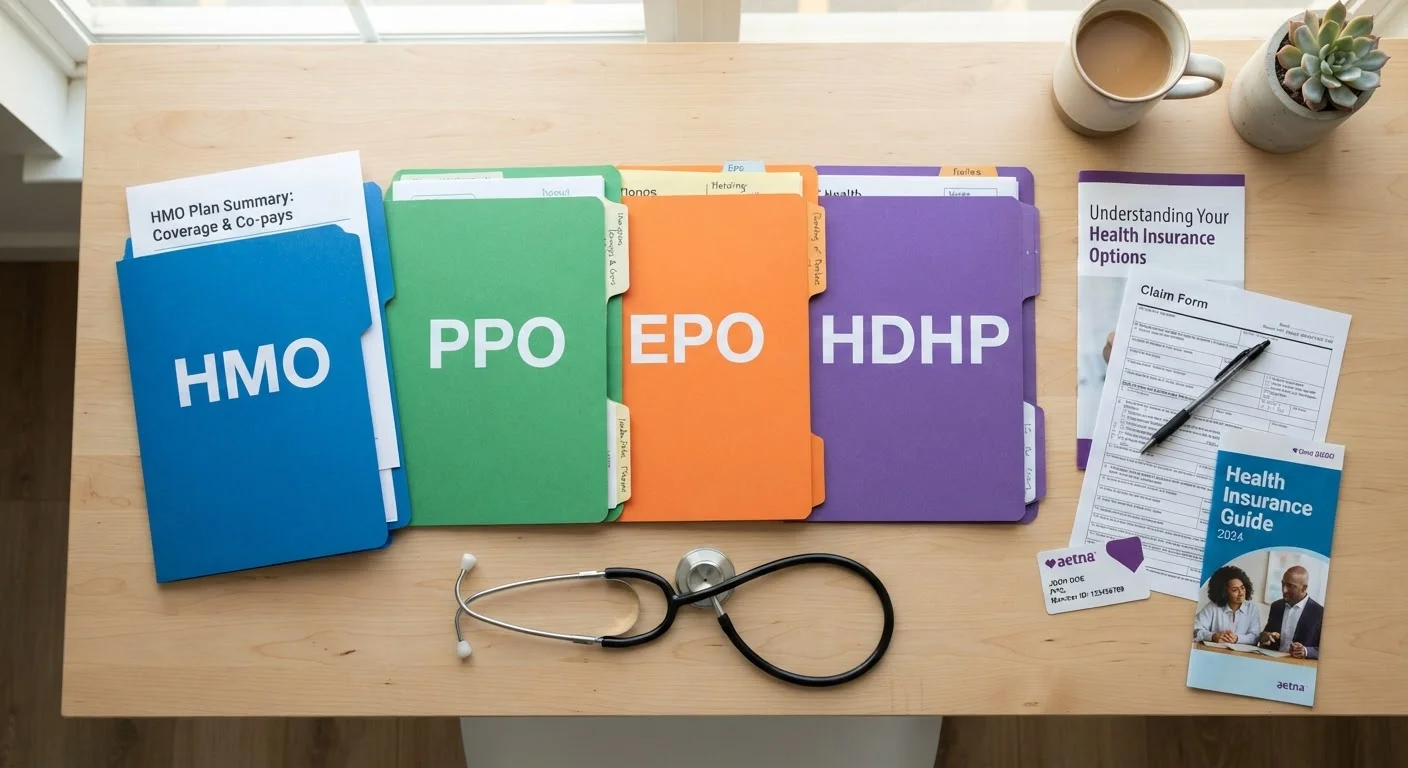
Key Takeaways
- HMOs offer lower costs but require you to use a specific provider network and get referrals.
- PPOs give more provider flexibility but typically carry higher premiums.
- EPOs combine network restrictions with no referral requirement - a middle-ground option.
- HDHPs have the lowest premiums but the highest out-of-pocket costs before coverage kicks in.
- Pairing an HDHP with a Health Savings Account (HSA) can offset the higher deductible over time.
Our Verdict
No single plan type is universally better - the right structure depends on how often you use care, which doctors you need, and how you handle financial risk. HMOs and HDHPs tend to minimize monthly costs; PPOs and EPOs prioritize access. Matching your plan's structure to your actual health habits and budget is what makes the difference.
| Best for | Recommended |
|---|---|
| Cost-conscious consumers with predictable, routine care needs | HMO |
| Those who want maximum provider choice and see multiple specialists | PPO |
| People who want network-based savings without the hassle of referrals | EPO |
| Healthy individuals comfortable with financial risk who want to build HSA savings | HDHP |
Why Plan Structure Matters Before You Compare Costs
Most people zero in on monthly premiums when picking a health plan, but the plan's structure - not just its price tag - determines how you access care, which doctors you can see, and what you'll owe when something goes wrong. Before you compare numbers, it helps to understand what kind of plan you're actually looking at.
The four main plan types you'll encounter - HMO, PPO, EPO, and HDHP - each make a different trade-off between cost, flexibility, and convenience. Understanding those trade-offs is covered in depth in our guide to what you're actually paying for, but this article focuses specifically on how the structures themselves differ.
A quick note: this is general educational information, not personalized insurance or financial advice. Coverage details, costs, and network rules vary by plan and insurer, so always review actual policy documents and consult a licensed insurance professional for guidance on your specific situation.
The Four Plan Types at a Glance
Here's how the four structures compare across the dimensions that matter most to most enrollees.
| HMO | PPO | EPO | HDHP | |
|---|---|---|---|---|
| Monthly premium | Low | High | Moderate | Lowest |
| Deductible | Low to moderate | Moderate | Moderate | High (federally defined) |
| Network restrictions | Strict - in-network only | Flexible - in or out | Strict - in-network only | Varies by plan |
| Referrals required | Yes, from PCP | No | No | Typically no |
| Out-of-network coverage | Generally none | Yes, at higher cost | Generally none | Varies by plan |
| HSA eligible | No | No | No | Yes |
| Best for | Routine care, tight budget | Specialist access, flexibility | No-referral savings | Healthy, HSA savers |
These are general patterns. Individual plans within each type can vary meaningfully, so treat these comparisons as starting points rather than guarantees.
HMO: Low Cost, Tight Network
A Health Maintenance Organization (HMO) ties your care to a defined network of doctors and facilities. You'll typically choose a primary care physician (PCP) who coordinates your care and provides referrals when you need a specialist. See a provider outside the network and - in most cases - you'll pay the full bill yourself.
The upside: HMO premiums and cost-sharing tend to be lower than PPOs. For someone who sees the same doctor regularly and doesn't need out-of-network specialists, the savings can be substantial over a year. The downside: if your preferred doctor isn't in the network, or if you travel frequently and might need care while away, the restricted access becomes a real constraint.
Check the Network Before You Enroll
Before signing up for any HMO, verify that your primary care doctor and any specialists you see regularly are in-network. Network membership can change year to year, so don't assume a doctor who was covered last year is still covered now. A quick call to both the insurer and the provider's office is the safest approach.
PPO: Maximum Flexibility, Higher Price
A Preferred Provider Organization (PPO) lets you see any doctor - in-network or out - without a referral. In-network care costs less, but you won't be left with a full bill for going outside the network (though your share will be higher).
PPOs are popular with people managing ongoing conditions who see multiple specialists, or anyone who values not having to route everything through a PCP. That freedom comes at a cost: PPO premiums are generally the highest of the four types, and deductibles can be significant. If you're comparing plans during open enrollment, our open enrollment guide walks through the timing and decisions involved.
EPO: Middle Ground With a Catch
An Exclusive Provider Organization (EPO) sits between an HMO and a PPO. Like an HMO, it restricts you to a network - go outside it and you're typically responsible for 100% of the cost. But like a PPO, most EPOs don't require referrals to see specialists.
EPOs often carry lower premiums than PPOs while giving you more autonomy than an HMO. The catch is the hard network boundary: there's no partial out-of-network coverage as a safety net. Before enrolling in an EPO, confirm that your current doctors and any specialists you rely on are in-network - that single check can save significant money and frustration later. You can also compare EPO structures against employer-offered options in our employer vs. Marketplace coverage breakdown.
HDHP: Low Premiums, High Deductible - and an HSA Opportunity
A High-Deductible Health Plan (HDHP) is defined by federal thresholds: as of recent IRS guidance, the minimum deductible is $1,650 for individual coverage and $3,300 for family coverage (thresholds are adjusted periodically, so verify current figures). Until you meet that deductible, you pay most routine costs out of pocket - though preventive care is typically covered in full.
The payoff is the lowest premium of any plan type, and - crucially - eligibility to contribute to a Health Savings Account (HSA). An HSA lets you set aside pre-tax dollars for qualified medical expenses, and unused funds roll over year to year. For a healthy person who doesn't expect heavy medical use, an HDHP paired with consistent HSA contributions can actually cost less over time than a richer plan with higher premiums. Our HDHP and HSA deep dive explains the mechanics in detail.
The risk is real, though: a surprise illness or injury in a year when you haven't built up your HSA balance means significant out-of-pocket exposure. HDHPs work best for people with a financial cushion and relatively predictable health needs. For more on managing that kind of trade-off, our budgeting basics hub offers strategies for building household financial resilience.
Don't Choose an HDHP Without a Financial Cushion
An HDHP's low premium is appealing, but the deductible can reach several thousand dollars before your plan pays for most services. If an unexpected health event hits before you've funded your HSA, you could face a large bill with no savings to cover it. Consider your realistic emergency fund before opting for the highest-deductible plan available.
This article provides general educational information about health insurance plan types and is not personalized insurance, financial, or medical advice. Plan terms, costs, networks, and eligibility rules vary by insurer and location. Always review plan documents carefully and consult a licensed insurance professional before making coverage decisions.