

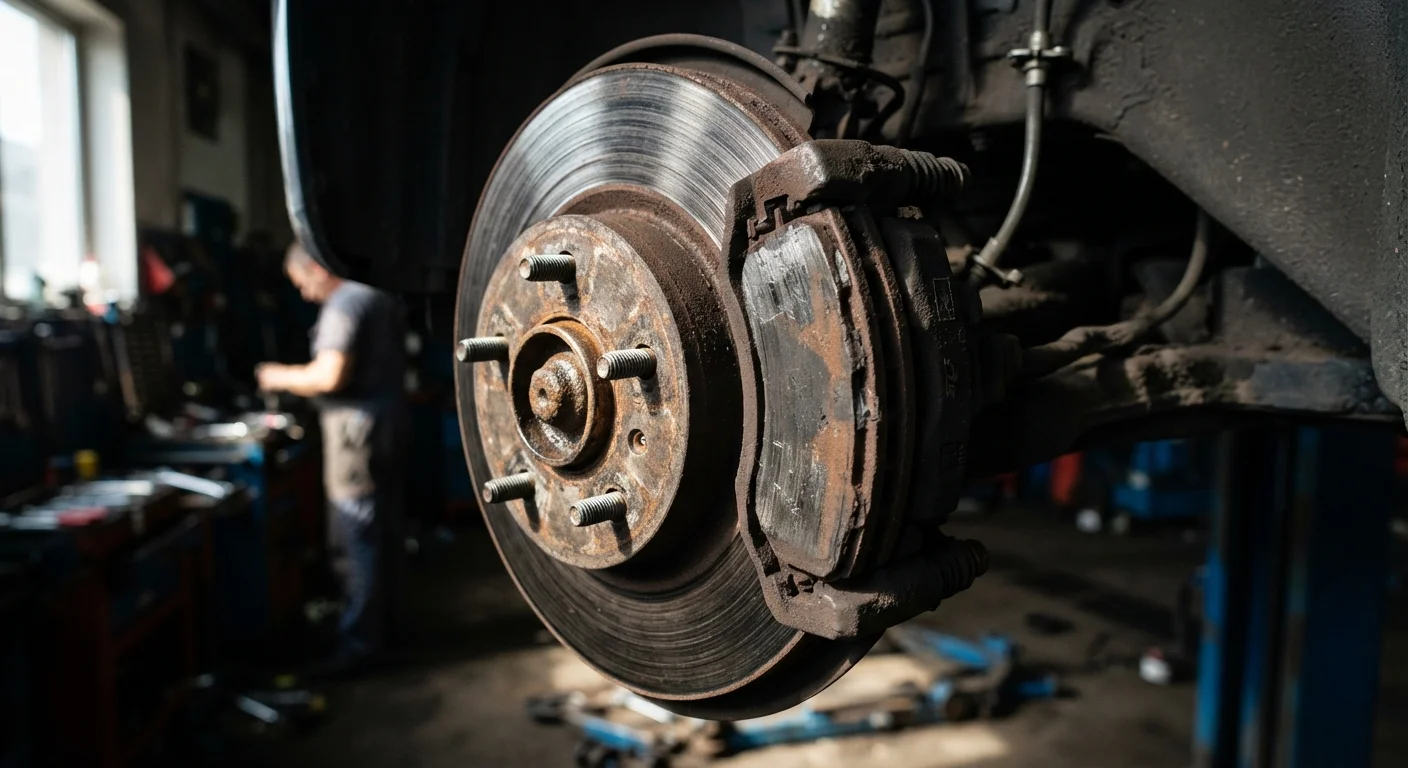
Key Takeaways
- Uneven brake wear is typically a symptom of a problem with calipers, rotors, or alignment - not just normal use.
- Inner pad wearing faster than outer pad is a classic sign of a stuck or sluggish caliper piston.
- Edge-to-edge taper wear often points to a misaligned caliper or worn caliper bracket slides.
- Ignoring uneven wear can accelerate rotor damage and increase stopping distances.
- A qualified mechanic should diagnose and repair uneven brake wear before the next brake service.
Uneven Brake Pad Wear
Uneven brake pad wear occurs when brake pads on the same axle - or even on the same caliper - wear down at different rates or in irregular patterns. Rather than a normal, even reduction in pad thickness across the full surface, one pad, one side, or one edge wears significantly faster than the other. This is almost always a symptom of an underlying mechanical issue rather than a random occurrence.
Braking force is applied through hydraulic pressure to the caliper pistons, which squeeze the pads against the rotor. Any disruption in this system - seized pistons, worn slides, or rotor runout - can create localized pressure differences that produce uneven wear.
What Brake Pad Wear Should Look Like
Under normal operating conditions, brake pads wear gradually and relatively evenly across their full contact surface. Both pads on a given caliper - inner and outer - should thin at roughly the same rate, and the left and right sides of an axle should track closely together. When a technician measures pad thickness during inspection, significant differences between any of these measurements signal that something in the braking system is not functioning as intended.
Normal wear produces a smooth, flat friction surface. Abnormal wear leaves behind clues: tapered edges, glazed surfaces, crumbling material, or dramatic thickness differences between the inner and outer pad of the same caliper. Each pattern points toward a specific cause.
Common Wear Patterns and What They Indicate
Understanding wear patterns helps a mechanic - or an informed car owner - narrow down the root cause quickly.
- Inner pad thinner than outer pad: This is the most common uneven wear pattern and almost always points to a stuck or sluggish caliper piston. When the piston doesn't retract properly, it maintains contact pressure on the inner pad even when no braking force is applied. The fix typically involves rebuilding or replacing the caliper.
- Tapered wear (thick on one edge, thin on the other): When one edge of the pad wears faster, the caliper is likely misaligned or the caliper bracket slides - small metal pins the caliper floats on - are corroded or seized. This prevents the caliper from centering itself on the rotor.
- One side of the axle wearing faster than the other: If the left front pad wears significantly faster than the right front, suspect a problem with the caliper on the faster-wearing side. A partially blocked brake hose can also trap hydraulic pressure, keeping that caliper engaged longer.
- Crumbling or glazed pad surface: Glazing results from the pad overheating, often due to a dragging caliper. Crumbling can indicate pad material degradation from excessive heat cycles or incompatible pad compounds.
~30%
Of premature brake jobs linked to caliper issues
Industry estimates from automotive service data suggest a substantial share of early brake pad replacements involve caliper dysfunction rather than ordinary wear.
2x-3x
Faster rotor wear from a dragging caliper
A continuously dragging caliper can accelerate rotor wear two to three times beyond normal service life, according to brake system engineering guidelines.
The Role of Rotors and Alignment
Rotors are not a passive component in uneven wear. A rotor with significant runout - meaning it wobbles slightly as it spins - creates cyclical pressure variations that cause the pad to wear in a scalloped or pulsing pattern. Rotor thickness variation, where the rotor is thicker in some spots than others, produces a similar effect and is often felt as a pulsing sensation through the brake pedal.
Wheel alignment plays a supporting role. While alignment issues primarily affect tire wear, pronounced camber or toe angles can alter the geometry of pad-to-rotor contact. Over time this contributes to edge-biased pad wear, particularly on vehicles with aggressive suspension setups or those that have sustained suspension component damage.
Ask for a Wear Measurement at Every Rotation
Most tire shops will measure brake pad thickness during a tire rotation at no extra charge. Asking for that measurement in millimeters - not just 'looks good' - gives you a concrete baseline to track over time. Catching a developing imbalance at 4mm versus 6mm is far less expensive than catching it at metal-on-metal contact.
Why Addressing This Early Matters
Uneven brake wear is a cascading problem. A stuck caliper piston grinds one pad down prematurely, which then allows metal-on-metal contact that scores the rotor. A scored rotor now requires resurfacing or replacement - a significantly more expensive repair than simply rebuilding the caliper when the wear pattern was first noticed.
Beyond cost, there is a safety dimension. Uneven braking force across an axle can cause the vehicle to pull to one side under hard braking - a handling behavior that reduces control, particularly in emergency stops. Having uneven wear diagnosed and corrected by a qualified mechanic is the appropriate course of action; brake system repairs are not well suited to guesswork or deferred maintenance.
This article is for general informational and educational purposes only. Brake system diagnosis and repair should be performed by a licensed, qualified mechanic. Do not attempt brake repairs without proper training and equipment.