

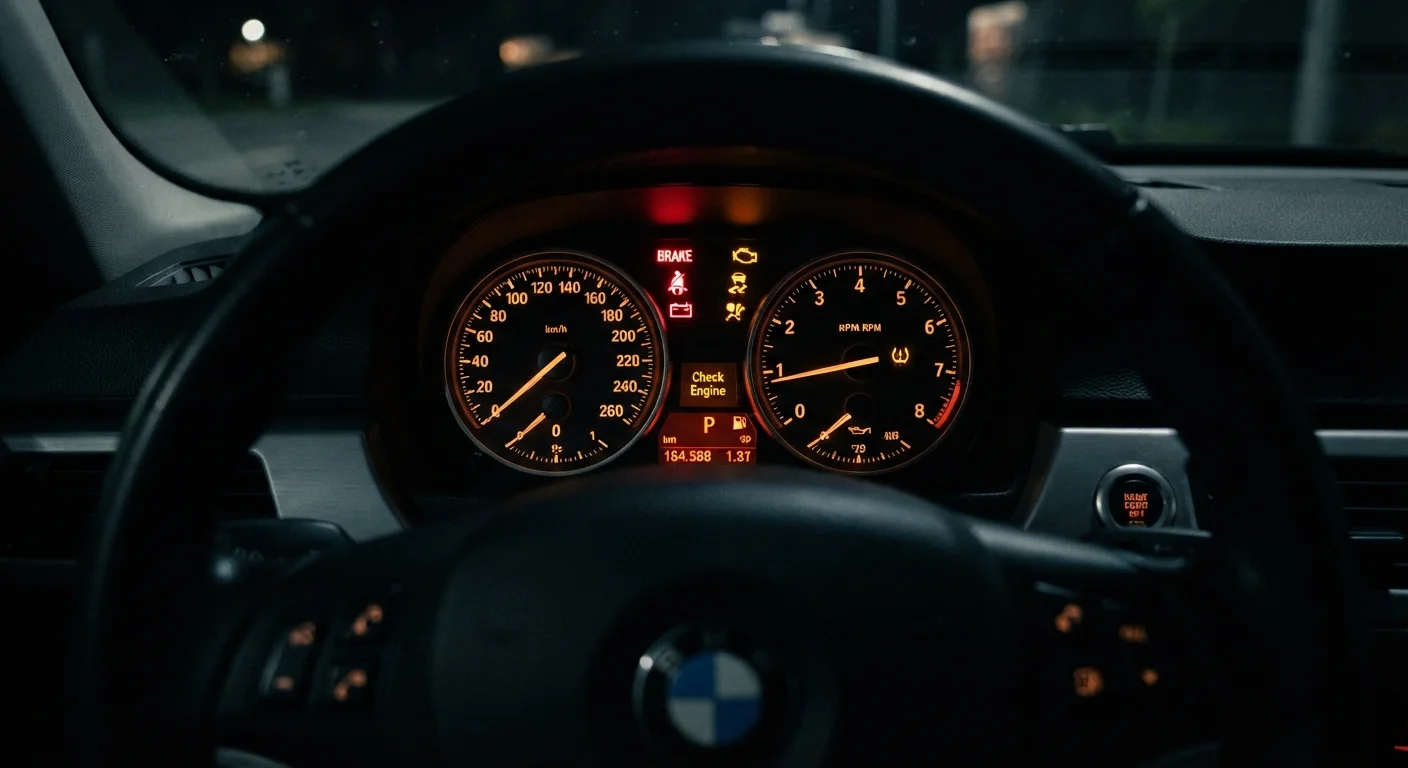
| Color: Red Lights | Serious or immediate - stop driving as soon as safely possible |
| Color: Amber/Yellow Lights | Attention needed soon - monitor and schedule service |
| Color: Green/Blue Lights | System active confirmation - not a warning |
| OBD-II Standard Required | All US passenger vehicles model year 1996 and newer (US EPA OBD-II mandate) |
| TPMS Federally Required Since | 2008 model year for all new US passenger vehicles (NHTSA TPMS Final Rule) |
| Most Common Warning Light | Check Engine Light |
Why Warning Lights Exist - and How to Read Them
Your vehicle's onboard diagnostic system continuously monitors dozens of sensors and systems. When something falls outside normal parameters, it triggers a dashboard warning light. These lights are color-coded by urgency: red signals a serious or immediate problem, amber/yellow indicates a condition that needs attention soon, and green or blue typically confirms a system is active (like high beams or turn signals).
Knowing the color tells you how fast to act. Knowing the symbol tells you what to address. Together, they're your car's built-in communication system - one worth learning before you need it on the highway.
| Color: Red Lights | Serious or immediate - stop driving as soon as safely possible |
| Color: Amber/Yellow Lights | Attention needed soon - monitor and schedule service |
| Color: Green/Blue Lights | System active confirmation - not a warning |
| OBD-II Standard Required | All US passenger vehicles model year 1996 and newer (US EPA OBD-II mandate) |
| TPMS Federally Required Since | 2008 model year for all new US passenger vehicles (NHTSA TPMS Final Rule) |
| Most Common Warning Light | Check Engine Light |
Common Warning Lights and What They Signal
Below are the warning lights drivers encounter most often, along with their typical causes and recommended responses.
Check Engine Light (Amber)
This is the most misunderstood light on any dashboard. It can indicate anything from a loose gas cap to a misfiring engine cylinder or a failing catalytic converter. A solid amber check engine light generally means you have time to schedule a diagnostic scan - don't ignore it, but you don't need to pull over immediately. A flashing check engine light, however, signals an active misfire that can damage the catalytic converter; reduce speed and have the vehicle inspected as soon as possible.
Oil Pressure Warning (Red)
This light - often shaped like an oil can - means your engine is not receiving adequate oil pressure. Driving with low oil pressure can cause catastrophic engine damage within minutes. Pull over safely, shut off the engine, and check the oil level. If the oil level is normal, do not drive the vehicle; have it towed to a mechanic.
Battery / Charging System Warning (Red)
This light indicates the electrical charging system is not functioning properly. Possible causes include a failing alternator, a worn drive belt, or a battery nearing the end of its life. Your vehicle may continue running temporarily on battery power alone, but electrical systems will start failing. Drive directly to a service facility without turning the engine off if possible.
Temperature Warning (Red)
An overheating engine can warp cylinder heads and cause severe internal damage. If this light activates, turn off the air conditioner, and if safe, turn on the heater to draw heat away from the engine. Pull over as soon as it is safe to do so. Do not open the radiator cap while the engine is hot.
Tire Pressure Monitoring System - TPMS (Amber)
TPMS alerts you when one or more tires drop significantly below the recommended pressure. Under-inflated tires reduce fuel efficiency, handling, and can increase blowout risk. Check tire pressure manually with a gauge - temperature changes alone can trigger TPMS on cold mornings. See our car maintenance schedule guide for recommended tire pressure check intervals.
Brake System Warning (Red)
If this light appears and the parking brake is fully released, the vehicle may have low brake fluid or a hydraulic fault. Have brakes inspected immediately - do not defer this one.
OBD-II
On-Board Diagnostics, second generation - a standardized system built into vehicles sold in the US after 1996 that monitors emissions, engine, and drivetrain performance. A scan tool plugged into the OBD-II port can read diagnostic trouble codes stored by the vehicle's computer.
Diagnostic Trouble Code (DTC)
An alphanumeric code generated by a vehicle's onboard computer when a sensor reading falls outside acceptable limits. Mechanics use these codes as a starting point for diagnosis - not a definitive repair order.
TPMS
Tire Pressure Monitoring System - a federally mandated sensor system in US vehicles that alerts the driver when tire pressure drops significantly below the manufacturer's recommended level.
Catalytic Converter
An emissions control device in the exhaust system that converts harmful combustion byproducts into less harmful gases. Engine misfires can overheat and damage the catalytic converter quickly.
Alternator
An engine-driven generator that recharges the battery and powers the vehicle's electrical systems while the engine is running. A failing alternator is a common cause of the battery warning light.
Oil Pressure
The force with which engine oil circulates through internal passages to lubricate moving parts. Insufficient oil pressure - caused by low oil level, a failed pump, or leaks - can destroy an engine rapidly.
When to Keep Driving vs. When to Stop Immediately
A simple rule: any red warning light warrants stopping the vehicle as soon as it is safely possible. Amber lights typically allow you to continue driving cautiously to a repair facility. The table below summarizes urgency levels for common lights.
| Warning Light | Color | Urgency |
|---|---|---|
| Oil Pressure | Red | Stop immediately |
| Engine Temperature | Red | Stop immediately |
| Brake System | Red | Stop immediately |
| Battery / Charging | Red | Drive directly to service |
| Check Engine (flashing) | Amber | Reduce speed, service soon |
| Check Engine (solid) | Amber | Schedule diagnostic scan |
| TPMS | Amber | Check pressure; drive cautiously |
If a warning light activates and you're unsure of its meaning, consult your owner's manual - the definitive reference for your specific vehicle. Many modern vehicles also display text messages alongside the symbol. For vehicles with a history of recurring warnings, reviewing the vehicle history report can reveal whether a pattern of electrical or mechanical issues predates your ownership.
Persistent or recurring warning lights - even ones that seem to resolve on their own - should always be evaluated by a qualified mechanic. An OBD-II scanner can read stored diagnostic trouble codes (DTCs) and help a technician identify the root cause efficiently. If you drive a high-mileage vehicle, proactive maintenance habits can reduce the frequency of unexpected warning light events.