

Key Takeaways
- Budgets most often collapse because of unrealistic expectations, not lack of willpower.
- Irregular and forgotten expenses are among the biggest budget-busters for American households.
- Small, flexible adjustments in the first month dramatically improve long-term budget survival rates.
- Tracking spending after the fact - not just planning it - is essential for staying on course.
The Real Reason Your Budget Didn't Survive Week Three
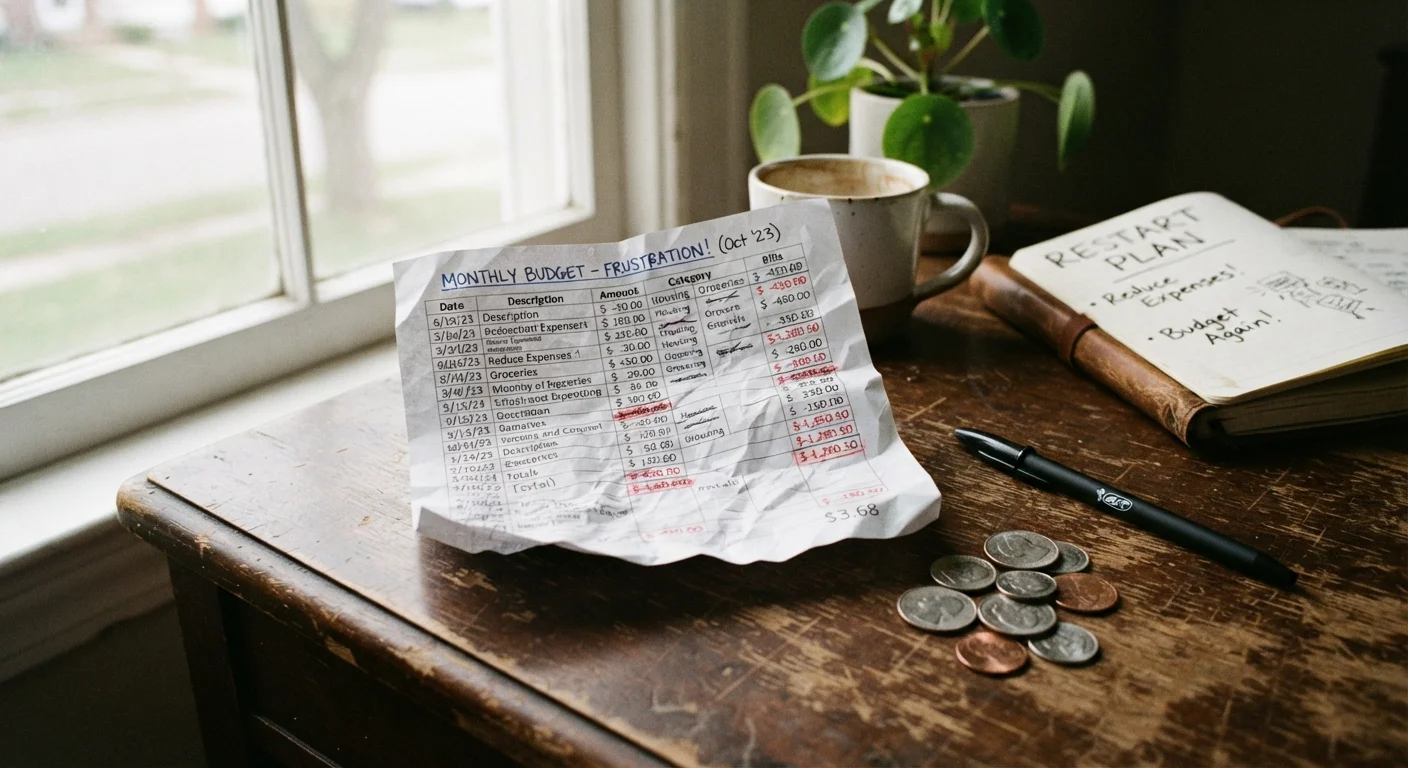
Starting a budget feels motivating. Sticking to one, as millions of Americans discover every January, is another matter entirely. Research consistently shows that a large share of new budgets are abandoned within the first 30 days - not because people lack discipline, but because the budget itself was set up to fail.
The good news: these failures follow recognizable patterns. Once you understand why budgets break down, you can build one that actually holds. If you haven't made your first budget yet, start with this foundational guide before reading on - the mistakes below will make more sense with the basics in place.
Building the budget around an idealized version of spending rather than actual habits.
Why it happens: When people are motivated to change, they often plan for who they want to be - not who they currently are. The result is a budget that looks great on paper but bears no resemblance to real life.
Leaving no room for irregular or unexpected expenses.
Why it happens: Monthly budgets naturally focus on recurring costs: rent, utilities, groceries. But expenses like car repairs, medical co-pays, or birthday gifts don't arrive on a schedule, so they often go unplanned.
Setting spending cuts so aggressive that the budget becomes unsustainable.
Why it happens: The desire to make dramatic progress quickly leads many people to slash categories - dining, entertainment, clothing - far below what they've historically spent. The deprivation quickly feels punishing.
Treating the first month's budget as final rather than a draft.
Why it happens: There's an assumption that a well-made budget should work immediately. When it doesn't, people feel they've failed - and abandon the process entirely rather than adjusting the numbers.
Failing to account for income variability when on hourly or freelance pay.
Why it happens: Many budget templates and apps assume a fixed monthly income. When paychecks fluctuate, the math falls apart and the budget feels irrelevant.
Skipping regular check-ins and only reviewing the budget at month's end.
Why it happens: Life is busy, and reviewing finances feels tedious. Many people set a budget once and assume good intentions will carry them through, only to discover a blowout when it's too late to correct course.
What the Data Says About Household Budget Strain
The difficulties people face aren't just anecdotal. Surveys of American households routinely surface the same pressure points: income that doesn't stretch far enough, expenses that arrive without warning, and budgeting systems that feel too rigid to maintain. Understanding the scale of the problem helps put your own experience in perspective.
~64%
Americans living paycheck to paycheck
Multiple surveys of U.S. adults, including reports from LendingClub and PYMNTS, have consistently found that roughly six in ten Americans report spending most or all of their monthly income.
$400
Emergency savings gap for many households
Federal Reserve consumer finance surveys have found that a significant share of U.S. adults would struggle to cover a $400 unexpected expense without borrowing or selling something.
3-4 weeks
Typical window before new budgets are abandoned
Financial behavioral research broadly suggests that most new budgeting attempts collapse within the first month, often due to unrealistic initial targets rather than lack of effort.
One frequently overlooked contributor is the category of "hidden" expenses - annual subscriptions, seasonal costs, and irregular bills that don't appear in a typical monthly tally. Learn where these surprises typically hide so you can plan for them before they arrive.
Adjustments That Give Your Budget a Real Fighting Chance
Avoiding the mistakes above is only half the work. The other half is building flexibility into your system from day one. A budget that accounts for imperfect months - an unexpected car repair, a social obligation, a skipped gym visit - will outlast one that demands perfection.
Don't Abandon the Budget - Revise It
If your budget breaks down midway through the month, the worst response is to give up entirely and "start fresh next month." That pattern repeats indefinitely. Instead, stop, identify which single category caused the problem, and make one targeted adjustment. A revised budget that you actually follow is worth far more than a perfect budget you abandon.
Consider reviewing your spending at the end of each week rather than waiting until the month closes. Small course corrections are far easier than large ones. And if your income isn't the same every month, standard budgeting templates may not serve you well - these strategies for variable-income earners are built for exactly that situation.
Once your budget is holding steady, the natural next step is channeling that discipline toward specific goals. Explore saving strategies and goal-setting frameworks to put your stabilized finances to work. And if you've ever wondered whether some of the conventional wisdom about budgeting is actually holding you back, this look at common budgeting myths is worth a read.
This article is for general informational and educational purposes only and does not constitute personalized financial advice. For guidance specific to your situation, consider consulting a qualified financial professional.