

Key Takeaways
- Fixed expenses are predictable and consistent; variable expenses fluctuate with your choices and circumstances.
- Most household budgets contain a mix of both types, and each requires a different planning approach.
- Variable expenses are usually where you have the most control and the most room to cut.
- Knowing your fixed expenses first tells you the minimum income you need to stay financially stable.
- Semi-variable costs, like utilities, sit between the two categories and deserve their own budget line.
Fixed vs. Variable Expenses
Fixed expenses are costs that stay the same amount every month, like rent or a car loan payment. Variable expenses change from month to month based on usage or behavior, like groceries, gas, or dining out. Understanding the difference helps you predict your spending, find areas to cut, and build a more realistic budget.
Some expenses - such as utility bills or insurance premiums - are sometimes called 'semi-variable' because they recur regularly but fluctuate in amount. For budgeting purposes, these are typically tracked alongside variable expenses.
What Makes an Expense Fixed or Variable?
Every dollar that leaves your account fits into one of two broad categories. Fixed expenses are charges you pay on a set schedule for a predetermined amount - the number on the invoice doesn't change from month to month. Variable expenses fluctuate based on consumption, lifestyle choices, or circumstances outside your control.
This isn't just a semantic distinction. The category an expense falls into determines how you should plan for it, whether you can realistically reduce it, and what happens to your finances if your income drops suddenly.
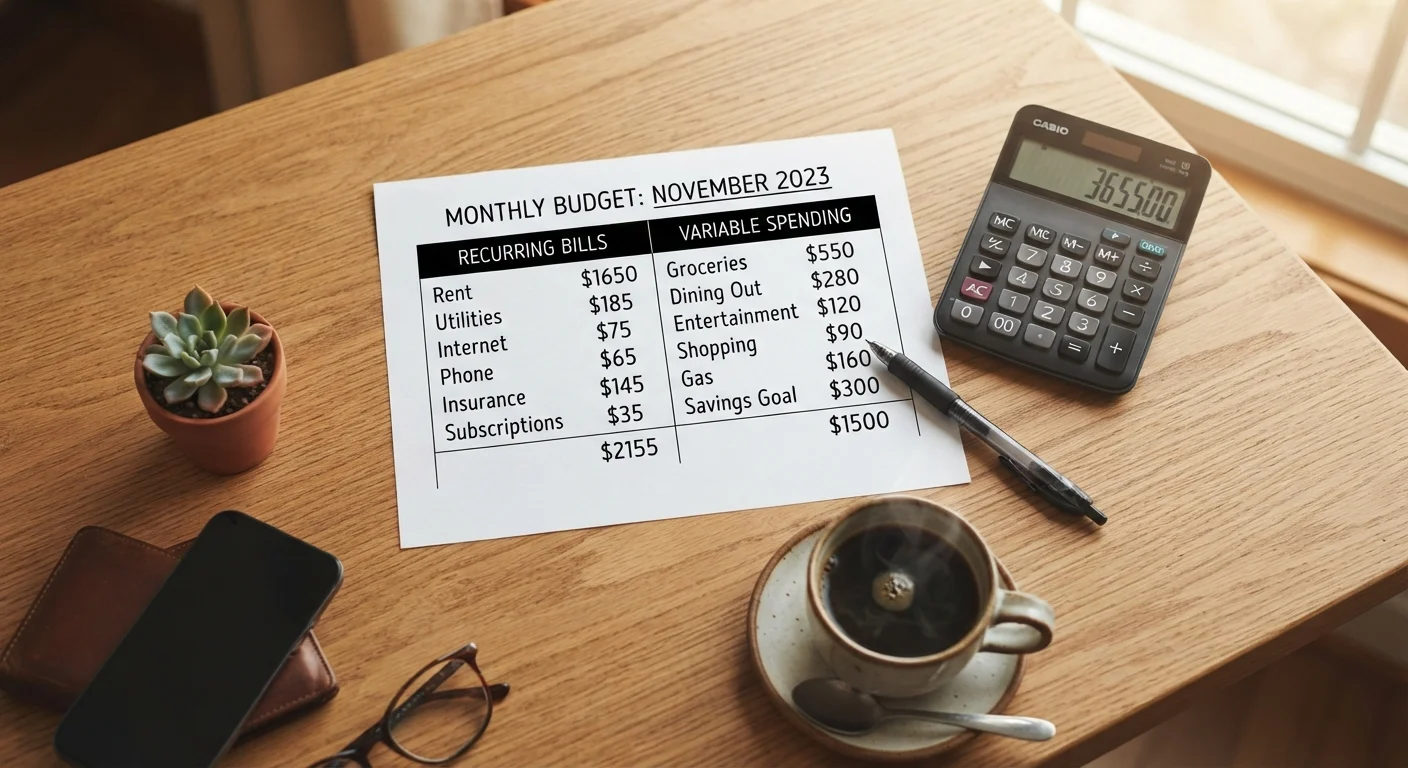
Fixed examples you likely already pay: rent or mortgage, auto loan, renter's or homeowner's insurance, student loan payment, and flat-rate subscriptions. Variable examples: groceries, gas, restaurant meals, clothing, entertainment, and most utility bills.
What About Semi-Variable Expenses?
Some costs don't fit neatly into either category. Electricity, water, and natural gas bills arrive every month (like a fixed expense) but vary with usage and season (like a variable one). For budgeting purposes, treat them as variable: estimate based on past months, and plan for higher amounts in peak heating or cooling seasons.
Why Fixed Expenses Define Your Financial Floor
Add up every fixed expense you carry each month and you have your financial floor - the minimum take-home income required to keep the lights on and avoid default. This number matters enormously. If your fixed costs consume 70% or more of your net income, you have very little margin for anything else, including savings and emergencies.
Because fixed expenses are contractual or recurring obligations, they're hard to eliminate quickly. Breaking a lease early, refinancing a loan, or canceling a service mid-contract often carries costs of its own. That's why financial planners generally advise keeping fixed commitments as lean as possible, especially if your income isn't guaranteed. If you're navigating an irregular paycheck, budgeting on a variable income requires anchoring your plan firmly around these non-negotiable costs first.
~33%
Average share of income spent on housing alone
The U.S. Bureau of Labor Statistics Consumer Expenditure Survey consistently finds housing as the largest single fixed expense category for American households.
Over 60%
Americans living paycheck to paycheck at times
Multiple surveys from financial research organizations have found that a majority of U.S. adults have difficulty covering expenses if a paycheck were delayed, underscoring the importance of understanding fixed cost obligations.
Variable Expenses: Where Your Budget Has Breathing Room
Variable expenses are where most households have genuine spending flexibility - and where budgets most commonly go off the rails. Because there's no fixed invoice arriving each month, it's easy to underestimate how quickly small purchases compound into large monthly totals.
The practical approach is to track variable categories over several months and set a realistic monthly cap for each. Groceries, dining, transportation fuel, personal care, and entertainment are the most common culprits in busted budgets. As you build awareness, you'll also surface hidden costs that quietly drain households, like annual fees charged in a single month or seasonal spikes in utility use.
Track Variable Spending in Real Time
Don't wait until the end of the month to review variable categories - check in weekly. A quick look at your bank or budgeting app mid-month gives you time to pull back on discretionary spending before you exceed your limits. Awareness alone is one of the most effective spending controls available.
Once you have a handle on variable patterns, you're ready to explore different planning frameworks - from cash envelopes to zero-based digital spreadsheets. See how different budgeting methods handle variable spending to find an approach that fits your household.
Building a Budget That Accounts for Both
A functional monthly budget lists fixed expenses first - because they're certain - then allocates what's left across variable categories and savings goals. This sequencing prevents the common mistake of spending freely early in the month and scrambling to cover rent later.
For variable categories, use historical averages with a modest buffer rather than best-case-scenario estimates. If groceries averaged $420 over the last four months, budget $450. The goal is a plan that holds up in a typical month, not just a perfect one.
Don't forget to account for irregular but predictable costs - annual insurance renewals, back-to-school spending, car registration fees - by dividing their yearly total by 12 and setting that amount aside monthly. This is one of the most commonly overlooked practices, and it's covered in depth in our guide to what most families overlook in a household budget.
Finally, pair your expense plan with a dedicated emergency fund. Fixed and variable expenses tell you what a normal month costs; an emergency fund covers the months that aren't normal. Learn how an emergency fund and a monthly budget work together to protect everything you're building. From there, the logical next step is putting extra dollars to work through saving toward short- and long-term financial goals.
This article is for general informational purposes only and does not constitute personalized financial advice. Consider consulting a qualified financial professional for guidance specific to your situation.