

Key Takeaways
- Dryer vent buildup is a leading cause of residential fires and should be cleared at least once a year.
- Window tracks, refrigerator coils, and range hood filters are among the most skipped but impactful cleaning tasks.
- Many overlooked tasks directly affect indoor air quality, appliance lifespan, and home safety.
- Seasonal scheduling makes it easier to stay consistent without letting these tasks pile up.
- Most of these jobs take under 30 minutes and require only basic household tools.
The Cleaning Tasks Hiding in Plain Sight
Weekly vacuuming and wiping down counters keep a home looking tidy - but there's a second layer of cleaning most households skip entirely, sometimes for years. These aren't obscure tasks; they're just easy to rationalize away because the consequences aren't immediately visible. Over time, though, they accumulate in ways that affect air quality, appliance efficiency, and in some cases, safety.
If you've ever wondered why your home still feels stale after a thorough clean, or why a major appliance seems to be working harder than it should, the answer is often one of these neglected seasonal tasks. The good news: most require only basic tools and 20 to 30 minutes of effort. Understanding why clean homes get messy so fast can help put these tasks in context - they're not a sign of failure, just gaps in the standard cleaning routine.
Below are seven commonly skipped deep-cleaning tasks worth scheduling into your seasonal home care plan.
Dryer Vent Cleaning
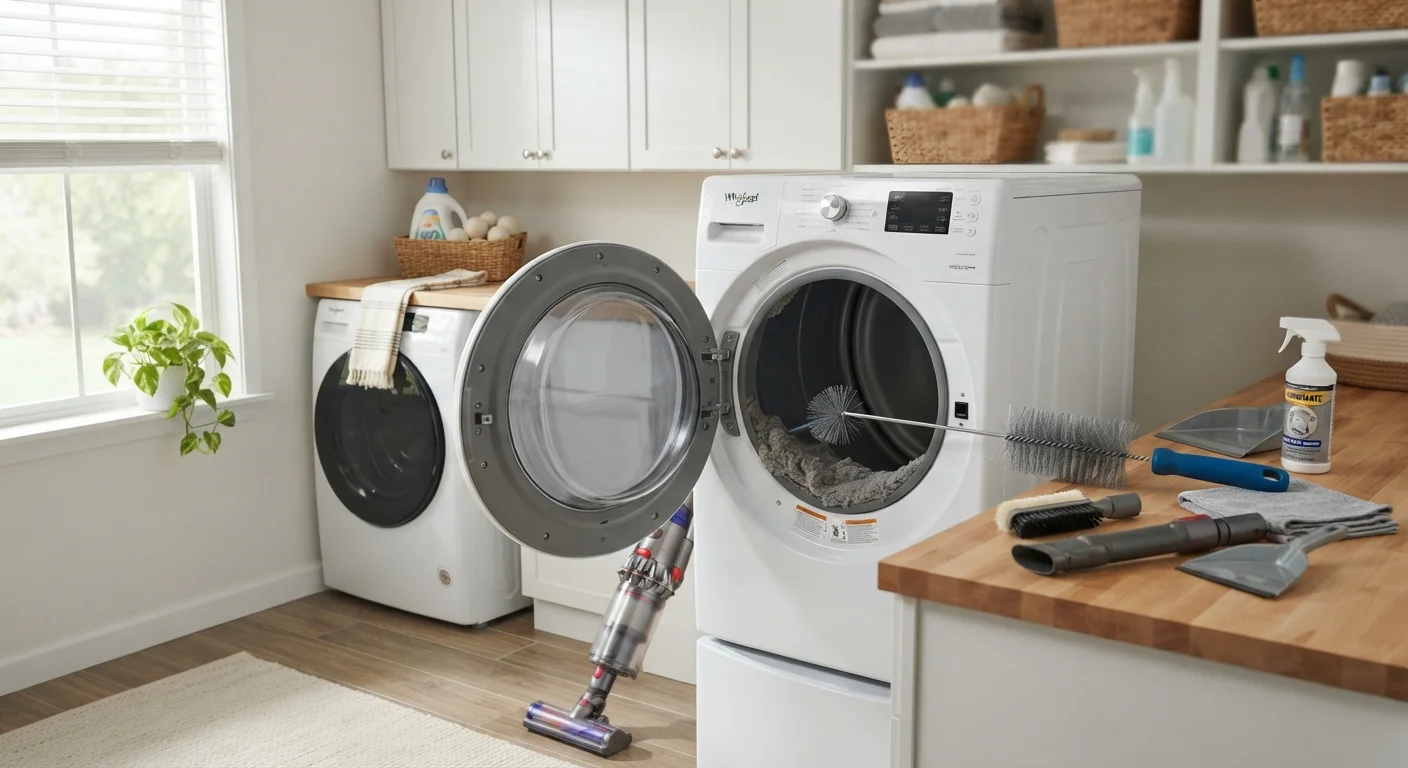
The lint trap catches most debris, but not all of it. Over time, lint accumulates inside the dryer duct and vent hose - a combination that restricts airflow, forces the dryer to run longer, and creates a genuine fire hazard. The U.S. Fire Administration has identified dryer vent buildup as a significant contributor to residential fires.
Plan to clean the full duct system at least once a year - more frequently if you do large loads regularly or have a long vent run. A flexible dryer vent brush kit makes this a manageable DIY job for most homeowners, though longer or more complex duct runs may warrant professional service.
Lint buildup inside dryer ducts is a leading - and preventable - cause of residential fires.
Refrigerator Condenser Coils
Condenser coils release heat as part of the refrigeration cycle. When coated in dust and pet hair, they can't dissipate heat effectively, which makes the compressor work harder and shortens the appliance's lifespan. Most refrigerators have coils located either at the back of the unit or behind a grille at the bottom front.
Cleaning them once or twice a year - using a coil brush and vacuum - takes about 15 minutes and can noticeably improve efficiency. Check your appliance manual for the coil location and any model-specific guidance before starting.
Dusty condenser coils force your refrigerator's compressor to overwork, cutting years off its lifespan.
Range Hood Filters
Range hood filters trap grease vapors released during cooking. After months of use, they become saturated - meaning the hood is no longer effectively pulling smoke, steam, or combustion gases away from your cooking area. The result is greasier surfaces throughout the kitchen and degraded indoor air quality.
Most metal mesh filters are dishwasher-safe or can be soaked in hot water with dish soap and baking soda. Check your filter every one to three months and replace charcoal filters (found in ductless hoods) according to the manufacturer's schedule, as these cannot be washed.
A clogged range hood filter stops protecting your kitchen air - and the grease builds up on every surface.
Window Tracks and Frames
Window tracks accumulate an impressive combination of dirt, dead insects, mold spores, and moisture over a single season. Because they sit outside daily awareness, they're often skipped for years. Beyond aesthetics, mold growth in damp tracks can affect air quality and, in wood-framed windows, lead to rot over time.
Use a stiff-bristled brush or old toothbrush to loosen debris, then follow with a vacuum and a damp cloth. A baking soda and vinegar solution works well for mold spots. This task is particularly valuable in the spring, after windows have been sealed shut through winter.
Window tracks are prime environments for mold growth that can silently affect indoor air quality.
Bathroom Exhaust Fan Covers
Bathroom exhaust fans pull moisture and odors out of the room, but a dust-clogged cover significantly reduces their effectiveness. That trapped humidity contributes to mold growth on ceilings, walls, and grout - the opposite of what the fan is designed to prevent.
Remove the cover and wash it in warm soapy water, then use a vacuum or compressed air to clear dust from the fan blades and motor housing. This takes fewer than 10 minutes and should be done every six months. While the cover is off, note whether the fan sounds unusually loud or labored - that can signal a motor nearing the end of its life.
A dust-choked exhaust fan makes bathroom mold problems worse, not better.
Behind and Beneath Large Appliances
The floor space behind the stove, washing machine, and refrigerator collects dust, food particles, and sometimes pests - all invisible from normal vantage points. Beyond hygiene concerns, built-up debris near appliance cords or gas connections is a fire and safety risk worth addressing.
Pull these appliances out once or twice a year to vacuum and mop behind and beneath them. This also gives you an opportunity to check for signs of leaks, unusual wear on cords, or pest activity. Use appliance rollers or a furniture slider if moving heavy units on your own to avoid floor damage or back strain.
The floor behind your stove and refrigerator can harbor debris that poses real fire and pest risks.
HVAC Vents and Return Air Grilles
Supply and return vents accumulate dust that then gets redistributed throughout the house every time the system runs. Cleaning them is a quick but high-impact task - remove the grilles, wash them in soapy water, let them dry fully, and vacuum the duct opening as far as the hose reaches.
This pairs naturally with replacing your HVAC filter, which the U.S. Department of Energy recommends doing every one to three months depending on filter type and household conditions. Staying on top of this also contributes to the broader room-by-room maintenance rhythm that keeps systems running efficiently year-round.
Dirty return air grilles circulate dust through the entire home every time the HVAC system runs.
Making These Tasks a Habit
The most effective way to stay on top of these tasks is to anchor them to a season rather than a date. Spring and fall are natural inflection points - when heating and cooling systems switch roles, when windows open again, when appliances get heavier use. Tying your deep-cleaning checklist to those transitions makes the habit stickier.
Start With Just One Task Per Season
Trying to tackle all seven tasks in a single weekend almost guarantees burnout. Instead, assign one or two to each season - for example, dryer vents and refrigerator coils in fall, window tracks and exhaust fans in spring. Spreading the effort keeps the workload manageable and ensures nothing waits years between cleanings.
If you prefer a more structured approach, our home maintenance calendar maps out tasks month by month so nothing slips through. And if you're evaluating how you divide cleaning responsibilities in your household, the comparison of zone cleaning vs. task cleaning may help you find a rhythm that actually sticks. For households where time or physical limitations make these tasks difficult, hiring a house cleaner is a practical option worth understanding before committing.