

Key Takeaways
- Sorting documents into clear categories is the essential first step before building any filing system.
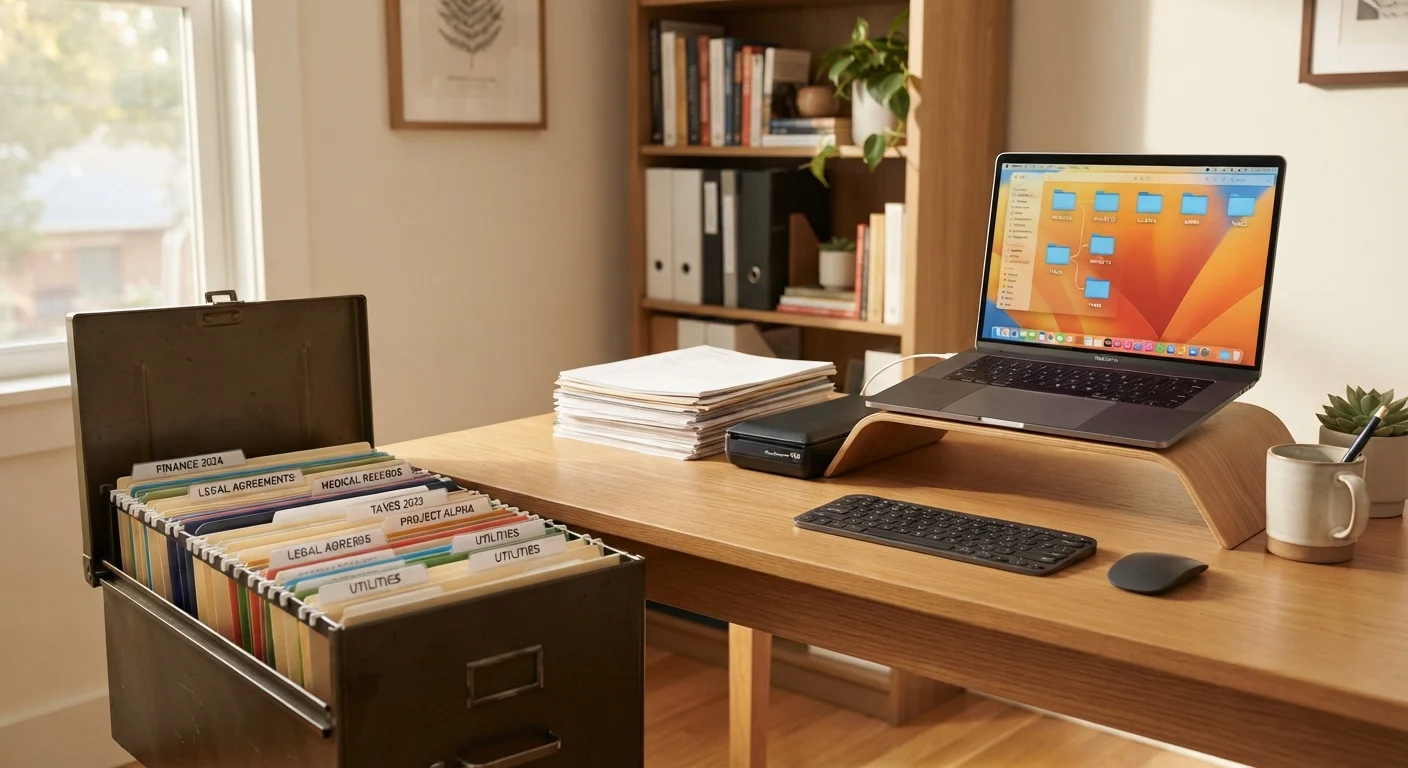
- A hybrid approach - keeping critical originals on paper and backing up digitally - offers the best protection.
- Consistent naming conventions and folder structures make digital files as easy to find as physical ones.
- Regular quarterly reviews prevent document clutter from building back up over time.
- Secure disposal of sensitive paperwork protects against identity theft.
What you will need
Why Most Household Filing Systems Break Down
The typical American household accumulates a significant volume of paperwork each year - insurance renewals, tax documents, appliance warranties, medical records, and more. Without a deliberate system, these documents end up scattered across kitchen drawers, countertops, and old bags, creating stress every time something important needs to be found quickly. Research on household disorganization consistently finds that the cost goes beyond inconvenience: misplaced documents can lead to missed deadlines, duplicate purchases, and financial penalties. For a deeper look, our article on the hidden costs of a disorganized home outlines how clutter quietly affects your finances and well-being.
Most systems fail not because people lack effort, but because they try to maintain a fully paper-based or fully paperless approach when neither extreme suits everyday life. A hybrid model - retaining critical originals physically while digitizing everything else - is more resilient, more accessible, and easier to maintain over time.
What you will need
Tools and Materials You'll Need
Before starting, gather the items below. Having everything ready in advance keeps the process from stalling midway through.
Cross-cut or micro-cut shredder
Securely destroys sensitive documents before disposal to prevent identity theft.
Filing cabinet or expanding accordion folder
Provides organized, physical storage for original documents sorted by category.
Flatbed scanner or mobile scanning app
Creates digital copies of important paper documents for backup and easy retrieval.
Cloud storage account or external hard drive
Stores and backs up digital files securely so they can be accessed from multiple devices.
Label maker or adhesive folder labels
Keeps physical folders clearly identified so anyone in the household can find what they need.
Fireproof document box or safe
Protects irreplaceable original documents from fire, flood, or theft.
If you own multiple appliances or electronics, note that many device manuals can be found on manufacturer websites as free PDFs, reducing your need for bulky paper copies. Our guide to long-term electronics care also covers keeping device records organized as part of good appliance maintenance.
Step-by-Step: Building Your System
Follow these steps in order. Each builds on the last, so skipping ahead - especially past the sorting and shredding phases - tends to result in a disorganized archive that is difficult to maintain.
Gather every document in the house
Collect all paper documents from every location - drawers, countertops, filing cabinets, junk boxes, and bags. Bring everything to one central workspace. Do not sort or discard anything yet; the goal is simply to see the full scope of what you have.
Sort documents into broad categories
Create physical piles for each category. Common household categories include: Identity & Legal (passports, birth certificates, Social Security cards, wills, deeds), Financial (bank statements, tax returns, loan documents), Insurance (home, auto, health, life policies), Medical (vaccination records, health summaries), Home & Property (mortgage documents, utility contracts, renovation permits), Vehicles (titles, service records), Warranties & Manuals, and Active Bills. Add a Shred pile for documents you can confirm are no longer needed.
Shred what you no longer need
Work through your Shred pile before setting up your system. General guidelines suggest keeping tax returns and supporting documents for at least seven years, pay stubs until you receive your annual W-2, and utility bills for one year unless needed for home-office deductions. When in doubt about retention, consult a tax or financial professional rather than assuming a document is safe to destroy.
[warning_callout]Set up your physical filing system
Label one folder or hanging file for each category identified in Step 2. Place your most frequently accessed categories - active bills, insurance, medical - toward the front of the cabinet. Store Identity & Legal originals in a fireproof document box or safe rather than a standard filing cabinet. Use clear, consistent labels so any household member can locate documents without asking for help.
Scan and create your digital archive
Use a flatbed scanner or a smartphone scanning app to digitize documents from each category. Create a matching folder structure on your computer or cloud storage account that mirrors your physical system. Apply a consistent naming convention to every file so documents are easy to search later.
[tip_callout]Schedule a quarterly review
Block one recurring time per quarter - perhaps 30 minutes - to file new arrivals, shred outdated documents, and update digital copies. Pair this habit with another existing routine, such as paying quarterly estimated taxes or reviewing your household budget. Consistent maintenance prevents the pile-up that makes document management feel overwhelming in the first place.
Keeping the System Working Long-Term
The hardest part of any organizational system isn't building it - it's maintaining it. A few habits make the difference between a system that holds and one that quietly collapses after a few months.
- Process mail the same day it arrives. Sort immediately into File, Act, or Shred rather than letting it stack.
- Digitize at the point of receipt. For important documents - a new insurance policy, a home repair receipt - scan before filing the paper copy.
- Involve your household. Make sure anyone who shares the home knows where key categories live and how the naming system works. A system only one person understands is a fragile system.
- Keep financial documents accessible but protected. Tax returns and records that support financial decisions connect directly to your broader household budgeting and debt and credit management practices. Easy access to accurate records makes these tasks significantly easier.
Never Discard Originals for These Documents
Certain documents - such as birth certificates, Social Security cards, passports, property deeds, wills, and vehicle titles - should always be kept as originals in a secure, fireproof location. Digital copies serve as helpful backups but may not be accepted as legal substitutes. Consult a legal professional if you are uncertain about which originals to retain.
A well-maintained document system pays dividends whenever you need to file an insurance claim, respond to a tax inquiry, or verify a warranty - situations where having the right paper at the right moment genuinely matters. Pair this with other household management habits, such as a structured weekly reset, and you'll find that the mental overhead of running a household decreases substantially over time.