

Key Takeaways
- Kitchen renovations routinely exceed initial budgets by 20-30% due to hidden costs most homeowners don't anticipate.
- Structural surprises, permit fees, and temporary living expenses are among the most commonly overlooked line items.
- Building a contingency fund of at least 15-20% of your total project estimate is widely recommended by renovation professionals.
- Skipping inspections or permits can create costly legal and insurance complications down the road.
- Appliance delivery gaps and countertop lead times can extend project timelines and add unexpected lodging or meal costs.
Why Kitchen Budgets Go Over - Before a Single Cabinet Is Hung
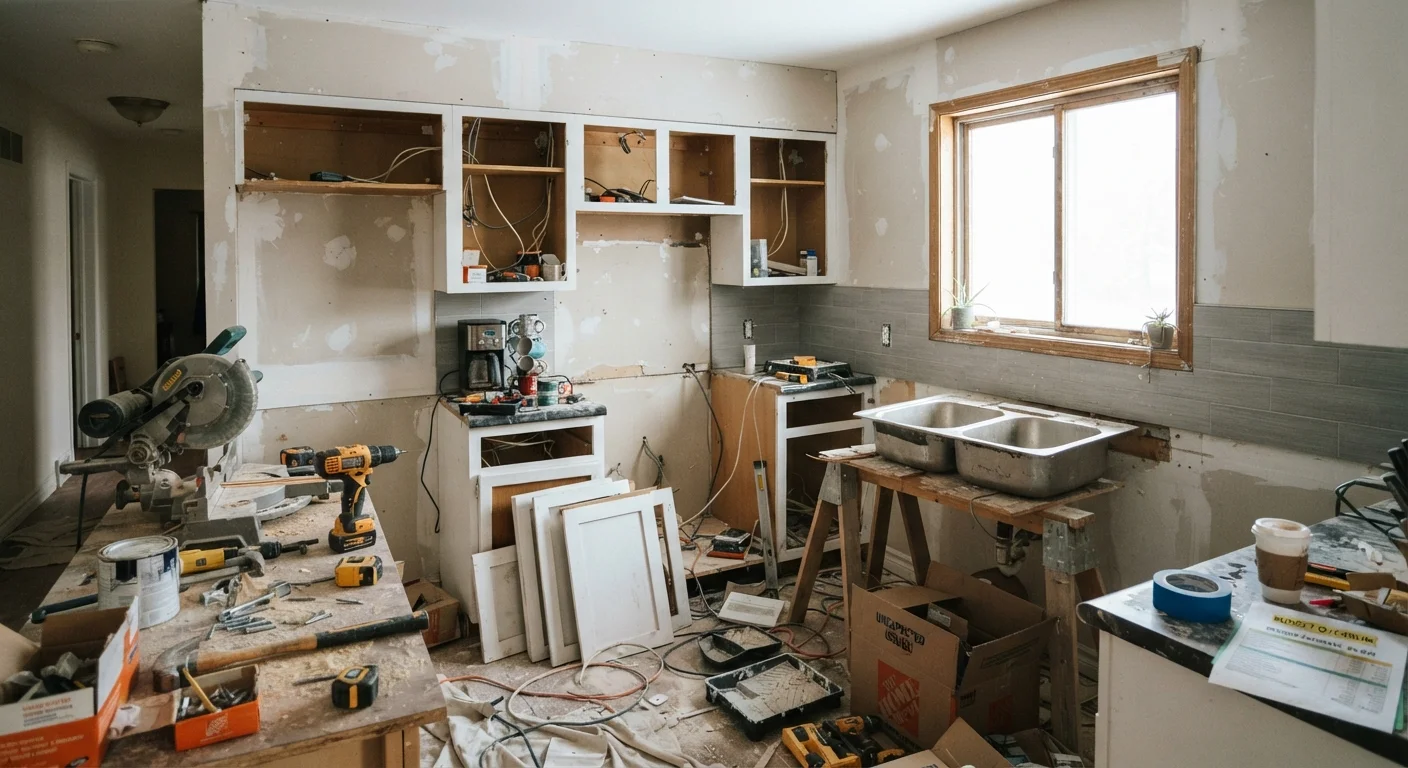
Kitchen renovations are among the most complex and expensive home improvement projects, yet budgets are frequently built around only the most visible elements: cabinetry, countertops, and appliances. What derails those budgets is rarely the showroom-floor decisions - it's the unglamorous costs that surface once walls come down and contractors start digging in.
Understanding where money quietly disappears is the first step to planning a renovation that doesn't blow up financially. The mistakes below represent the most common oversights homeowners make, why they happen, and what you can do to protect your budget before the first demo day.
Underestimating the cost of temporary kitchen displacement - meals out, portable appliances, and storage - during the renovation period.
Why it happens: Homeowners focus on construction line items and forget that losing kitchen access for weeks can add hundreds to monthly food and living expenses.
Ignoring structural and behind-the-wall costs such as outdated wiring, inadequate plumbing, or water-damaged subfloors.
Why it happens: These issues are invisible until demolition begins, making it easy to leave them out of the initial estimate.
Forgetting permit and inspection fees as formal line items in the renovation budget.
Why it happens: Permits feel like administrative hurdles rather than real costs, and many homeowners assume their contractor handles this without checking the associated fees.
Overlooking countertop and appliance lead times, which can stall a project and extend contractor labor costs.
Why it happens: Material lead times - often four to twelve weeks for custom countertops or specialty appliances - are easy to overlook when planning a schedule.
Failing to account for debris removal, dumpster rental, and haul-away fees.
Why it happens: Demolition feels like a zero-cost step compared to installation, so disposal costs are often left off the initial estimate entirely.
Assuming existing ventilation, gas lines, or electrical panels will support the new kitchen layout without upgrades.
Why it happens: Homeowners often plan new appliance configurations without consulting an electrician or plumber to verify existing capacity, particularly when upgrading to higher-BTU ranges or adding dishwashers.
Planning and Permit Costs Deserve a Dedicated Budget Line
Many homeowners treat permits as a formality - a minor checkbox rather than a real cost center. In practice, permit fees for a kitchen remodel vary widely by municipality but can range from a few hundred to well over a thousand dollars when electrical, plumbing, and structural changes are involved. Missing this line item early means it arrives as an unpleasant surprise mid-project.
Skipping Permits Can Cost You More Later
Unpermitted kitchen work - particularly electrical, plumbing, or structural changes - can create significant complications when you sell your home. Buyers' inspectors often flag unpermitted renovations, which can stall closings or require expensive remediation. Some homeowner insurance policies may also limit coverage for damage stemming from work done without required permits. Always verify local requirements with your municipality before starting work.
Unpermitted work also carries long-term risk. When you sell the home, unpermitted renovations can complicate inspections, delay closings, or require costly remediation. It's worth verifying exactly which elements of your planned renovation require permits in your jurisdiction before signing a contractor agreement.
For a broader look at how surprise costs accumulate across a household, see our guide to hidden household budget busters. And if you're weighing other renovation decisions, common renovation myths that lead to costly decisions is worth a read before you commit.
Building a Contingency Fund Isn't Optional
Industry guidance consistently recommends setting aside 15-20% of a kitchen renovation's total estimated cost as a contingency buffer. This isn't pessimism - it reflects the statistical reality that behind-the-wall conditions rarely match expectations. Outdated wiring, inadequate ventilation, water damage, and subfloor rot are all common discoveries that add thousands to final tallies.
20-30%
Typical budget overrun on kitchen remodels
Home improvement industry data and contractor surveys consistently indicate kitchen renovations exceed initial estimates by 20-30% on average, primarily due to hidden structural and systems costs.
15-20%
Recommended contingency buffer
Renovation professionals broadly advise homeowners to reserve 15-20% of their total project estimate as an unallocated contingency to absorb unexpected discoveries.
4-12 weeks
Typical countertop lead time
Custom stone and engineered countertops commonly require four to twelve weeks from order to installation, a timeline that frequently surprises first-time renovators.
The most financially resilient approach is to treat your contingency as an allocated budget category - not money you hope you won't spend. If it goes unspent, that's a win. If it gets used, it means the project finishes rather than stalls.
Kitchen renovations share a planning challenge with other technology-heavy home investments. Our overview of hidden smart home costs illustrates how easily ongoing and structural costs are underestimated across home improvement categories.
Your Contingency Fund Is Not Optional
Behind-the-wall surprises - rotted subfloors, outdated wiring, hidden water damage - are common in kitchens of any age. These discoveries are not rare edge cases; contractors encounter them routinely. Treating your contingency fund as a locked budget category from day one protects your project from stalling partway through, which can leave your kitchen unusable and ultimately cost far more than the original surprise.