

Key Takeaways
- Most U.S. adults consume only about half the daily fiber recommended by health authorities.
- Dietary fiber supports digestive health, blood sugar regulation, and long-term cardiovascular wellness.
- Increasing fiber intake gradually, rather than all at once, helps the body adjust without discomfort.
- Legumes, whole grains, vegetables, and fruits are reliable everyday sources of fiber.
- Small, consistent food swaps are more effective than dramatic dietary overhauls for building lasting habits.
What you will need
Why the Fiber Gap Is a Real Public Health Concern
Dietary fiber is one of the most consistently underconsumed nutrients in the American diet, yet its role in health is broad and well-supported by research. Fiber - found only in plant-based foods - feeds beneficial gut bacteria, helps regulate blood glucose, supports healthy cholesterol levels, and promotes feelings of fullness after eating. The gap between recommended and actual intake isn't minor: population-level data routinely shows average consumption falling roughly 40-50% short of established targets.
This shortfall is largely structural. Heavily processed foods, which make up a significant portion of the modern American diet, contain little to no fiber. White bread, packaged snacks, fast food, and sweetened beverages displace the whole grains, vegetables, legumes, and fruits that supply fiber naturally. The result is a population that is often calorie-sufficient but fiber-deficient - a pattern sometimes called a "nutrient gap" in epidemiological research.
Understanding this context matters because it shifts the frame from personal failure to dietary environment. Just as sustainable eating approaches address why restrictive diets rarely stick, closing the fiber gap works best through steady, practical adjustments rather than dramatic overhauls.
Nutrition label awareness
Reading the dietary fiber line on packaged food labels helps you track fiber content and compare options at the store.
Measuring cups
Useful for portioning beans, oats, and grains when you're learning what a serving of fiber-rich food looks like.
Food journal or tracking app
Logging meals for a few days can reveal where your fiber intake is lowest and where swaps would have the most impact.
How to Close Your Fiber Gap: Step-by-Step
The following steps are designed to help you build fiber intake incrementally using foods that are widely available and budget-friendly. You do not need specialized products, supplements, or a complete dietary transformation to make meaningful progress.
What you will need
Assess your current fiber intake
Before making changes, spend two or three days paying attention to what you eat. Look at nutrition labels on packaged foods and note the grams of dietary fiber per serving. Most adults need roughly 25-38 grams per day according to general dietary guidance from the Academy of Nutrition and Dietetics - yet surveys consistently suggest average U.S. intake hovers around 15 grams daily. Identifying your baseline tells you how large your gap actually is and where the biggest opportunities exist.
Swap refined grains for whole grains
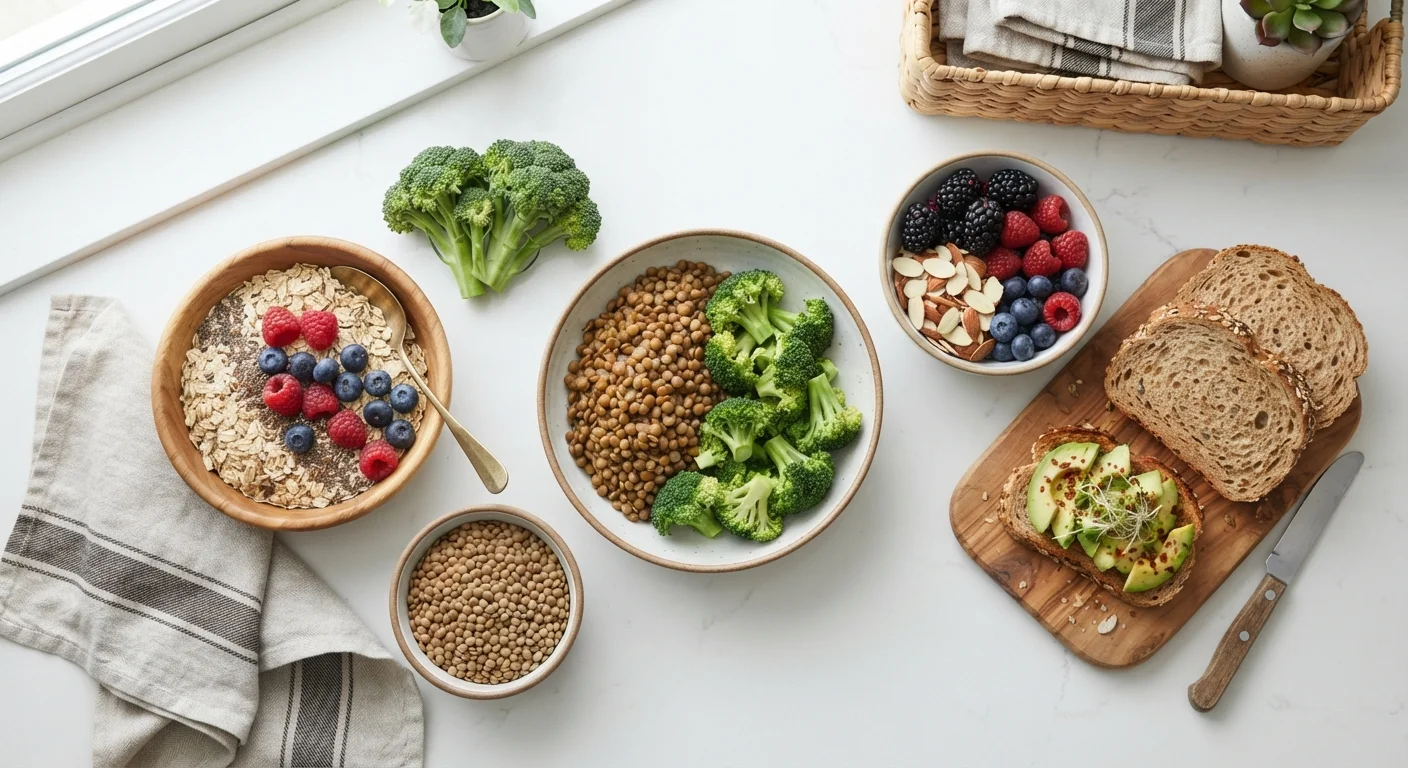
One of the highest-impact changes you can make is replacing refined grain products with whole grain equivalents. Choose whole wheat bread over white bread, rolled oats over instant packets with added sugar, brown or wild rice over white rice, and whole grain pasta over refined pasta. A single serving of cooked oatmeal can provide around 4 grams of fiber - a meaningful contribution toward your daily target from just one meal.
Make legumes a regular part of your meals
Beans, lentils, and chickpeas are among the most fiber-dense foods available. A half-cup of cooked lentils delivers approximately 8 grams of fiber along with substantial plant-based protein. Add canned (rinsed) chickpeas to salads, use black beans as a burrito filling, or stir red lentils into soups and stews. Canned legumes require no soaking and can be added to meals within minutes, making them one of the most practical fiber upgrades available.
Increase vegetable and fruit variety
Vegetables and fruits contribute both soluble and insoluble fiber - two forms that serve different roles in gut health. Soluble fiber (found in apples, oats, and carrots) forms a gel in the digestive tract that can help moderate blood sugar and cholesterol levels. Insoluble fiber (found in broccoli, whole wheat, and leafy greens) adds bulk and supports regularity. Prioritize whole fruit over juice, since most of the fiber is in the flesh and skin rather than the liquid.
Build fiber into snacks and side dishes
Snack choices are often where fiber intake quietly collapses. Replacing chips or crackers with raw vegetables and hummus, a small handful of almonds, or a piece of whole fruit can add several grams per day without changing your main meals. For side dishes, choose roasted vegetables, edamame, or a simple bean salad instead of plain white rice or bread rolls.
Increase your intake gradually over several weeks
Rather than immediately jumping to your target fiber level, add roughly 3-5 grams per week. This gradual approach gives the gut microbiome time to adjust and minimizes the bloating and gas that often discourage people from continuing. Pair each increase with an additional glass or two of water daily, since fiber functions best in a well-hydrated digestive system.
Increase Fiber Slowly to Avoid Discomfort
Adding too much fiber too quickly can cause bloating, gas, and cramping. Increase your intake gradually over several weeks and drink plenty of water throughout the day. Staying hydrated is essential because fiber absorbs water in the digestive tract. If you have a digestive condition such as irritable bowel syndrome or Crohn's disease, consult a healthcare provider before significantly changing your fiber intake.
Think Addition, Not Subtraction
Rather than focusing on foods to eliminate, concentrate on adding fiber-rich ingredients to meals you already enjoy. Stir canned white beans into pasta sauce, toss a handful of spinach into a smoothie, or swap white rice for brown. These additions build fiber intake without requiring you to abandon familiar eating patterns - a principle consistent with sustainable eating habits.
Fiber Supplements Are Not a Direct Substitute
Fiber supplements such as psyllium husk can be helpful in some situations, but they do not deliver the full range of nutrients, antioxidants, and phytochemicals found in whole plant foods. Whole foods remain the preferred source according to major dietary guidelines. Always speak with a healthcare professional before starting any supplement regimen.
Building fiber into your daily routine is consistent with the broader principle of improving overall dietary quality - the same foundation that supports physical performance. If you're also working on general wellness goals, our guide on common fitness myths addresses some widely held misconceptions that can slow progress in that area as well.
This article is for general informational and educational purposes only and is not a substitute for personalized medical or nutritional advice. Consult a qualified healthcare professional before making significant changes to your diet, especially if you have an existing health condition.